
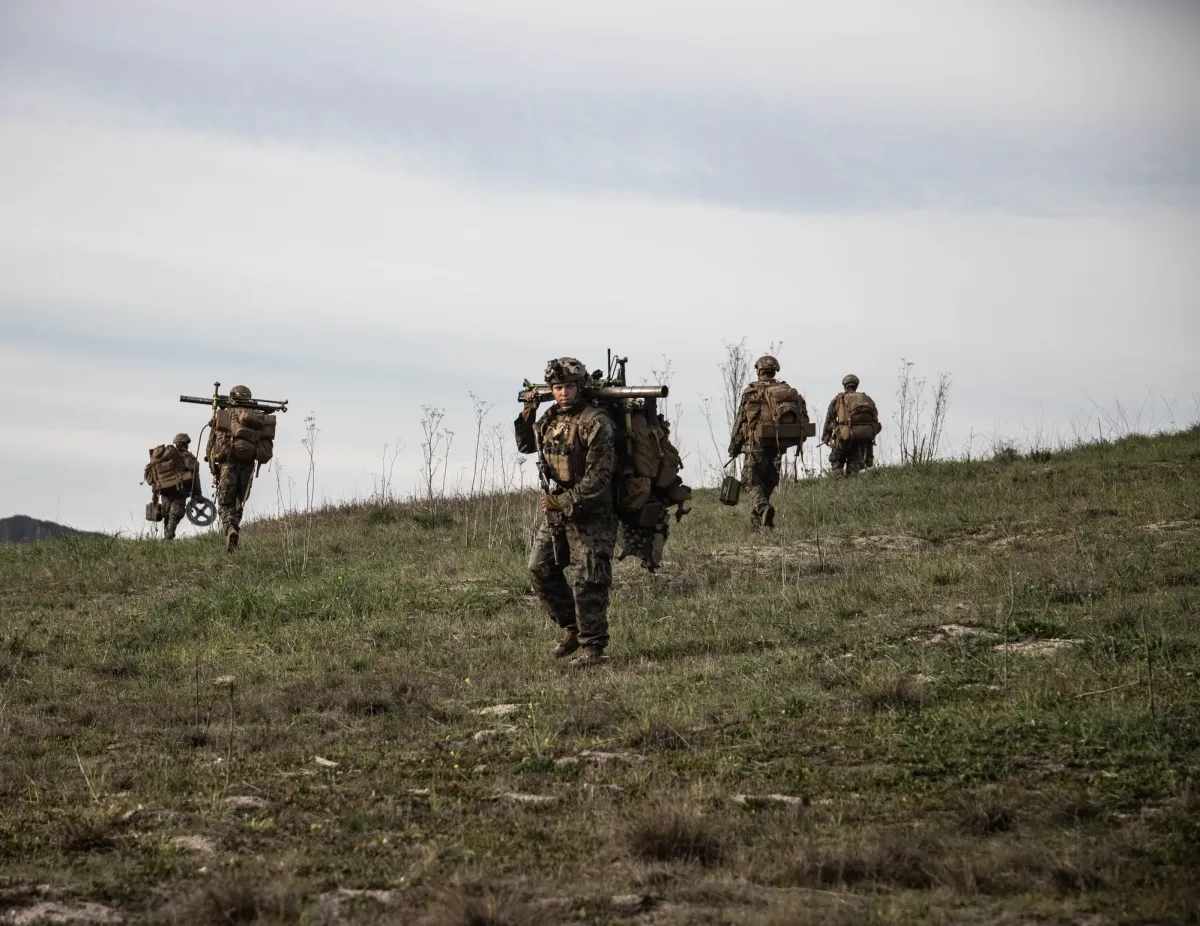
What Is ROTC? Scholarships, Service & How It Works
How ROTC Works: A Complete Overview
Worried about the massive cost of college and the uncertainty of finding a job after graduation? ROTC, the Reserve Officers' Training Corps, is a program that can pay your tuition and guarantee a management-level career before you even graduate. So what is ROTC, exactly? It's a merit-based pathway that lets you live a normal college life while you train to become a commissioned military officer.
At its core, how ROTC works is simple: it's a merit-based scholarship program offered on over 1,700 U.S. college campuses. In exchange for financial aid that can cover tuition, fees, and books, you agree to complete the program and accept a service commitment, a requirement to work for several years as a leader in the U.S. Army, Navy, or Air Force after you graduate. Candidates who are already thinking ahead to the physical preparation this path demands can find structured training through CF ONE training programs.
Unlike what many believe, ROTC cadets are college students first. They pursue degrees in everything from engineering to nursing, live in dorms, and participate in campus life just like their peers. The program acts as a leadership minor that runs alongside your major, teaching you how to lead teams and manage complex projects, all while you earn your bachelor's degree. For candidates specifically looking for military-focused training programs built around the fitness standards ROTC commissioning requires, military fitness programs covers the full range of options available.
An Officer vs. an Enlisted Member: A Simple Guide to Military Roles
The military has two distinct career paths: officers and enlisted members. While both are absolutely essential to the mission, they come with very different responsibilities and expectations. It's the most fundamental distinction in military structure, and ROTC is designed for one path specifically.
A simple way to think about the difference is to compare the military to a large company. Officers are the managers and executives. They are responsible for planning, making strategic decisions, and leading teams. Enlisted personnel are the highly skilled specialists and technicians who execute the mission, the mechanics, medics, communicators, and operators who perform the hands-on work. For candidates evaluating which military fitness program fits their preparation timeline and goals, the military fitness program buying guide walks through how to choose the right option before commissioning.
The ROTC program is one of the main paths to becoming an officer. Its curriculum is built around developing the leadership, ethics, and decision-making skills required for that management role. Upon graduating from college and successfully completing the program, a student is formally appointed as a leader, a process known as commissioning as an officer.
Does ROTC Pay for College? A Look at Scholarships and Stipends
For many students and their families, the most pressing question about ROTC is a financial one. The answer is that, yes, ROTC can be an incredibly powerful tool for funding a college education. The program offers competitive, merit-based scholarships that can relieve a significant portion of the financial burden. An ROTC Scholarship often pays for full tuition and mandatory fees at thousands of universities across the country, allowing students to focus on their studies without accumulating massive debt. For candidates with specific questions about military training program structure and what to look for when preparing for commissioning, the military fitness program FAQ covers the most common questions in one place.
Beyond covering the big-ticket item of tuition, the program also provides direct financial support to its students. Contracted cadets receive a stipend, which is a tax-free monthly allowance designed to help with living expenses. Think of it as a small, consistent paycheck to help with costs like food, transportation, or personal items. This stipend is paid to all contracted cadets, whether they are on a full scholarship or not.
When combined, these benefits create a comprehensive financial package. A typical ROTC scholarship recipient may receive:
Full tuition and fees coverage
An annual allowance for books (e.g., $1,200 per year)
A monthly living stipend (e.g., $420 per month)
Of course, these substantial benefits are part of an exchange. In return, cadets commit their time and energy to the program during the school week.
What Does a Typical Week for an ROTC Cadet Look Like?
For students exploring the program, understanding the time commitment is a critical question. The good news is that the ROTC schedule is designed to fit within a traditional college experience, much like a demanding part-time job or being a student-athlete. It adds structure to your week but doesn't consume it.
The weekly schedule is typically broken down into three core components, leaving the rest of your time free for your academic major and social life:
Early Morning Physical Training: Two or three mornings a week, you’ll join your fellow cadets for group workouts designed to build fitness and teamwork.
One ROTC Academic Class: You’ll attend one classroom session per week, just like any other college course, covering topics from military history to leadership ethics.
One Leadership Lab: This is a weekly hands-on training session where you put theory into practice, learning skills like map reading, first aid, or how to lead a small team through a challenge.
Beyond these scheduled activities, you are a regular college student. You’ll spend the vast majority of your time attending your major-specific classes, studying in the library, and participating in clubs or other campus events. While this weekly training is a key part of the program, it’s just one piece of the puzzle. The other major piece is the service obligation you fulfill after earning your degree.
What Is the Service Obligation After Graduating from ROTC?
The financial support and leadership training from ROTC don’t come without a significant commitment of your own. In exchange for these benefits, graduating cadets accept a service obligation, a formal agreement to serve as an officer in the military for a set number of years after earning their degree. This is the "return" on the investment the military makes in your education.
This post-graduation service can take two primary forms. The most common path is Active Duty, which is a full-time job as a military officer with a competitive salary and benefits. The other option is to serve part-time in the Reserve or National Guard. This allows you to pursue a separate civilian career while training with a local unit typically one weekend a month and two weeks per year.
The specific length of your commitment, often several years, depends on your military branch, scholarship details, and chosen career field. Understanding this post-graduation service is a major factor when considering if ROTC is worth it, and it's a key distinction when comparing ROTC to other military pathways.
ROTC vs. Enlisting vs. Military Academy: Choosing Your Path
With the service commitment in mind, it becomes easier to see how ROTC fits among the different ways to join the military. Think of it as choosing a path based on your personal and career goals. Each route offers a distinct experience and leads to a different starting point in your military journey.
The most direct route is enlisting, which you can do after high school. Enlisted members are the skilled specialists and hands-on experts of the military. They receive technical training and form the backbone of the force. In contrast, ROTC is a path to becoming an officer, the military’s equivalent of a manager, responsible for planning and leading teams.
On the other end of the spectrum are the prestigious military service academies, such as West Point for the Army or the Naval Academy for the Navy. Attending an academy is a fully immersive military experience. Your entire college life, from academics to athletics, is structured within a military environment. All graduates also become officers.
ROTC offers a unique middle ground. It allows you to have a traditional college experience at a school of your choice while training to become an officer on the side. You get the "best of both worlds": the life of a typical college student and the leadership development of the military, all leading to a guaranteed management role after you graduate. Candidates who want a complete picture of all officer commissioning pathways, including ROTC, OCS, and the Service Academies, should read become a military officer: pathways and training, which lays out every route and what distinguishes them.
How Do I Join? Your First Steps into the World of ROTC
Getting started with ROTC is a more straightforward process than you might think, and it often begins with simple research. The key is understanding that you generally apply to an ROTC program and a college at the same time, but they are separate processes. For many, the journey begins in high school, but options are available even after you’ve started college.
Ready to explore the requirements and see how to join an ROTC program in college? Here is a simple, step-by-step guide to get you moving in the right direction:
Research Colleges: Identify universities that host an ROTC program for your desired branch (Army, Navy, or Air Force). Not every school has every program.
Check Basic Eligibility: Visit the official Army, Navy, or Air Force ROTC websites to review the core requirements for things like age, citizenship, and physical fitness.
Apply for a National Scholarship: If you’re a high school senior, you can apply online for a national ROTC scholarship. This is a competitive process that often takes place in the fall.
Enroll On-Campus: Didn’t get a scholarship or already in college? You can often still join. Visit the ROTC department on campus and ask about enrolling in the program as a college freshman or sophomore to try it out.
The Physical Fitness Requirement: What ROTC Actually Expects
Every ROTC program includes a physical fitness component. Cadets participate in group physical training multiple mornings per week, and fitness performance is evaluated throughout the program.
For Army ROTC, this typically means preparing for the Army Fitness Test (AFT), the five-event test that replaced the Army Combat Fitness Test (ACFT) on June 1, 2025. The AFT measures strength, work capacity, and endurance across a deadlift, hand-release push-up, sprint-drag-carry, plank, and two-mile run. The standard a cadet must meet is not just about passing the test. It is about demonstrating the physical leadership credibility expected of an officer candidate.
Arriving at ROTC physically prepared is one of the clearest advantages any cadet can have. Cadets who struggle physically during training sessions are spending energy managing survival rather than developing leadership. Cadets who arrive already meeting or exceeding fitness standards can focus on the actual leadership curriculum. Candidates who want to start building the physical foundation before ROTC begins should read basic training prep, an effective 8-week preparation framework for building the fitness that ROTC's physical training demands from the first week.
Eligibility: Age and Physical Standards Across Branches
ROTC eligibility requirements vary slightly by branch and program type. Understanding these before committing to a path saves candidates from investing time in a track they may not qualify for.
Generally, ROTC candidates must be U.S. citizens, meet age requirements (typically 17-26 for most programs, with variations), meet physical fitness standards, and pass a medical screening. Scholarship applicants face additional competitive criteria including academic performance and leadership experience.
For candidates considering OCS as an alternative to ROTC, age eligibility also varies by branch and is a key deciding factor. Candidates who want the full OCS age eligibility picture should review the OCS age limit and eligibility guide, which covers the age windows and requirements for each branch's Officer Candidate School program.
Body Composition Standards for ROTC Candidates
ROTC programs also enforce body composition standards consistent with Army, Navy, or Air Force regulations. These are not guidelines. They are eligibility requirements.
Candidates who do not meet height and weight standards or body fat percentage limits are not eligible to contract, which is the step that activates scholarship benefits and formal program enrollment. Meeting these standards is a prerequisite, not a stretch goal.
Candidates who want to confirm they meet body composition requirements alongside fitness standards should review the Army height and weight standards guide, which covers the body composition requirements that apply to Army ROTC candidates.
Is an ROTC Commitment Right for You?
Weighing a significant life decision like this requires clarity. The benefits of joining ROTC are clear, a potential scholarship, a guaranteed leadership job, and invaluable skills, but they must be balanced against the profound commitment of your time and future service.
The question of whether the ROTC program is worth it transforms from a general query into a personal one. The real decision isn't just about paying for college; it's about choosing a blueprint for the first chapter of your professional life and determining if that path aligns with your own goals and values.
Your best next step isn’t a commitment, but a conversation. To confidently explore if this is right for you, visit the official Army, Navy, or Air Force ROTC websites. There you can find details on university programs and connect with an instructor, the perfect person to answer your specific questions and help you see the path ahead. Understanding what is tactical conditioning gives every ROTC candidate the foundational physical framework behind what military officer training is building from commissioning through an entire career, the fitness qualities that define what it means to lead from the front.
Understanding what is tactical fitness gives every ROTC candidate and military-curious reader the complete picture of what effective military performance training is designed to produce, the professional physical standard that every officer is expected to model and maintain throughout their career.


