
Murph Workout: Training Plan, Scaling & Safe Execution
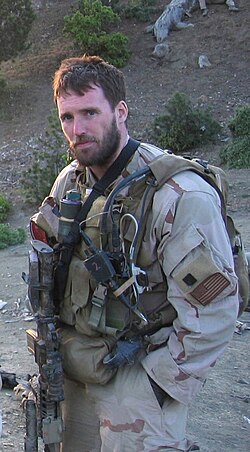
The Murph workout is more than a workout, it's a ritual. Every Memorial Day, tactical athletes, CrossFitters, and weekend warriors take on the hero WOD named for Navy SEAL Lieutenant Michael P. Murphy, killed in Afghanistan during Operation Red Wings in 2005 and posthumously awarded the Medal of Honor. He called it "Body Armor." We call it Murph.
On paper it's simple, a one-mile run, 100 pull-ups, 200 push-ups, 300 air squats, then another one-mile run, all in a 20-pound vest if you go Rx:
1 Mile Run
100 Pullups
200 Pushups
300 Squats
1 Mile Run
Wearing a 20lb Vest
In practice it's brutal, and every year unprepared people end up in the ER with rhabdomyolysis, muscle breakdown severe enough to release myoglobin into the bloodstream and threaten the kidneys. It almost always traces back to the same mistake: going Rx and unpartitioned with no preparation. Ego writes a check the body can't cash. Here's the professional approach we build into our tactical fitness programs: how to train for it, how to scale it, and how to finish strong instead of finishing in a hospital bed.
Know the Standard Before You Scale It
Scaling Murph intelligently means knowing what you're scaling down from. The Rx standard is the one-mile run, 100 pull-ups, 200 push-ups, and 300 air squats, capped with a second one-mile run, performed in a 20-pound weight vest, 14 pounds is the common women's standard. Purists complete the calisthenics "unpartitioned": all 100 pull-ups, then all 200 push-ups, then all 300 squats, in that order. That's an elite-level effort and the wrong place for a first-timer to start. The far more common and far safer approach is to partition the reps and, for most people, skip the vest entirely on a first attempt. Neither choice makes the workout any less of a tribute. Finishing it well does.
Step 1 - Partition the Volume
The single biggest mistake people make is attacking the calisthenics straight through. Unless you're an elite CrossFit athlete, doing 100 pull-ups in a row is a fast track to nowhere, your form collapses around rep 30 and the next 70 turn into garbage reps that wreck your shoulders and tank your push-ups before you reach them. Partitioning solves this. Breaking the work into small, repeatable rounds keeps local muscle fatigue low, keeps your heart rate controlled, and keeps you moving instead of grinding to a halt. The total volume is identical, you're just spreading it intelligently instead of front-loading failure.
The Cindy partition is the standard for a reason. Twenty rounds of 5 pull-ups, 10 push-ups, and 15 air squats lands you on exactly 100 / 200 / 300, and the ratio mirrors your natural strength curve, most people can do roughly twice the push-ups as pull-ups and three times the squats, so no single movement becomes the bottleneck.
The "Cindy" Style (Standard):
20 Rounds of:
5 Pullups
10 Pushups
15 Squats
This keeps muscle fatigue low and keeps you moving.
If pull-up endurance is your weak link, the Mini-Cindy is gentler still. Thirty-three rounds of 3 / 6 / 9 keeps every set well short of failure and covers 99 pull-ups, 198 push-ups, and 297 squats, you simply finish the last 1, 2, and 3 reps at the end. Slower on the clock, easier on the joints, and a smart pick for a first-timer or anyone coming back from a layoff.
The "Mini-Cindy" (For endurance):
33 Rounds of:
3 Pullups
6 Pushups
9 Squats
(Then finish the remaining reps at the end).
Step 2 - Build Up to the Vest
The 20-pound vest is what turns a hard workout into a genuinely dangerous one for the unprepared, so it's the first thing to cut if you're not ready. The rule is simple: if you can't run a 10-minute mile fresh, don't put on a vest; if you can't do 10 strict pull-ups fresh, don't put on a vest. If that mile is the gap, work from a plan that walks you through how to choose a running program before you ever add load. The vest compounds every rep and every stride, and in the final mile it can feel like a suffocation device wrapped around your chest. Earn it over weeks, not in one ego-driven afternoon.
The Ramp Up:
Weeks 1-4: Bodyweight only. Focus on volume accumulation.
Weeks 5-6: Wear the vest for the RUN only. Take it off for the calisthenics.
Week 7: Wear the vest for the squats and pushups. Take it off for pullups.
Week 8: Full vest rehearsal (half volume).
The ramp introduces load gradually so connective tissue and engine adapt together, and if you want a head start on carrying weight, ruck training and gear progression builds the exact load tolerance the vest will demand.
Tendons and ligaments strengthen far slower than muscle, so the goal across these weeks is to add the vest in stages, never all at once.
Step 3 - Hydrate and Fuel for a 45–70 Minute Effort
Murph is 45 to 70 minutes of continuous output for most people, and you'll sweat out one to two liters of water doing it, more in the Memorial Day heat. Dehydration accelerates both heat illness and rhabdo, so fueling isn't an afterthought; it's part of the strategy.
Pre-Game: Drink 16oz of water with electrolytes (sodium) 30 minutes before.
Intra-Workout: You don't need water during the workout if you are hydrated, but having a bottle handy for a quick sip transition helps mentally.
Post-Game: Do not drink beer immediately. Your kidneys are stressed. Drink a protein shake and another liter of water first. Then have the burger.
The post-workout window matters more than people realize. Your kidneys are already working overtime to clear the byproducts of all that muscle damage, and dropping alcohol on top of that is exactly the wrong move. Rehydrate with water and electrolytes, get protein in, and give your body a few hours before the cookout. The beer and burger will still be there.
The 8-Week Murph Training Plan
The vest ramp tells you when to add load; this is the training that earns you the right to use it. A sound Murph block runs about eight weeks and trains three qualities at once: muscular endurance in the pull, push, and squat; aerobic capacity for the runs and the overall engine; and the specific work capacity to keep moving for 45 to 70 minutes straight.
Weeks 1–2 (Base): Accumulate volume with sub-maximal sets - 10 rounds of 3 pull-ups, 6 push-ups, 9 squats, three days a week - plus two easy 1–2 mile runs. Reps in the bank, not intensity.
Weeks 3–4 (Build): Run a half-Murph (50 / 100 / 150) once a week using your chosen partition, and add a tempo run. Practice your transitions between movements.
Weeks 5–6 (Specific): Step up to a three-quarter Murph and add grease-the-groove pull-ups - small sets of strict reps scattered through the day to build the pulling endurance that bottlenecks most athletes.
Week 7 (Rehearsal): Complete a full-volume Murph at an easy pace, partitioned, no vest. This is a dress rehearsal for pacing and fueling, not a time trial.
Week 8 (Taper): Cut volume by roughly half, keep movement crisp, and arrive on Memorial Day fresh. You don't build fitness the week of Murph - you protect it.
Know the Warning Signs of Rhabdo
Most people finish Murph sore and proud. A small number finish on the way to the emergency room, and the difference often comes down to spotting the warning signs early. Rhabdomyolysis happens when overworked muscle tissue breaks down and dumps myoglobin into the bloodstream faster than the kidneys can clear it. In the hours or day or two after Murph, stop and seek medical care if you notice:
Dark, cola- or tea-colored urine - the single most telling sign.
Severe muscle pain and swelling far out of proportion to normal soreness.
Profound weakness, or muscles that feel locked up and won't loosen.
Nausea, confusion, or a sharply reduced need to urinate.
Normal post-Murph soreness is expected. Dark urine is not soreness, it's a medical red flag that warrants the ER, not a wait-and-see. When in doubt, get checked.
Should You Do Murph This Year?
Murph is built for intermediate-and-up athletes with a base, people who can run a couple of miles, string together strict pull-ups, and hold form through high-rep calisthenics. If that's you, it's one of the best single-day tests of grit and work capacity you'll ever do, and the kind of WOD-style conditioning that rewards year-round training.
If you're a true beginner, returning from injury, pregnant or early postpartum, or managing a heart or kidney condition, this is the year to scale hard or sit it out. A quarter-Murph or half-Murph honors the same fallen hero without putting you in the ER. There's no shame in scaling, the only wrong way to do Murph is the one that lands you in a hospital bed.
Summary
Murph honors a fallen hero, Lieutenant Michael P. Murphy, and the best way to honor him is to execute the mission with excellence, not to injure yourself through a lack of preparation. Partition the volume so your form holds. Earn the vest over weeks instead of strapping it on cold. Hydrate and fuel for the 45-to-70-minute effort it is. And know the warning signs well enough to walk away if your body tells you to.
Do that, and you'll finish strong, recover fast, and come back next Memorial Day stronger than you left. Train smart. Earn the patch.


