
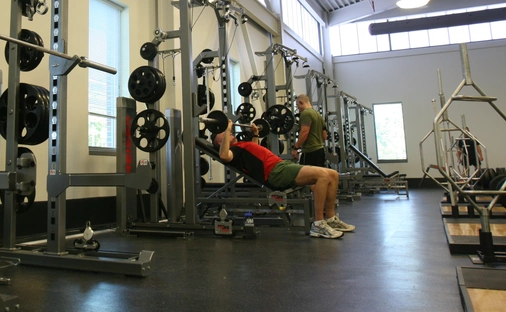
Incline Bench Press Muscles Worked | Combat Fitness
Incline Bench Press: Muscles Worked (and How the Angle Changes Them)
The incline bench press works the upper (clavicular) head of the pectoralis major as the prime mover, with the anterior deltoid and triceps as the main secondary muscles. Tilting the bench moves load off the mid and lower chest and onto the upper chest and front delts, so the angle you set matters as much as the weight on the bar. If you want that pressing work built into a full plan instead of guessed at session to session, our tactical fitness programs program it for you.
This breakdown comes from the electromyography (EMG) research on bench angle, not gym folklore: the muscles, the angle effect, barbell versus dumbbell, and incline versus flat and decline.
Incline Bench Press Muscles Worked: The Short List
The incline bench press trains three muscle groups, in order of contribution:
Primary: upper (clavicular) pectoralis major. Drives the upper arm up and across the body.
Secondary: anterior deltoid. Flexes the shoulder and works harder as the bench gets steeper.
Secondary: triceps brachii. Extends the elbow and finishes the lockout.
Stabilizers: serratus anterior, rotator cuff, and the mid (sternal) pec. They control the shoulder blade and the bar path. Dumbbells also recruit more biceps.
One honest note before going further: the angle changes emphasis. It does not build a different chest.
The Primary Muscle: Why the Incline Hits the Upper (Clavicular) Pec
The pectoralis major has two heads. The clavicular head starts on the inner half of the collarbone, and the larger sternocostal head starts on the sternum and upper rib cartilage. Both insert on the same spot on the upper arm bone, but their fibers pull in different directions.
The clavicular fibers angle up toward the shoulder, so they assist shoulder flexion (raising the arm in front of you). Recline the bench and your press path turns into more shoulder flexion and less straight horizontal pushing. That lines the work up with the upper fibers, making incline the go-to upper chest muscle group exercise.
The research mostly backs this up. Trebs and colleagues found upper pec activity peaked near a 44 degree bench, and Rodríguez-Ridao and colleagues found it peaked at 30 degrees. Not every study agrees, though. Barnett and colleagues found the clavicular head nearly as active on a flat bench, with the incline mainly adding front delt work. EMG measures activation, not growth, so treat these numbers as a guide to emphasis.
The Secondary Muscles: Front Delt and Triceps
The anterior deltoid starts on the outer third of the collarbone, next to the clavicular pec, and does the same job: flexing the shoulder. Because the incline adds shoulder flexion, the front delt takes a bigger share of the load than it does on a flat bench. Trebs found anterior delt activity climbed steadily as the bench angle rose.
The triceps extend the elbow and own the top half of the press. Their activity depends more on grip width and load than on bench angle.
This pairing is why the incline earns a place in tactical programming beyond the mirror. The upper pec and front delt together drive any press that travels up and forward: shoving a teammate over a wall, loading a pack onto a vehicle, or pressing a load overhead. Building that pattern is part of functional strength for military performance, where pressing strength has to transfer to the job.
How the Bench Angle Changes Emphasis: 30 vs 45 Degrees
A 30 to 45 degree incline gives you the most upper pec work before the front delt takes over. Below 30 degrees the press behaves more like a flat bench. Above 45 degrees it shifts toward a shoulder press, with the deltoid doing most of the lifting.
Here is how the angle bands break down:
Low incline (15 to 30 degrees): Closest to flat. More total pec involvement and the heaviest loads you can incline press. Rodríguez-Ridao found clavicular activity peaked at 30 degrees.
Moderate incline (30 to 45 degrees): The upper chest sweet spot. Trebs found upper pec activity highest near 44 degrees, with front delt demand rising but still manageable.
High or steep incline (above 45 degrees): The front delt dominates. Rodríguez-Ridao found the anterior deltoid outworked the pec from 45 degrees up, and at 56 to 60 degrees the lift is a shoulder press in all but name.
Bench notches vary by brand, so check yours once with a phone angle app. If your shoulders get cranky on steep inclines, drop a notch; the lower angle keeps the upper chest stimulus with less load on the front of the shoulder.
Barbell vs Dumbbell Incline Press: What Shifts?
The barbell incline bench press lets you move the most weight on a fixed path. Heavier loads mean more triceps demand at lockout.
The dumbbell incline press trades load for range and control. The dumbbells can travel deeper at the bottom, each arm works on its own, and stabilizer demand climbs. In Saeterbakken’s chest-press comparison, pec activity was similar between barbell and dumbbells, triceps activity was higher with the barbell, and biceps activity was higher with dumbbells.
Grip width shifts things too. A close grip moves work toward the triceps, as Barnett found on flat and incline benches alike. A wide grip shortens the range of motion and puts more stress on the front of the shoulder. Setup, bar path, and cueing for both versions are a technique topic of their own. If you are deciding how pressing fits into a full plan, our guide to choosing a strength & endurance program walks through what to look for.
Incline vs Flat vs Decline Bench: Where Each Hits the Chest
Each bench angle biases a different region of the same muscle:
Incline: Upper (clavicular) pec plus more front delt. Lighter loads than flat.
Flat: Highest mid and lower (sternocostal) pec activity, and usually your heaviest press. Rodríguez-Ridao found lower pec activity greatest at 0 degrees.
Decline: Lower pec bias with less front delt involvement. Glass and Armstrong found lower pec activity higher on the decline than the incline.
Neither is better on its own: flat builds the most total pressing strength, and incline fills in the upper chest. A balanced program runs both. An upper chest that lags usually comes from years of flat-only pressing, which is a programming problem more than an exercise problem. Cable work can add upper chest volume without more shoulder load. To slot both presses into a complete week, start with a strength workout for athletes and build out from there.
FAQ: Frequently Asked Questions
What muscles does the incline bench press work?
The incline bench press works the upper (clavicular) pectoralis major as the prime mover, with the anterior deltoid and triceps as secondary muscles. The serratus anterior and rotator cuff stabilize the shoulder, and dumbbells add biceps work. Compared with a flat bench, the angle shifts load toward the upper chest and front delt.
Does the incline bench work the upper or lower chest?
The incline bench biases the upper chest. Tilting the bench lines the press up with the upward-angled clavicular fibers, so they take a larger share of the work. The lower chest still contributes, but less than on a flat or decline bench.
What angle is best for the upper chest?
A bench set between 30 and 45 degrees gives the most upper chest work. EMG studies place peak upper pec activity at 30 degrees in one study and near 44 degrees in another. Above 45 degrees, the front delt takes over and the lift turns into a shoulder press. Start at 30 degrees and go steeper only if your shoulders tolerate it.
Is the incline or flat bench better for the chest?
Neither is better on its own. The flat bench produces the highest mid and lower pec activity and lets you press the most weight. The incline bench shifts emphasis to the upper chest and front delt. For a balanced chest and transferable pressing strength, program both across the week instead of picking one.
Does the incline bench press work the shoulders?
Yes. The anterior (front) deltoid is a major secondary mover on the incline bench press, and its share of the work rises as the bench gets steeper. Above roughly 45 degrees, the front delt outworks the chest. The side and rear delts contribute little.
Barbell vs. dumbbell incline press: which works more muscle?
Both work the same muscle groups at similar pec activation. The barbell allows heavier loads and draws more triceps work. Dumbbells allow a deeper range of motion, demand more stabilization, and recruit more biceps. Use the barbell for pressing strength and dumbbells for range and side-to-side balance.
What muscles does the incline bench work vs. the decline bench?
The incline bench targets the upper (clavicular) pec and front delt. The decline bench targets the lower (sternocostal) pec with less front delt involvement. Both use the triceps to lock out. The two angles sit at opposite ends of the same muscle.
The incline bench press muscles worked come down to three groups: the upper pec leads, the front delt and triceps assist, and the bench angle decides the ratio. Keep the bench between 30 and 45 degrees, run both barbell and dumbbell versions, and pair incline with flat pressing so neither region falls behind. Grab our free balanced-chest routine to put incline and flat pressing into a structured plan, then build it into a full training block with Combat Fitness.
References:
Trebs AA, Brandenburg JP, Pitney WA. An electromyography analysis of 3 muscles surrounding the shoulder joint during the performance of a chest press exercise at several angles. Journal of Strength and Conditioning Research. 2010;24(7):1925-1930.
Rodríguez-Ridao D, Antequera-Vique JA, Martín-Fuentes I, Muyor JM. Effect of five bench inclinations on the electromyographic activity of the pectoralis major, anterior deltoid, and triceps brachii during the bench press exercise. International Journal of Environmental Research and Public Health. 2020;17(19):7339.
Lauver JD, Cayot TE, Scheuermann BW. Influence of bench angle on upper extremity muscular activation during bench press exercise. European Journal of Sport Science. 2016;16(3):309-316.
Barnett C, Kippers V, Turner P. Effects of variations of the bench press exercise on the EMG activity of five shoulder muscles. Journal of Strength and Conditioning Research. 1995;9(4):222-227.
Glass SC, Armstrong T. Electromyographical activity of the pectoralis muscle during incline and decline bench presses. Journal of Strength and Conditioning Research. 1997;11(3):163-167.
Saeterbakken AH, van den Tillaar R, Fimland MS. A comparison of muscle activity and 1-RM strength of three chest-press exercises with different stability requirements. Journal of Sports Sciences. 2011;29(5):533-538.
Saeterbakken AH, Mo DA, Scott S, Andersen V. The effects of bench press variations in competitive athletes on muscle activity and performance. Journal of Human Kinetics. 2017;57:61-71.
Lehman GJ. The influence of grip width and forearm pronation/supination on upper-body myoelectric activity during the flat bench press. Journal of Strength and Conditioning Research. 2005;19(3):587-591.
Solari F, Burns B. Anatomy, Thorax, Pectoralis Major Major. StatPearls. StatPearls Publishing.
Elzanie A, Varacallo M. Anatomy, Shoulder and Upper Limb, Deltoid Muscle. StatPearls. StatPearls Publishing.
Headquarters, Department of the Army. FM 7-22, Holistic Health and Fitness. Washington, DC: Department of the Army; 2020.
Disclaimer: This article is for educational purposes only and is not medical advice. Consult a qualified healthcare provider before starting a new training program, especially if you have a shoulder injury or pain during pressing. EMG findings describe muscle activation under study conditions and do not guarantee specific strength or size outcomes.


