
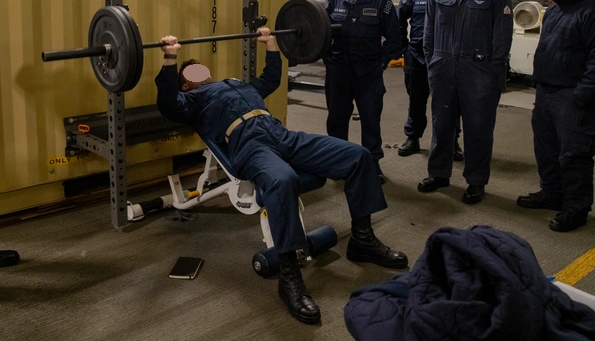
How to Do Incline Bench Press: Setup & Form | Combat Fitness
How to Do the Incline Bench Press: Setup, Angle, and Proper Form
Knowing how to do incline bench press reps correctly comes down to two settings: the bench angle and where the bar touches. Set the bench to 30 to 45 degrees, plant your feet, pull your shoulder blades back and down, grip just outside shoulder width, lower the bar to your upper chest just below the collarbone, and press up and slightly back over your shoulders. If you would rather have your pressing programmed than pieced together, our tactical fitness programs build it into a structured plan.
Below: the full setup, the right bench height, barbell versus dumbbell, how to train it with no incline bench, and the mistakes that stall progress.
How to Do Incline Bench Press Properly, Step by Step
The incline bench press is a press performed on a bench reclined 30 to 45 degrees, with the bar lowered to the upper chest. Every step below does one of two jobs: keep the shoulder stable, or keep the bar on the path that loads the upper chest.
Set the bench. Adjust the pad to 30 to 45 degrees and slide the seat so your eyes sit just behind the bar. Too far under it and you clip the hooks on every rep.
Plant your feet. Flat on the floor, slightly behind your knees, pushing down. On an incline your body wants to slide down the pad, and leg drive pins you in place.
Set your shoulder blades. Pull them back and down and keep a slight upper-back arch. This builds a solid platform and keeps the front of the shoulder out of a vulnerable position.
Take your grip. Thumbs wrapped, hands just outside shoulder width, forearms vertical at the bottom. Skip the thumbless grip; on an incline a slipped bar falls toward your face.
Unrack and stack. Bring the bar over your shoulders with arms locked. Breathe in and brace.
Lower to the upper chest. Take two to three seconds, elbows tucked roughly 45 to 60 degrees from your torso, and touch just below the collarbone.
Press up and slightly back. Drive the bar back toward the rack so it finishes over your shoulders. Exhale through the sticking point.
Safety note: with no spotter, set the safety pins or spotter arms just below chest height, or use dumbbells, which you can lower to the floor if a rep fails.
What Angle Should the Incline Bench Be? (How High to Set It)
The incline bench should sit between 30 and 45 degrees. That range puts the most work on the upper chest before the front delts take over. Below about 30 degrees the press behaves like a flat bench. Above 45 degrees it becomes a shoulder press.
The EMG research supports that window, with some spread. Rodríguez-Ridao and colleagues found upper pec activity peaked at 30 degrees; Trebs and colleagues found it highest near 44 degrees. Both found front delt involvement climbing as the bench got steeper. The full breakdown of how the angle reshuffles the work lives in our guide to the muscles the incline bench press works.
Bench notches differ by brand, so check yours once with a phone angle app. If you are unsure how much to incline the bench, start at 30 degrees and go steeper only if your shoulders stay quiet.
Barbell vs. Dumbbell Incline Press: How the Setup Changes
The barbell lets you load the most weight on a fixed path, which makes it the better tool for pressing strength. It needs a rack and safeties, and it locks your hands in one position.
The dumbbell incline press trades load for range. Sit with the dumbbells on your thighs, lie back, and kick them up one at a time with your knees. Start over your shoulders, lower to the sides of your upper chest with palms forward or slightly turned in, and press up and slightly together. To finish, bring the weights to your chest and use them as a counterweight to sit up.
Muscle activity is close between the two. Saeterbakken and colleagues found similar pec activity on barbell and dumbbell presses, with more triceps on the barbell and more biceps with dumbbells. Use the barbell for heavy strength work and dumbbells for range, side-to-side balance, and training solo. To see how incline work fits into a full week, our guide to choosing a strength & endurance program covers what a well-built plan includes.
No Incline Bench? How to Do It Anyway
You do not need an adjustable bench to train the incline press pattern. Any setup that angles the press up and forward relative to your torso does the same job, which matters in a garage, a hotel gym, or a deployed setting.
Flat bench on blocks. Raise the head end on stacked bumper plates or a solid box, confirm it does not rock, and press dumbbells from it.
Floor press. Press from the floor with your upper back on a firm mat for a slight incline. The floor caps the bottom range, protecting the shoulder and building lockout strength.
Landmine press. Wedge one end of a barbell into a corner and press the other end up and forward, half-kneeling or standing. The arc mirrors an incline path and adds a bracing demand.
Decline push-up. Feet on a bench, box, or ruck, hands on the floor. Elevating the feet shifts load to the upper chest and front delts. Add a weight vest to progress.
Loaded push-ups are not a lesser option. Calatayud and colleagues found push-ups and bench presses matched for muscle activity produced similar strength gains. Pressing that works with minimal kit is part of functional strength for military performance, because the mission does not wait for a full gym.
Common Incline Bench Press Mistakes to Avoid
Fix these before you add weight:
Bench too steep. Above 45 degrees you are shoulder pressing. Drop to 30 to 45.
Flaring the elbows. Elbows out at 90 degrees puts the most stress on the front of the shoulder. Tuck them to roughly 45 to 60 degrees.
Bar drifting toward the face. A bar near your throat means the path is wrong and a missed rep turns dangerous. Keep forearms vertical and touch below the collarbone.
Bouncing the bar. Rebounding steals the hardest part of the rep and jars the shoulders. Control the descent and touch lightly.
Losing the setup. Hips lifting or shoulder blades rolling forward means the load is too heavy. Reset and lighten it.
Clean technique will not fix an upper chest that has lagged for years; that is a programming problem, covered in why your upper chest lags and how to fix it. Once your form holds under load, build the incline into a strength workout for athletes alongside your flat pressing.
FAQ: Frequently Asked Questions
How do you do the incline bench press properly?
Set the bench to 30 to 45 degrees, plant your feet, and pull your shoulder blades back and down. Grip just outside shoulder width, lower the bar under control to just below your collarbone with elbows tucked, and press up and slightly back until the bar sits over your shoulders.
What angle should the incline bench be set to?
Set the incline bench between 30 and 45 degrees. Studies place peak upper chest activity at 30 degrees in one and near 44 degrees in another. Below 30 degrees the lift behaves like a flat bench; above 45 the front delts take over. Start at 30 if unsure.
Where should the bar touch on the incline bench press?
The bar should touch your upper chest, just below the collarbone. That keeps your forearms vertical and the path aligned with the upper chest. Touching higher drifts the bar toward your face and neck, which is unsafe if a rep fails.
How do you do an incline press without an incline bench?
Raise the head of a flat bench on stable plates or a box, floor press with your upper back on a firm mat, use a landmine press, or do decline push-ups with your feet elevated. Each angles the press up and forward to load the upper chest.
Barbell or dumbbell for the incline press: which is better?
Neither is better overall. The barbell allows heavier loads and suits strength work but needs a rack and safeties. Dumbbells allow more range, work each side independently, and are safer alone because you can lower them to the floor. Most programs use both.
How much less should you incline bench vs. flat bench?
Expect to lift less on the incline, because the angle shifts work toward the smaller upper chest and front delts. As a coaching rule of thumb, many lifters land around 10 to 20 percent below their flat bench, though angle, experience, and build all move that number.
What are the most common incline bench press mistakes?
The most common mistakes are a bench set too steep, flared elbows, a bar drifting toward the face, bouncing off the chest, and a lost shoulder blade setup. Each one loads the front of the shoulder or takes work away from the upper chest.
Learning how to do incline bench press reps well is discipline in the setup: the right angle, a locked-in back, vertical forearms, and a bar that touches the upper chest every time. Get those right and the load can climb safely for years. Grab our free pressing plan to put incline and flat pressing into a structured progression, then take it further inside Combat Fitness.
References:
Trebs AA, Brandenburg JP, Pitney WA. An electromyography analysis of 3 muscles surrounding the shoulder joint during the performance of a chest press exercise at several angles. Journal of Strength and Conditioning Research. 2010;24(7):1925-1930.
Rodríguez-Ridao D, Antequera-Vique JA, Martín-Fuentes I, Muyor JM. Effect of five bench inclinations on the electromyographic activity of the pectoralis major, anterior deltoid, and triceps brachii during the bench press exercise. International Journal of Environmental Research and Public Health. 2020;17(19):7339.
Lauver JD, Cayot TE, Scheuermann BW. Influence of bench angle on upper extremity muscular activation during bench press exercise. European Journal of Sport Science. 2016;16(3):309-316.
Barnett C, Kippers V, Turner P. Effects of variations of the bench press exercise on the EMG activity of five shoulder muscles. Journal of Strength and Conditioning Research. 1995;9(4):222-227.
Saeterbakken AH, van den Tillaar R, Fimland MS. A comparison of muscle activity and 1-RM strength of three chest-press exercises with different stability requirements. Journal of Sports Sciences. 2011;29(5):533-538.
Welsch EA, Bird M, Mayhew JL. Electromyographic activity of the pectoralis major and anterior deltoid muscles during three upper-body lifts. Journal of Strength and Conditioning Research. 2005;19(2):449-452.
Calatayud J, Borreani S, Colado JC, Martin F, Tella V, Andersen LL. Bench press and push-up at comparable levels of muscle activity results in similar strength gains. Journal of Strength and Conditioning Research. 2015;29(1):246-253.
Fees M, Decker T, Snyder-Mackler L, Axe MJ. Upper extremity weight-training modifications for the injured athlete: a clinical perspective. American Journal of Sports Medicine. 1998;26(5):732-742.
Green CM, Comfort P. The affect of grip width on bench press performance and risk of injury. Strength and Conditioning Journal. 2007;29(5):10-14.
Lehman GJ. The influence of grip width and forearm pronation/supination on upper-body myoelectric activity during the flat bench press. Journal of Strength and Conditioning Research. 2005;19(3):587-591.
Haff GG, Triplett NT, eds. Essentials of Strength Training and Conditioning. 4th ed. National Strength and Conditioning Association. Champaign, IL: Human Kinetics; 2016.
Headquarters, Department of the Army. FM 7-22, Holistic Health and Fitness. Washington, DC: Department of the Army; 2020.
Disclaimer: This article is for educational purposes only and is not medical advice. Consult a qualified healthcare provider before starting a new training program, especially if you have a shoulder injury or feel pain while pressing. Always train heavy pressing with a spotter or properly set safeties. EMG findings describe muscle activation under study conditions and do not guarantee specific strength or size outcomes.


