
How Bones Adapt to Impact: Build Stronger Bones
How Bones Adapt to Impact: The Science of Building Stronger Bones
Bones adapt to impact through a process called mechanical loading. When bones are exposed to repeated stress, running, jumping, lifting, or carrying load, they respond by becoming denser, stronger, and more resilient. So yes, bones get stronger with exercise, but only under specific conditions: the stress has to be applied consistently and progressively, not in sudden spikes. This matters enormously for tactical athletes, whose skeletons absorb ruck weight, repetitive foot strike, and loaded carries week after week.
That is exactly the kind of loading our tactical athlete training programs are built to manage, applying enough stress to drive adaptation without tipping athletes into injury. Get the adaptation right and your bones become harder to break. Get the progression wrong and you invite stress fractures. In simple terms: bones get stronger when they are stressed, but only if that stress is applied in the right amounts, at the right times, and with adequate recovery.
The Basic Principle: Wolff’s Law
Wolff's Law was first described by German anatomist Julius Wolff in 1892, and it remains the foundation of how we understand skeletal adaptation. Over a century later, orthopedic researcher Harold Frost refined it into the "mechanostat" model, which adds a crucial detail: bone responds to thresholds of strain, not just the presence of load. Below a certain strain level, bone is lost. Above it, bone is built. Tactical training works precisely because rucking, sprinting, and loaded lifting push strain past that building threshold on a regular basis.
When impact or load is applied:
Bone cells detect the mechanical stress.
The body increases bone formation in those areas.
Over time, the bone becomes thicker and stronger.
When loading is reduced or removed:
Bone density decreases.
Structural strength declines.
This is why astronauts lose roughly 1–2% of bone mineral density per month in their weight-bearing bones during spaceflight, with no gravity loading the skeleton, the body simply stops maintaining it, and why sedentary individuals develop weaker bones than active ones.
How the Bone Remodeling Process Works
Bone is living tissue. It is constantly being broken down and rebuilt through three main types of cells:
Osteocytes
The most abundant bone cells, over 90% of the total, and the ones that actually sense mechanical load. Buried inside the bone matrix, they detect the strain from each footstrike or ruck step and signal the other two cell types to respond.
Osteoclasts
These cells break down old or damaged bone tissue.
Osteoblasts
These cells build new bone in response to mechanical stress.
Training stimulates this cycle. When bones experience repeated loading, the body increases osteoblast activity, leading to stronger and denser bone tissue. However, this process is slow. Unlike muscle, which can adapt within weeks, a full bone remodeling cycle in adults takes roughly three to six months to complete, which is why skeletal gains lag months behind your cardio and strength.
What Types of Impact Strengthen Bone
Not all exercise produces the same bone-building effect. Bones respond best to dynamic, weight-bearing, and multi-directional forces.
High-Impact Activities
These create the strongest bone stimulus:
Sprinting
Jumping and bounding
Plyometrics
Change-of-direction drills
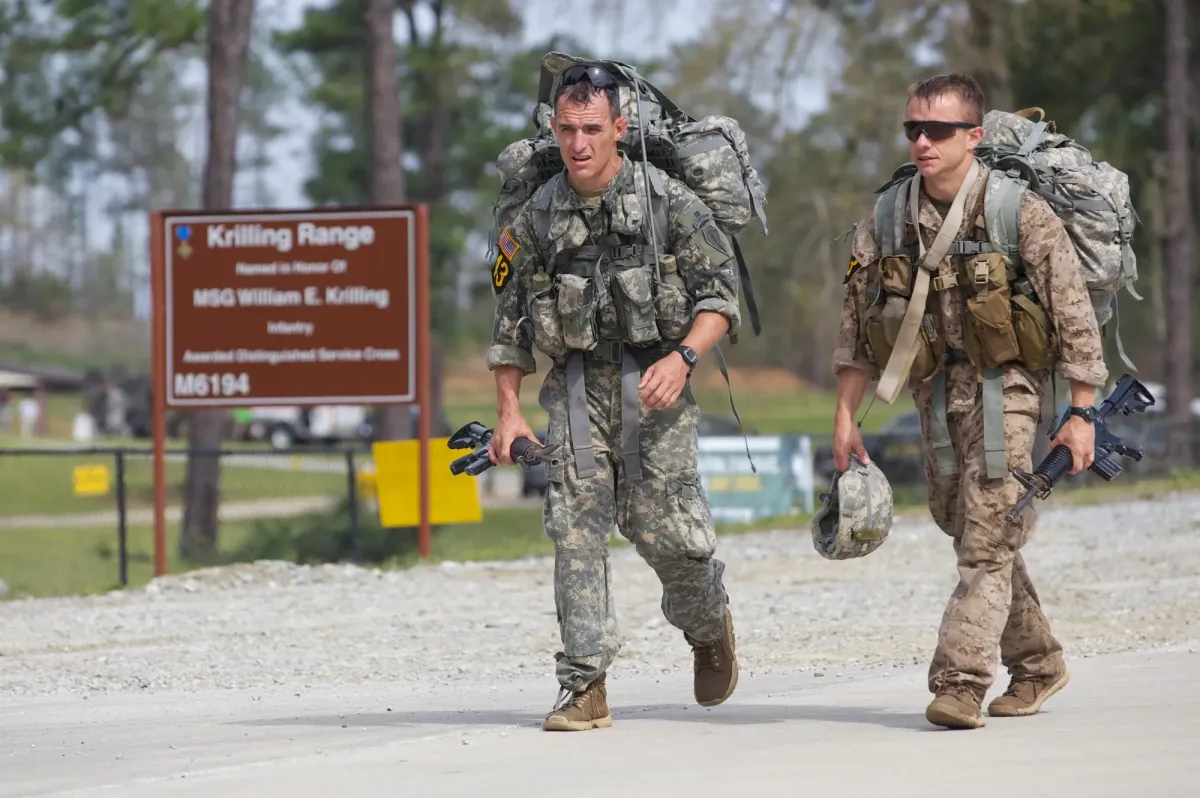
Loaded carries and rucking
These activities produce rapid, forceful loading, which signals the body to strengthen bone tissue. The common thread is rate of force: bone responds far more to fast, high-magnitude loading than to slow, steady effort. A single bound or a heavy ruck step delivers a sharper strain signal than minutes of easy movement. This is exactly why loaded carries and rucking are such efficient bone builders for tactical athletes, they combine external load with repetitive ground impact. Our rucking-focused programming, Dismount, is built around progressively loaded movement that develops this kind of skeletal resilience without spiking volume past what the bone can absorb. If you are newer to loaded carriers, our complete ruck training progression guide covers how to build gear, mileage, and load in the right order.
Moderate-Impact Activities
These still provide useful stimulus:
Running
Hiking
Step-ups
Strength training with external load
These are especially effective when performed consistently over time. Running deserves special mention here. Each footstrike loads the tibia, femur, and hips at one to three times bodyweight, and over thousands of repetitions per week that adds up to a powerful, if moderate, bone stimulus. The catch is that the same repetitive loading that builds bone will break it if mileage climbs faster than the skeleton can remodel. Structured running programs like Step Off! for newer runners, or 35M5M for advanced performance, manage that progression deliberately so bone density builds instead of breaking down. Running is also one of the most common tools tactical athletes use to lean out, and our guide to training for body composition and performance shows how to program it without shortchanging bone health.
Low-Impact Activities
These have limited bone-building effect:
Swimming
Cycling
Rowing
They are excellent for cardiovascular development, and they prove you can build endurance without running, but they do not produce enough skeletal loading to significantly increase bone density on their own. This is a critical point for anyone rehabbing an injury or building an aerobic base primarily through the bike or pool: you can develop an excellent engine while your bones quietly stay the same. That's fine as a phase, but it becomes a problem if low-impact work fully replaces weight-bearing training for months at a time. The fix isn't to abandon swimming or cycling, it's to keep at least some impact and loaded work in the week so the skeleton keeps getting the signal it needs.
Why Gradual Progression Matters
Bones adapt more slowly than muscles, tendons, or the cardiovascular system. The way muscles adapt to volume and intensity plays out over a few weeks. Even the way tendons adapt to load follows a shorter timeline than the skeleton does. This creates a common problem: athletes feel fit enough to train harder, but their skeletal system has not caught up yet.
This is one of the main reasons stress fractures occur. Here's the mechanism: every hard session creates tiny areas of micro-damage in the bone. In the right doses, that micro-damage is the signal, it triggers osteocytes to call in remodeling, and the bone comes back stronger. But when load climbs faster than that three-to-six-month remodeling cycle can repair the damage, the micro-cracks accumulate faster than they heal. That's a stress reaction, and left unchecked it becomes a stress fracture. As a rough guardrail, keeping weekly increases in mileage or ruck load modest, on the order of 10% or less, gives remodeling time to catch up.
When impact increases too quickly:
Micro-damage accumulates in bone tissue.
Remodeling cannot keep up with the stress.
The bone weakens temporarily.
A stress reaction or fracture develops.
Proper progression allows:
Micro-damage to trigger adaptation.
Remodeling to complete.
Stronger bone to form before the next increase in load.
The Role of Frequency and Consistency
Bone responds best to frequent, moderate loading rather than occasional extreme impact.
Short, repeated exposures to impact:
Stimulate bone formation.
Allow recovery between sessions.
Produce steady increases in bone strength.
For example:
Running or rucking several times per week is more effective than one extremely long session.
Small increases in load or volume produce better outcomes than sudden jumps.
Consistency over months and years is the main driver of durable skeletal adaptation. This is also why program-hopping undermines bone development more than almost anything else. Bone rewards the athlete who shows up three or four times a week for years, not the one who crushes a brutal block and then disappears. A structured plan removes the guesswork, it sequences impact, load, and recovery so the skeleton is always being nudged just past its threshold and then allowed to rebuild. If you want that progression handled for you, every plan inside our training programs is built on exactly this principle of consistent, progressive loading.
Age and Bone Adaptation
Bone adaptation is strongest during adolescence and early adulthood, when bone-building processes are most active. However, adaptation continues throughout life.
With age:
Bone remodeling slows.
Recovery takes longer.
The margin for error decreases.
But impact training still helps:
Maintain bone density.
Reduce fracture risk.
Preserve mobility and independence.
Strength training and weight-bearing aerobic work are especially important for older athletes.
For tactical athletes in their 30s, 40s, and beyond, this is non-negotiable. The window for easy bone-building closes after early adulthood, but the ability to maintain density never does, it just demands more deliberate loading. External-load work is the most reliable tool here, because it lets you keep applying a meaningful strain stimulus even when high-impact activity needs to be dialed back to protect joints. Strength-focused programming such as Mass Gainer 2.0 keeps that loading consistent and progressive as the years add up.
Practical Takeaways
If your goal is stronger, more resilient bones:
Include regular weight-bearing and impact activities.
Progress load and volume gradually.
Train consistently rather than sporadically.
Avoid sudden spikes in mileage, load, or intensity.
Support training with proper nutrition and recovery.
Bone strength is built the same way every other tactical quality is built: through repeated, well-managed stress applied over time, not isolated heroic workouts. Respect the timeline, your skeleton is remodeling on a three-to-six-month clock, far slower than your lungs or muscles, progress your load patiently, and keep impact and weight-bearing work in your week even when you're chasing other goals. Do that consistently and you build a skeleton that holds up under ruck, foot strike, and load for decades. For the bigger picture of how bone work fits alongside strength, conditioning and durability, our tactical fitness field manual pulls the whole system together.


