
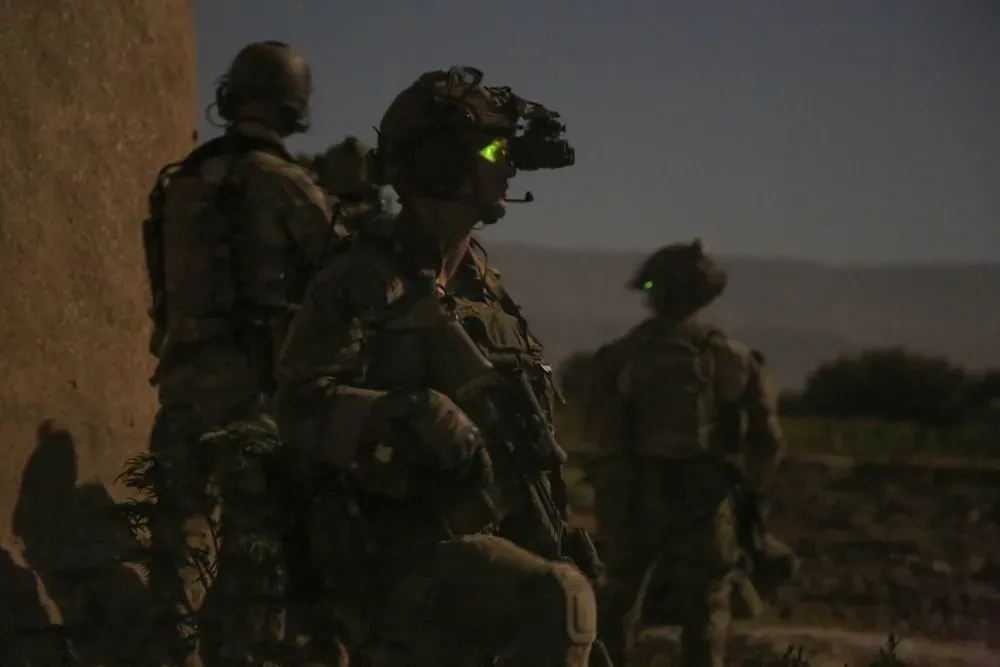
Marine Scout Sniper Training & the Scout Sniper School
What Marine Scout Sniper Training Involved and What Replaced It
Marine scout sniper training produced some of the most lethal precision marksmen the U.S. military has ever fielded, and in December 2023 the Marine Corps graduated its final class and retired the program. For more than eight decades, the Scout Sniper Basic Course turned hand-picked infantrymen into Hunters of Gunmen: Marines who could stalk within yards of an enemy, gather intelligence for days without being seen, and deliver a single decisive shot at extreme range. This guide breaks down what that pipeline actually demanded, selection, fieldcraft, marksmanship, and the mental discipline behind the scope, and explains how the capability lives on today under the new MOS 0322 Reconnaissance Sniper designation inside reconnaissance battalions and Marine special operations.
Summary
This article examines what Marine Corps Scout Sniper selection and training involved before the program closed, emphasizing marksmanship, stealth, reconnaissance, mental resilience, and disciplined precision. It outlines the curriculum pillars, advanced ballistics, camouflage and concealment, observation and reporting, scenario-based drills, and small-team tactics, that defined the course. The operational role centered on hidden intelligence gathering and surgical engagements that shaped broader maneuvers while minimizing collateral damage. It closes by explaining how the Marine Corps reorganized that capability under Force Design and the 0322 Reconnaissance Sniper MOS.
Selection and Sniper School
Becoming a Marine scout sniper was never a matter of volunteering off the street. Candidates were already infantry Marines, typically a Lance Corporal or above, hand-selected by their battalion to fill a billet in the Surveillance and Target Acquisition platoon before they ever reached the Scout Sniper Basic Course. Prerequisites were strict: a first-class Physical Fitness Test, a current rifle Expert qualification, a General Technical score of at least 100, vision correctable to 20/20, and a clean disciplinary record. Clearing a bar that high starts well before selection, which is why disciplined military training programs matter for anyone serious about this pipeline.
The course itself was a roughly two-and-a-half-month gauntlet, taught at schoolhouses including Camp Geiger and Camp Pendleton, built to break the unprepared, graduation rates hovered near 44 percent in the late 2010s, meaning more than half of every class washed out. New students were called PIGs (Professionally Instructed Gunmen), and only those who passed earned the title HOG (Hunter of Gunmen).
Curriculum and Core Techniques
The curriculum was far broader than pulling a trigger. Students mastered observation and memory through KIMS games, where they had seconds to study a tray of objects and later recall every detail, the same discipline that lets a sniper memorize a battlefield through a spotting scope. They learned range estimation by eye and by reticle, terrain analysis, sketching and reporting, land navigation, and the construction of detailed range cards. Scenario-based drills layered these skills under fatigue and time pressure, because in the field a scout sniper was an intelligence asset first and a shooter second. Teamwork was built into every event: snipers worked in two-Marine teams, splitting the roles of shooter and spotter and rotating constantly so each could do both.
Beyond Marksmanship: Ballistics and Mental Conditioning
Sniper training went far beyond basic marksmanship. Trainees learned to read and correct for windage, elevation, temperature, humidity, and the spin drift that pushes a bullet off line over distance, expressing every correction in minutes of angle or milliradians on the scope. A single missed wind call at 800 yards can move the round more than a foot, so students built and maintained data books, logging every shot to develop reliable dope for their rifle and ammunition.
The psychological load was just as demanding as the technical one. Holding a firing position motionless for hours, regulating breathing and heart rate, and committing to a cold-bore shot under stress required a level of composure that the course deliberately tested through sleep deprivation and graded, time-constrained problems. Building that kind of composure on purpose is exactly what structured tactical performance coaching is designed to develop for athletes preparing outside the schoolhouse.
Camouflage, Concealment, and Enemy Study
Camouflage and concealment separated the scout sniper from any other marksman. Students built their own ghillie suits and learned to move through open terrain so slowly and deliberately that trained observers scanning with optics could not detect them. The signature evaluation was the stalk: a candidate had to cover several hundred meters of exposed ground, reach a firing position within a set distance of graders armed with binoculars, and fire two blank rounds without being spotted, all while a walker stood near the target to pinpoint any movement. Beyond hiding, scout snipers studied enemy doctrine, weapons signatures, and movement patterns so they could interpret what they were watching and anticipate what the enemy would do next.
Operational Role and Intelligence Gathering
Scout snipers were most often employed in small teams as the eyes of an infantry battalion, attached to the Surveillance and Target Acquisition platoon. Their primary job was to gather intelligence and feed accurate, timely reporting back to commanders using structured formats such as SALUTE and SALT reports. By observing enemy positions, strength, and patterns from concealment, they gave a commander a picture no drone feed could fully replace. That same intelligence often shaped the battle long before a trigger was pulled.
A scout sniper team that stayed hidden while watching a key route or objective held a decisive advantage. Their reports could trigger artillery, an airstrike, or a shift in ground maneuver, and the mere suspicion that a sniper team was watching could freeze an enemy's movement entirely. This force-multiplier effect, the ability to shape a much larger fight from a single concealed position, is exactly why losing the dedicated capability at the battalion level drew sharp criticism from the sniper community when the program closed.
Precision Strikes
When a scout sniper did engage, precision was the point. The job was to neutralize a specific high-value target, a commander, a crew-served weapon, or a forward observer, with as little collateral damage as possible. Marine snipers worked weapons such as the bolt-action M40 series, the semi-automatic M110, and the .50 caliber M107, with effective engagements commonly reaching out to roughly 1,000 yards and beyond depending on the weapon and conditions. That surgical reach reduced risk to civilians and friendly forces and let a two-Marine team accomplish what would otherwise require a far larger element.
Combat Training and Versatility
Scout snipers trained well beyond the rifle. The pipeline reinforced patrolling, fieldcraft, communications, and the ability to operate independently far from support, because a team behind enemy lines had to solve its own problems. civilians chasing that same all-around capability often turn to programmed tactical fitness, and comparing the leading military training system alternatives is a practical way to find a plan that builds it.
They were trained to handle and maintain a range of weapons and optics and to integrate with the units they supported. This versatility, paired with the discipline to do nothing but watch for days, is what made a scout sniper team useful across the full range of an infantry battalion's missions.
Marksmanship Fundamentals and Technology Integration
Marksmanship remained the cornerstone the whole pipeline was built around. A scout sniper had to place a first-round, cold-bore hit at distance, in wind, often after a long and exhausting stalk, with no opportunity for a warm-up shot. That demanded a deep working knowledge of internal and external ballistics, a meticulously maintained data book, and the patience to wait, sometimes for hours, for the conditions and the target to line up. The skill was perishable, which is why qualified HOGs trained constantly to keep it sharp.
Snipers practiced at unknown distances and across changing conditions, learning to read mirage, dial corrections, and trust their dope when it mattered. Over the program's history the tools evolved, from iron sights and early glass to modern variable optics, laser rangefinders, and ballistic calculators, but the fundamentals never changed. The best scout snipers blended that technology with hard-won fieldcraft, using the math and the equipment to confirm what experience already told them rather than to replace it.
Continuous Training and Exercises
Because the skill degraded without repetition, qualified scout snipers trained continuously between deployments. Regular range time, stalk practice, and refresher work kept teams ready to deploy on short notice. This relentless maintenance of a difficult, perishable craft is part of what set Marine snipers apart and earned the community its reputation, names like Carlos Hathcock and Chuck Mawhinney becoming legends of the Marine sniper lineage.
Training exercises were built to mirror real missions as closely as possible, putting teams through extended field problems that combined movement, observation, reporting, and live fire under realistic stress. That hands-on repetition built the judgment a checklist never could. Scout sniper teams also worked alongside other elements in combined exercises, sharpening the coordination and communication that an embedded intelligence asset depends on.
Special Forces Training and Decision-Making
The closest thing to special operations in the scout sniper world was the demand for independent judgment far from help, and that thread now runs directly into where the capability landed. After the 2023 reorganization, school-trained snipers were concentrated in reconnaissance battalions and Marine Forces Special Operations Command, the genuine special operations side of the Corps. Before that shift, the discipline lived under the 0317 scout snipers MOS, the designation that defined the community for decades. Much of that reconnaissance expertise over laps with Marine Force Recon, the Corps' elite reconnaissance element that now operates in the same demanding space. Those Marines carry the MOS 0322 Reconnaissance Sniper designation and train through the Reconnaissance Training Center and the Marine Raider Training Center, while company-level precision fire at the infantry level is now handled by designated markmen.
The ability to think clearly and decide fast under pressure was always central to the role. A concealed sniper team made consequential calls with incomplete information, sometimes choosing not to shoot because the intelligence they were gathering mattered more than the target in their crosshairs. That discipline, knowing when to stay invisible and when to act, was drilled through graded, ambiguous scenarios designed to reward sound judgment over trigger pull.
Teamwork and Communication
Although a sniper team operated in isolation, it lived or died on communication. The shooter and spotter functioned as a single unit, with the spotter calling wind, ranging targets, and managing the team's reporting while the shooter stayed on the gun. Teams trained on field radios and reporting procedures so they could relay observations and call for support without compromising their position.
Clear, disciplined communication is what turned a hidden two-Marine team into a genuine combat multiplier. By feeding reliable information up the chain and coordinating with supporting arms, a scout sniper team extended its reach far beyond rifle range and tied its small footprint into the battalion's broader plan.
Conclusion
The Marine scout sniper earned a reputation as one of the most demanding and respected jobs in the Corps, and that legacy did not disappear when the schoolhouse closed its doors in 2023. That prestige carries the same weight in Marine culture as the iconic Marine dress blues, both signaling a standard the Corps holds itself to.
The pipeline forged Marines defined by patience, precision, fieldcraft, and judgment, qualities that still define the snipers now serving under the 0322 designation. Understanding what that training demanded is the best way to appreciate both the Marines who carried the title and the standard their successors are expected to meet.
For anyone drawn to the discipline behind the scope, the takeaway is less about the rifle than about the engine underneath it: relentless conditioning, mental resilience, and the capacity to perform a precise task while exhausted and under stress. That is the same foundation any serious tactical athlete is chasing, and it is exactly the kind of structured, selection-focused preparation that closes the gap between admiring the standard and being able to meet it.
FAQ
What are the core pillars of Marine Corps Scout Sniper training?
The Scout Sniper Basic Course curriculum centers on advanced marksmanship and ballistics; camouflage and concealment; observation, reporting, and reconnaissance; scenario-based drills; and small-team tactics. These pillars are reinforced by special-operations-style conditioning and the integration of modern technology and optics. Together, they build precision, stealth, and adaptability across terrains and weather, preparing snipers to operate effectively in complex, real-world missions.
How do Marine snipers shape operations beyond simply taking shots?
Their primary operational impact came from hidden intelligence gathering: observing enemy movements, positions, and patterns, then relaying accurate, timely reports that informed commanders' decisions. This intelligence can trigger decisive actions like airstrikes or maneuver shifts, disrupt enemy plans, and create psychological uncertainty. When they do engage, their precision strikes neutralize high-value targets with minimal collateral damage, amplifying the effects of broader joint and combined operations.
How are mental resilience and decision-making under stress developed in sniper training?
Training deliberately pushes candidates to their physical and psychological limits, cultivating discipline, patience, and the ability to remain calm under pressure. Repetition, scenario-based drills, and graded field problems. This mindset is as crucial as marksmanship, enabling snipers to wait for the right moment, process complex variables, and act decisively.
What role do environmental calculations and technology play in long-range precision?
Snipers mastered the physics of shooting by calculating windage, elevation, temperature, and humidity to predict bullet trajectory across distances and conditions. They blend these traditional ballistic fundamentals with advanced optics and modern tools, enhancing accuracy while retaining the fieldcraft to perform in austere environments. This fusion of precision math and technology ensures reliable, repeatable results even in adverse settings.
References
U.S. Marine Corps, "Scout Sniper Transition" message, Plans, Policies & Operations (PP&O), February 2023 - directed transition of Scout Sniper Platoons to Scout Platoons and establishment of MOS 0322 (Reconnaissance Sniper) under Force Design 2030.
Marine Corps Times, "Marines remove scout sniper platoons from infantry battalions" (2023).
Task & Purpose, "End of an era: The last class of Marine Scout Snipers graduates on Dec. 15" (2023).
Marine Corps Association, "Gone But Not Forgotten: Scout Snipers Memorialize a Century of Service," Leatherneck (2025).


