
Marine Dress Blues: A Complete Guide to the USMC Uniform
What Marine Dress Blues Mean: History, Symbolism, and Variants
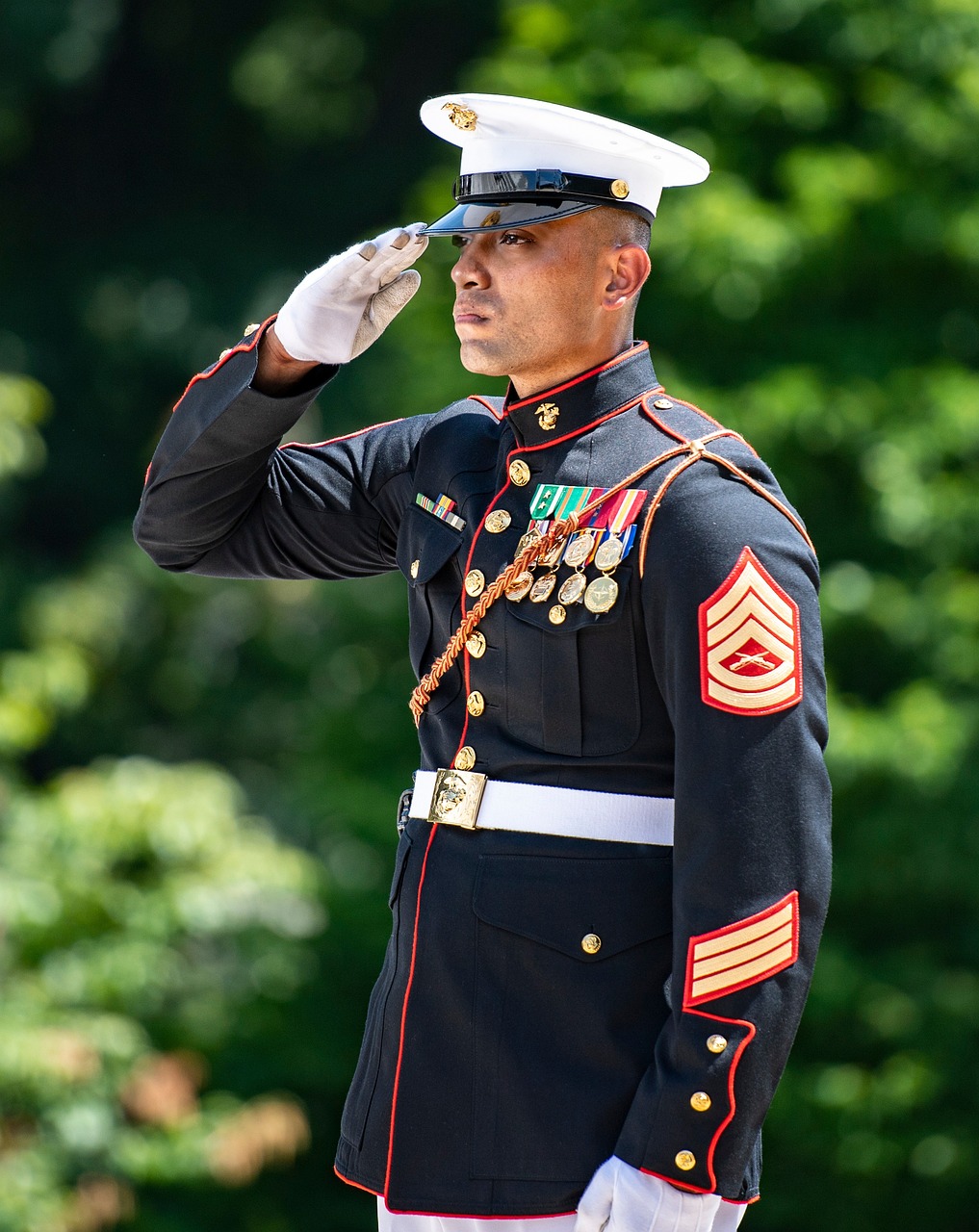
The Marine Dress Blues are one of the most recognizable uniforms in the world. The deep blue blouse and crisp white cover, also called the USMC dress blues or the Marine Corps dress blue uniform, are more than clothing; they are a symbol of American history and unwavering honor. This guide breaks down every element of the dress blue uniform: the blood stripe, the Eagle, Globe, and Anchor, the officer and enlisted differences, and the Bravo, Charlie, and Delta variants. Among all USMC uniforms, this one stands apart, and for most people it immediately signals discipline and respect.
But what does it all truly mean, and what do Marine uniforms look like up close? From the distinct high collar to the famous red "blood stripe" running down the trousers, every single element tells a story rooted in sacrifice and tradition. This uniform wasn't just designed to look sharp: it was crafted to communicate over 200 years of the Corps' identity in every stitch and button. Marines who wear this uniform are held to the same elite physical standards that define the Corps, and any athlete preparing for that standard can explore our CF ONE military training programs.
These details transform the uniform from a powerful image into a visual history you can read, turning a marine outfit into a story.
Tap any element to reveal its history. Compositions and wear regulations follow Marine Corps Uniform Regulations, MCO 1020.34H, with historical detail drawn from the National Museum of the Marine Corps and official USMC records.
What Are the Core Parts of the Dress Blue Uniform?
The dress blue uniform's primary components are its dark blue jacket and crisp white hat. In the Marine Corps, the jacket is formally called a blouse and the hat a cover. The blouse's distinctive high collar dates to the 19th century, when leather neck-stocks were worn to protect a Marine's neck from cutlass slashes, a tradition that earned Marines the enduring nickname "Leathernecks." This classic Marine dress uniform silhouette is instantly recognizable, and it has stayed essentially unchanged since the late 1800s.
On the cover and buttons you will find the Eagle, Globe, and Anchor (the EGA), the official emblem of the Corps. This symbol tells a story: the eagle represents service to the nation, the globe signifies the Marines' worldwide presence, and the anchor reflects their naval heritage and close ties to the U.S. Navy. How every component is positioned and worn is governed by the Marine Corps Uniform Regulations, the official order that keeps the dress blue uniform consistent across all USMC uniforms.
These pieces, the blouse and cover, adorned with a symbol of honor, form the uniform's unmistakable silhouette. Yet, the story continues down to the trousers, which feature one of the most visible symbols of leadership and sacrifice in the entire U.S. military. For marines and aspiring recruits who want to understand the fitness standards behind the uniform, the military fitness program FAQ addresses the most common questions about preparing for military physical requirements.
What Is the Meaning of the Famous "Blood Stripe"?
That powerful symbol on the trousers is the famous "blood stripe." Tradition holds that the scarlet stripe honors the memory of the Marine officers and non-commissioned officers (NCOs) who sustained heavy casualties during the Battle of Chapultepec in 1847. It serves as a permanent reminder of the high price of leadership on the battlefield.
Because of this respected tradition, the blood stripe is not worn by every Marine. It is reserved for those who hold leadership positions: Corporals, Sergeants, and all officer ranks. A non-commissioned officer is an enlisted Marine entrusted with leading and mentoring fellow Marines, a role central to the Corps' success, which is why the scarlet stripe appears only once a Marine reaches the rank of Corporal.
So, while every Marine wears the uniform with pride, that scarlet stripe is an immediate and powerful mark of a leader. It is one of the clearest visual distinctions you can spot, but it's not the only one that differentiates an officer's uniform from an enlisted Marine's.
How to Spot an Officer's Uniform vs. an Enlisted Marine's
Beyond shared pride, an officer's Dress Blues carry distinct elements that set them apart from an enlisted Marine's uniform. Both officers and enlisted NCOs wear the blood stripe, but an officer's stripe is noticeably broader (a single wide scarlet band) against the thinner stripe worn by enlisted leaders. On general officers it is wider still, making trouser striping one of the fastest ways to read a Marine's rank at a glance.
The most dramatic difference, however, is the sword. Marine officers are authorized to carry the Mameluke sword, a uniquely elegant blade with a curved design and an ivory-colored grip. This historic weapon commemorates the 1805 assault on Derna during the First Barbary War in North Africa, where Lieutenant Presley O'Bannon led Marines in the action the Corps still marks in its hymn. Enlisted NCOs also carry a sword for formal duties, but it is a straight-bladed, more traditional military design. These details are part of the marine officer uniform and the USMC officer dress uniform, especially during formal ceremonies.
Why Are There So Many Versions of the Dress Blues?
You may have noticed Marines sometimes wear brilliant white trousers with the iconic blue blouse. If you've wondered "do Marines wear white pants?", yes, in certain settings. This combination is the Blue-White Dress uniform, reserved for formal daytime events in warmer months, and it is a separate uniform family from Blue Dress rather than a version of it. Worn with full-size medals it is Blue-White Dress "A"; worn with ribbons it is Blue-White Dress "B." You will see it at special ceremonies, summer parades, and while on duty at the White House. It is never an all-white look: this variant always pairs a blue coat with white trousers.
When do Marines wear dress blues? Most often you will see the version most people picture: the midnight blue blouse worn with trousers. For enlisted Marines those trousers are sky blue, noticeably lighter than the blouse, which is exactly the contrast that makes the uniform so recognizable. Officers wear midnight blue trousers instead. Worn with ribbons, this is Dress Blue Bravo, the standard formal uniform for year-round wear and evening events such as the Marine Corps Birthday Ball. Worn with full-size medals it becomes Dress Blue Alpha, the most formal version. Think of Bravo as the Corps' equivalent of a classic tuxedo: always sharp, and appropriate for nearly any formal occasion.
For less formal duties or in warm climates, Marines can remove the blouse. This creates the Dress Blue Charlie and Dress Blue Delta uniforms, a practical shirt-sleeve look pairing the khaki shirt with blue trousers. The Dress Blue Charlie uses a long-sleeve khaki shirt and tie, while the Dress Blue Delta is its short-sleeve, warm-weather counterpart worn without a tie. Both keep a professional appearance without the formality of the wool blouse, and both serve as a uniform of the day as well as for parades and less formal functions.
Separate from the dress blue system, Marines also wear service uniforms. The USMC Service Alphas (often called "marine service alphas") feature the green coat and trousers, while the USMC Service Bravos use the shirt-and-tie configuration with green trousers. These are everyday professional looks distinct from the USMC dress blue uniform.
For the most formal nighttime occasions, there is also Marine Corps Evening Dress, a distinct mess-style uniform worn by officers and staff non-commissioned officers.
Regulations outline what uniforms Marines can wear in public; permissions depend on the event, location, and duty status. As a rule of thumb, the versions worn with ribbons (Blue Dress B and Blue-White Dress B) are authorized for liberty, while the medals versions (Blue Dress A and Blue-White Dress A) are not.
How to "Read" a Marine's Medals and Ribbons
A Marine's dress blue blouse is a visual record of their service and achievements, and you don't need to be an expert to read its story. The awards are arranged by "precedence", a strict order of importance set by Marine Corps regulations. Think of it like a resume, where the most significant accomplishments come first: on the dress blue uniform, the highest honors sit at the very top of the rack and closest to the center of the chest.
You may see two different ways these awards are displayed. For the most formal occasions, like the Marine Corps Birthday Ball or a state dinner, Marines wear full-sized medals. These are the classic, dangling medallions that add significant weight and ceremony to the dress uniform. Medals are what distinguish the "A" versions of each uniform from the "B" versions, and that single detail is enough to tell you how formal an occasion is.
On most other occasions, Marines wear ribbons, the small, colorful bars that represent the exact same awards. This is a practical system for displaying a career's worth of honors on less formal uniforms. Each ribbon corresponds to a specific medal, creating a clear and concise display for day-to-day wear.
Frequently Asked Questions
What is the difference between Dress Blue Alpha and Bravo?
Medals. Both use the blue blouse with blue trousers. Alpha is worn with full-size medals and is the more formal of the two; Bravo is worn with ribbons and is what you will see at most events, including the Birthday Ball. Bravo is also authorized for liberty, and Alpha is not.
Do Marines wear white pants with dress blues?
Yes, but that is a separate uniform rather than a version of Blue Dress. Blue blouse with white trousers is Blue-White Dress, worn for formal summer functions. With medals it is Blue-White Dress "A"; with ribbons it is Blue-White Dress "B."
Why are the trousers a different colour from the jacket?
Because enlisted Marines wear sky blue trousers under a midnight blue blouse, and that contrast is one of the defining features of the uniform. Officers wear midnight blue trousers that do match the blouse, which makes the trouser colour one of the quickest ways to tell an officer from an enlisted Marine at a distance.
Who is allowed to wear the blood stripe?
Corporals, Sergeants, and all officer ranks. It is not worn by junior enlisted Marines. Tradition holds that it honors the officers and NCOs who fell at the Battle of Chapultepec in 1847, which is why it marks leadership specifically.
What is the difference between Dress Blue Charlie and Delta?
Sleeves and tie. Charlie uses a long-sleeve khaki shirt with a tie or necktab; Delta uses a short-sleeve khaki shirt with no tie. Neither includes the blouse, and both are worn with blue trousers as a uniform of the day.
What sword do Marines carry with dress blues?
Officers carry the Mameluke sword, a curved blade with an ivory-colored grip that commemorates the 1805 assault on Derna during the First Barbary War. Enlisted NCOs carry a straight-bladed NCO sword.
More Than a Uniform: A Story of Honor You Can Now Read
Before, you may have simply seen an impressive uniform. Now, you see the story behind it. Three details do most of the work: the high collar, the blood stripe, and the medals. You recognize them not just as design elements, but as symbols with deep roots in the history of the Marine Corps service uniform and the USMC dress blues.
These details transform the US Marine Corps dress blue uniform into a living document. Each component is a chapter on honor, sacrifice, and leadership, connecting the individual Marine to a legacy stretching back centuries.
The next time you see a Marine in their Dress Blues, you won't just see an immaculate uniform. You will see a story of service and commitment, a story you now know how to read. The physical standards required to earn that uniform are built on a foundation of tactical conditioning, the training framework that prepares Marines for the sustained demands of service.
For those inspired to pursue that standard themselves, two resources on the Marine physical fitness test break down exactly what's required: mastering the Marine PFT covers the full test in depth, while the Marine Corps PFT calculator and guide helps you to estimate your score and identify where to focus your training.
References
Marine Corps Uniform Regulations, MCO 1020.34H. Headquarters, United States Marine Corps.
National Museum of the Marine Corps, historical collections on Marine Corps uniforms and the Mameluke sword.
United States Naval Academy, Object 17: Mameluke Sword from the Assault on Derna, Tripoli, 1805.


