
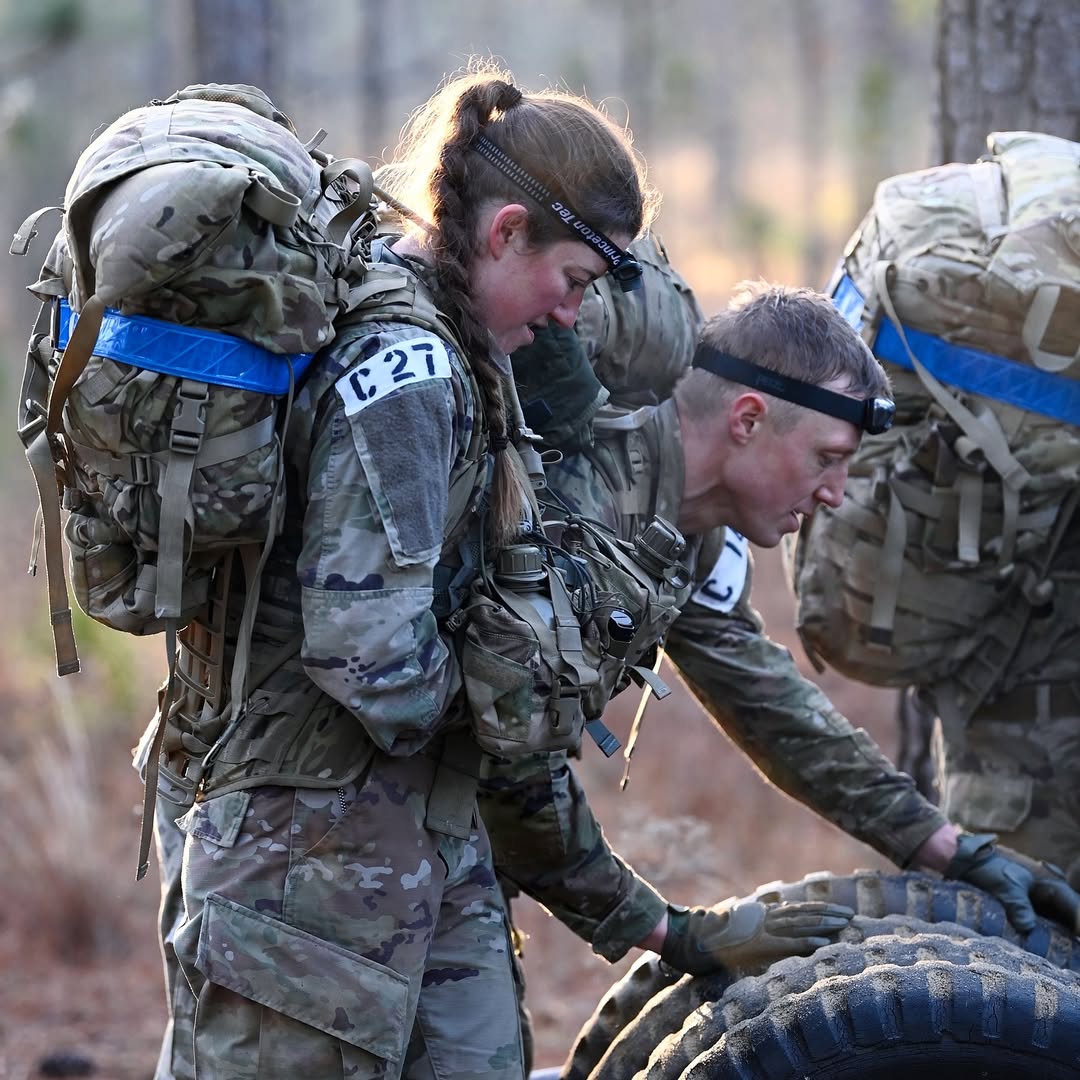
Managing Fatigue in Military Training: Perform Anyway
Why Fatigue Is the Real Test in Every Selection Pipeline
Fatigue is not a problem in military training pipelines. It’s the environment. Managing fatigue during military training pipelines is the skill that separates the candidates who finish from the ones who quit, and it's trainable. That's exactly why evidence based military fitness programs treat fatigue as a variable to manage rather than an obstacle to avoid.
From selection to advanced courses, fatigue is constant:
Limited sleep
High physical output
Repeated stress exposure
Minimal recovery
The mistake most candidates make is trying to avoid fatigue. That’s not the objective.
The objective is to:
Understand fatigue, manage it, and perform under it
This guide breaks down:
What fatigue actually is
The difference between acute and chronic fatigue
How recovery works in high-stress environments
How to make decisions when fatigued using a structured framework
Fatigue isn't about feeling fresh, it's about staying functional when sleep, food, and rest are all rationed. Every selection course is engineered to degrade you faster than you can recover, then measure what's left. Candidates who treat fatigue as a failure state burn out early. The ones who finish understand the mechanics: what fatigue is, how it accumulates, and how to keep making sound decisions while carrying it. That shift, from avoiding fatigue to operating inside it, is the entire game. If you're comparing where to build that skill, our breakdown of Combat Fitness compared to other programs weighs how each program prepares you to operate under fatigue instead of simply chasing intensity. Along the same lines, our roundup of the best tactical training program alternatives compares them specifically on whether they build real fatigue tolerance.
What Is Fatigue?
Fatigue is a reduction in your ability to produce force, sustain effort, or maintain performance.
It is not just “feeling tired.”
It includes:
Muscular fatigue
Neurological fatigue
Psychological fatigue
And in military environments, these stack together. This stacking is what makes pipeline fatigue different from ordinary gym tiredness. A hard lifting session produces mostly peripheral fatigue that clears in a day or two. A selection week layers metabolic load on top of sleep loss, caloric deficit, and constant cognitive threat, so peripheral, central, and psychological fatigue compound at once. The result is non-linear: your legs feel heavy, your reactions slow, and your motivation craters at the same time. Recognizing which layer is dominant in a given moment is the first step toward managing it instead of being buried.
Types of Fatigue
1. Peripheral (Muscular) Fatigue
Localized to muscles
Caused by repeated contractions, metabolic stress
2. Central (Neurological) Fatigue
Reduced neural drive from the brain
Slower reaction times
Decreased coordination
3. Psychological Fatigue
Reduced motivation
Increased perceived effort
Decision-making degradation
In selection pipelines, you are rarely dealing with just one. You are dealing with all three, simultaneously. In practical terms, central fatigue is the one most candidates underestimate. Peripheral fatigue is obvious, muscles burn and slow down. But reduced neural drive shows up quietly: a half-second-late reaction on an obstacle, a sloppy weapon manipulation, a missed instruction. Those small lapses cost time, points, and occasionally safety. Psychological fatigue then amplifies everything, inflating perceived effort until a routine task feels maximal. Knowing the three layers feed each other explains why pushing harder rarely fixes a bad day, and why a strategic adjustment usually does.
Acute vs Chronic Fatigue
Understanding timelines is critical for performance.
Acute Fatigue
Short-term
Caused by recent training or events
Necessary for adaptation
Examples:
After a long ruck
After interval sessions
After a high-output training day
Chronic Fatigue
Long-term accumulation
Occurs when recovery is insufficient
Signs:
Persistent soreness
Declining performance
Poor sleep quality
Irritability
Loss of motivation
Key Difference
Acute fatigue = productive stress
Chronic fatigue = unmanaged stress
In military pipelines, you will always carry some fatigue.
The goal is to:
Prevent acute fatigue from turning into chronic fatigue before critical events
The line between productive acute fatigue and destructive chronic fatigue is exactly where overtraining lives. The 2013 joint consensus statement from the European College of Sport Science and the American College of Sports Medicine (Meeusen et al.) separates short-term functional overreaching, which improves performance after recovery, from non-functional overreaching and overtraining syndrome, where performance stays suppressed for weeks. The warning signs are the chronic-fatigue markers listed above. For a candidate, crossing that line before a course start is often unrecoverable in the time available, which is why pre-selection load management matters as much as the training itself.
What Is Recovery?
Recovery is the process by which your body:
Repairs tissue
Restores energy systems
Rebalances the nervous system
It is not passive. It is an active process influenced by behavior and environment. Getting that process right is what separates candidates who bounce back from those who slowly decline, which is why treating recovery as a performance multiplier matters more than any single hard session.
Primary Recovery Drivers
Sleep quality and duration
Nutrition (calories, carbohydrates, protein)
Hydration
Stress management
Movement (active recovery)
In military pipelines, most of these are constrained.
Which means:
Recovery is not optimized, it is managed.
The Reality of Military Training Pipelines
Most traditional recovery advice breaks down in this environment.
You will face:
Sleep restriction
Caloric deficits
Environmental stress (heat, cold, terrain)
Repeated physical demands
This means:
You cannot eliminate fatigue
You cannot fully recover
So the goal shifts:
From maximizing recovery → to managing performance under incomplete recovery
This is the same problem operators face in the field, where training at high operational tempo means holding capacity together across back-to-back demands with almost no recovery built in.
Training Load Friction Model
Fatigue doesn’t exist in isolation. It interacts with total life and environmental stress.
Friction includes:
Sleep deprivation
Mental stress
Environmental conditions
Load carriage
Nutrition gaps
As friction increases:
Your ability to recover decreases
The same workload produces more fatigue
Sports science quantifies this with the acute:chronic workload ratio (Gabbett, 2016): recent load divided by your longer-term baseline. Spike that ratio, a sudden volume jump after a deload, or a friction-heavy week, and injury and breakdown risk climbs sharply. The friction model is the field version of the same idea. If your chronic baseline is a comfortable 30 km of rucking per week and a course drops 60 km on you while you sleep four hours a night, you're running an acute:chronic ratio near 2.0 in the worst possible conditions. That's the math of a blown-out candidate.
Example
Same task:
8 km ruck
Low friction:
Fed, rested, low stress
→ manageable
High friction:
Sleep-deprived, underfed, stressed
→ significantly higher fatigue cost
Key Insight
Fatigue is not just about what you do, it’s about the context you do it in.
Decision Framework for Training Under Fatigue
This is the most important section. When fatigued, your ability to make good decisions drops.
So you need a framework. The reason a framework matters is that fatigue attacks the exact faculty you'd normally use to manage it. A rested athlete backs off when something feels wrong; a depleted one rationalizes, ignores warning signs, and pushes into injury. A pre-decided sequence removes judgment from the moment of weakness. You run the steps mechanically, type, performance-versus-effort, recovery state, intent, adjustment, reassess, instead of negotiating with yourself at 0400 on three hours of sleep. The framework isn't about thinking harder under fatigue. It's about needing to think less.
Step 1: Identify the Type of Fatigue
Ask:
Is this acute (short-term)?
Or chronic (accumulated)?
If acute:
→ You can often push
If chronic:
→ You need to adjust
Step 2: Assess Performance vs Effort
Ask:
Is performance stable?
Or declining?
If effort is high but performance is stable:
→ manageable fatigue
If effort is high and performance is declining:
→ warning sign
Step 3: Evaluate Recovery Constraints
Ask:
How much sleep am I getting?
Am I eating enough?
Is stress elevated?
If recovery is compromised:
→ reduce additional stress where possible
Step 4: Determine Training Intent
Not every session should be maximal.
Define:
Is this a key session?
Or a supporting session?
Step 5: Make the Adjustment
Options:
Maintain (if fatigue is manageable)
Reduce intensity
Reduce volume
Convert to recovery session
Step 6: Reassess Within 24–48 Hours
Fatigue fluctuates.
What matters is the trend, not a single session.
Performance vs Survival Mode
In pipelines, many candidates shift into survival mode.
Signs:
Just getting through sessions
No focus on execution quality
Increasing mistakes
This is dangerous.
Because:
Poor movement increases injury risk
Poor decisions compound fatigue
Picture day nine of a selection course: a candidate stops driving through reps and starts merely surviving them. Their ruck pace holds, but foot placement on broken ground gets lazy, the pack rides wrong, and shooting fundamentals slip. None of it fails them outright, until a rolled ankle on a root or a safety violation ends the course in one instant. Survival mode feels like grit, but it's the moment execution quality quietly collapses. Holding standards under fatigue isn't ego; it's the cheapest insurance against the injuries and errors that wash people out.
The goal is:
Maintain performance standards, even under fatigue
Practical Fatigue Management Strategies
None of these strategies remove fatigue, they buy efficiency at the margins, and in a constrained environment the margins decide outcomes. The principle running through all of them is the same: spend your limited recovery capacity on the inputs with the highest return, and stop wasting it on the ones you can't change. You can't control the course schedule, the weather, or the chow hall. You can control how you sleep when given the chance, how you fuel, how you pace, and how much avoidable stress you pile on yourself between events.
1. Prioritize Sleep When Possible
Even small improvements matter:
30–60 minutes more sleep
Naps when available
Sleep is the highest ROI recovery tool.
2. Fuel for the Work Required
Even in constrained environments:
Prioritize carbohydrates for performance
Maintain protein intake
Low energy availability accelerates fatigue.
3. Control What You Can
You can’t control everything.
But you can control:
Effort distribution
Pacing
Execution quality
4. Avoid Unnecessary Fatigue
Common mistake:
Adding extra work on top of already high stress
More is not better here. Better is better. This is precisely why harder training backfires: piling volume onto an already depleted system degrades the performance you're trying to protect.
5. Maintain Movement Quality
Fatigue degrades:
Mechanics
Coordination
Focus on:
Efficient movement
Proper pacing
Technique under fatigue
6. Build Fatigue Tolerance in Training
Before selection:
Introduce controlled fatigue
Simulate density
Practice decision-making under stress
But:
Do not live in constant fatigue
The Balance: Adaptation vs Breakdown
All fatigue management comes down to one balance:
Expose yourself to fatigue → without allowing it to accumulate uncontrollably
Too little fatigue:
→ underprepared
Too much fatigue:
→ breakdown
The best candidates:
Experience fatigue
Understand it
Manage it
Perform anyway
Common Mistakes
1. Trying to Eliminate Fatigue
Impossible in this environment.
2. Ignoring Chronic Fatigue
Short-term pushing becomes long-term regression.
3. Overtraining Before Selection
Many candidates arrive already fatigued.
This is one of the biggest errors.
4. Poor Decision-Making Under Fatigue
Fatigue reduces:
Judgment
Awareness
Which leads to:
Bad pacing
Poor effort distribution
Increased injury risk
How This Applies to Tactical Athletes
Military pipelines are unique because:
Performance is required under fatigue
Recovery is limited
Stress is continuous
This means:
Training must prepare you for fatigue
But also protect long-term capacity
Generic programs fail because they:
Ignore fatigue accumulation
Ignore recovery constraints
Ignore decision-making under stress
This is the gap our programming is built to close. Tactical athletes, military selection candidates, law enforcement, and first responders, don't train in ideal conditions, so training that assumes ideal recovery sets them up to fail. The same principles carry directly across professions, which is why managing fatigue in law enforcement draws on the exact recovery and decision-making constraints selection candidates face. Effective preparation deliberately rehearses degraded states: controlled fatigue exposure, decision drills under stress, and density work that mirrors operational tempo, all periodized so the athlete builds tolerance without arriving at the start line already broken. The objective is never to glorify suffering. It's to make fatigue familiar enough that, on the day it counts, it's survivable.
Final Takeaway
Fatigue is not the enemy. Mismanaged fatigue is.
If you understand:
What fatigue is
How it accumulates
How recovery works
How to make decisions under fatigue
You gain a massive advantage.
Because most candidates:
Either avoid fatigue
Or drown in it
Very few learn how to operate inside it.
FAQ Section
What is fatigue in military training?
Fatigue is a reduction in physical, neurological, and psychological performance caused by accumulated stress from training and environment.
How do I know if my fatigue is too high?
Signs include declining performance, persistent soreness, poor sleep, irritability, and reduced motivation.
Can you fully recover during a military pipeline?
No. Recovery is limited. The goal is to manage fatigue, not eliminate it.
What is the difference between acute and chronic fatigue?
Acute fatigue is short-term and expected. Chronic fatigue builds over time and negatively impacts performance.
How do you train to handle fatigue?
Gradually expose yourself to higher training density and controlled fatigue while maintaining recovery between phases.
What is the biggest mistake candidates make?
Arriving at selection already fatigued from excessive training and poor load management.
References
Gabbett, T. J. (2016). The training–injury prevention paradox: should athletes be training smarter and harder? British Journal of Sports Medicine, 50(5), 273–280.
Meeusen, R., Duclos, M., Foster, C., Fry, A., Gleeson, M., Nieman, D., Raglin, J., Rietjens, G., Steinacker, J., & Urhausen, A. (2013). Prevention, diagnosis, and treatment of the overtraining syndrome: Joint consensus statement of the European College of Sport Science and the American College of Sports Medicine. Medicine & Science in Sports & Exercise, 45(1), 186–205.


