
How to Maintain Fitness on Deployment (No Gym Needed)
What to Protect, What to Let Go
High operational tempo changes everything. The training schedule that worked at home station doesn't survive contact with a real operational environment: limited time, physical demands outside the gym, irregular sleep, and stress loading that never shows up in a training log. Whether the trigger is a surge, a field exercise, or a full deployment, the question is the same, how do you maintain fitness when the conditions that supported your program are gone?
The athletes who come out of high-tempo periods with their fitness largely intact are not the ones who found ways to maintain their full training program. They're the ones who made deliberate, accurate decisions about what to protect and what to set aside. Athletes who want programming already designed around these operational realities can explore our CF ONE deployment-ready programs. They understood that maintenance under constraint looks different from development under ideal conditions, and they adjusted without ego.
This is that framework.
The Two-Category Decision
When operational tempo increases, every element of your training program falls into one of two categories: worth protecting, or acceptable to reduce. Making that categorization before the high-tempo period starts, rather than figuring it out reactively in the middle of it, is what allows effective maintenance.
Worth protecting: aerobic base. The aerobic system detrains faster and more consequentially for tactical performance than most strength qualities. A minimum of two aerobic sessions per week, even twenty to thirty minutes each, substantially slows aerobic detraining. This is the highest-value protective investment during high-tempo periods.
There's a physiological reason aerobic capacity sits at the top of the protect list. Mujika and Padilla's detraining research (2000) shows that maximal oxygen uptake falls measurably within the first two weeks of insufficient stimulus, faster than most strength qualities erode. The same body of work shows trained athletes never drop all the way back to untrained levels, and that even a sharply reduced dose holds the line: Hickson and Rosenkoetter (1981) found that cutting training frequency while keeping intensity high preserved aerobic power. Two honest sessions a week isn't a compromise. It's the evidence-backed maintenance floor.
Worth protecting: baseline strength patterns. Two heavy compound strength sessions per week maintain strength in trained athletes almost indefinitely. The sessions don't need to be elaborate, a squat or deadlift pattern and a pressing or pulling pattern, pushed to reasonable effort. That's sufficient.
Acceptable to reduce: volume, accessory work, hypertrophy-focused training, conditioning circuits beyond basic aerobic maintenance. These are the development tools that belong in the preparation phase, not the maintenance phase. For athletes who want a program structure specifically designed for deployment cycles, the deployment training program buying guide walks through how to evaluate and select a plan that prioritizes the right qualities for operational environments.
Minimum Effective Maintenance Protocols
Strength maintenance under high operational tempo: two sessions per week of thirty minutes each. Each session covers one lower body compound movement and one upper body movement. Three to four sets per movement at eighty to eighty-five percent of normal working load. Progressive loading is not the goal, the goal is stimulus maintenance.
Aerobic maintenance: two sessions per week of twenty to thirty minutes at moderate intensity. Running, cycling, rowing, whatever is accessible. This is the minimum contact with aerobic stimulus required to prevent meaningful detraining in trained athletes. Three sessions per week is better. Two is the floor.
The reason these minimums work is that maintenance and development are different jobs. Building fitness demands progressive overload and accumulated volume. Holding fitness demands only that you keep touching the stimulus often enough that the body has no reason to give the adaptation back. That's why load quality matters more than session count here: one hard, brief squat-and-press session protects more strength than three easy, padded ones. Keep the intensity honest, keep the frequency consistent, and let everything else go without guilt.
How Long Does the Minimum Dose Hold?
The obvious follow-up question, and one most maintenance advice avoids: this works for how long?
Longer than most people expect. The Department of Defense's Human Performance Resources Center, summarizing the reduced-training literature, reports that aerobic fitness can be maintained for around fifteen weeks on two sessions per week of roughly thirteen to twenty-six minutes, and that strength can be maintained for around thirty-two weeks on a similarly reduced dose, provided intensity is held.
Two things follow from that. First, a standard rotation sits inside those windows, which means the framework on this page isn't a holding action against inevitable decline, it's a genuine plan for the duration. Second, the variable those numbers depend on is intensity, not volume. Reduce your sessions and keep them hard and the clock runs long. Reduce the effort and it doesn't matter how often you show up.
What to Use When There's No Gym
"Whatever is accessible" is true and useless. Here is what accessible usually means.
Figure 1.1 - Field substitutions by movement pattern when no gym is available. Lower compound, upper push, upper pull, aerobic and loaded carry, with the equipment actually found downrange and the two items worth packing. Sources: Lopes et al., SAGE Open Medicine 7, 2019; Soligon et al., European Journal of Applied Physiology 120, 2020; Pandolf, Givoni & Goldman, Journal of Applied Physiology 43(4):577–581, 1977.
Two things worth putting in a bag before you go: a set of resistance bands and a suspension trainer. Between them they weigh under two kilos, need only an anchor point, and cover every pulling pattern, which is the one category that genuinely disappears without equipment.
And the mindset point underneath all of it: the constraint downrange is rarely equipment. It's a ruck, a bar to hang from, and something heavy in a bag, and that covers the entire protect list on this page.
The combined time investment for minimum effective maintenance: approximately ninety to one hundred twenty minutes per week, across four sessions. This is achievable in most operational environments. For answers to common questions about how to maintain readiness across deployment cycles, the deployment training program FAQ covers the most important variables to understand before and during a deployment. It's not the full program. It's the line between maintaining fitness and losing it.
Using Operational Activity as Training
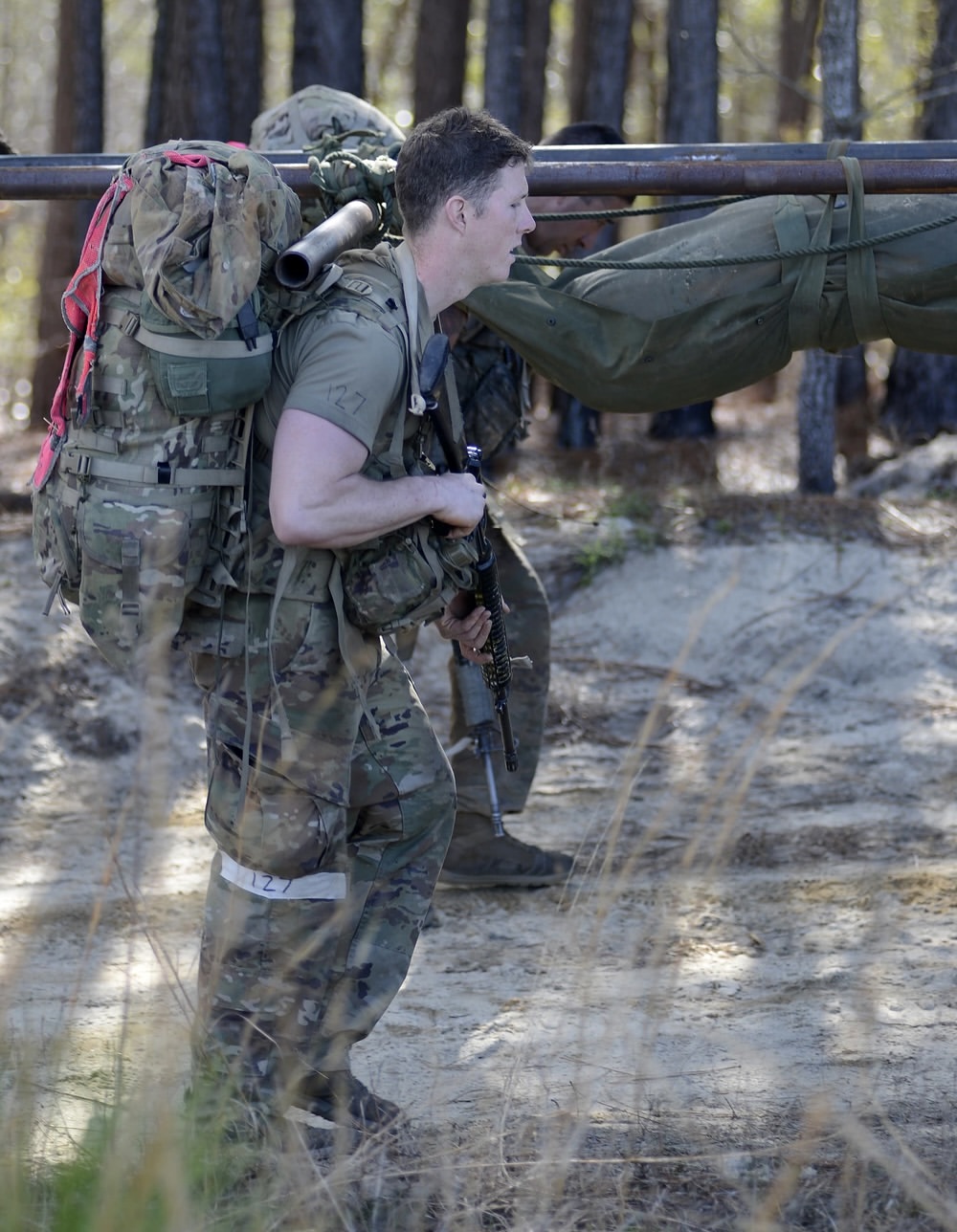
During genuinely high-tempo operational periods, field exercises, sustained operations, active deployment, operational activity itself contributes to fitness maintenance in ways that should be acknowledged and accounted for. Extended foot movement with load is aerobic training. It counts. Repeated load-bearing tasks maintain structural conditioning. The physical demands of operational work, even when they don't feel like training, are imposing a training stimulus that reduces the detraining rate and supplements whatever dedicated training occurs.
The practical move is to log operational work honestly, the way you'd log a session. A six-mile foot movement under load is an aerobic and structural training day, not a rest day, and it should count as one when you decide whether you still owe yourself a dedicated workout. This protects you from two opposite mistakes: writing off the job's physical cost as "not real training," and stacking a full session on top of an already brutal operational day and calling the resulting overreach discipline.
This doesn't mean operational activity replaces training. It means that during the periods when dedicated training is genuinely impossible, the physical demands of the job are slowing the detraining clock. Understanding what training readiness is, and how readiness fluctuates based on total stress load, not just dedicated training, explains why operational activity counts toward the readiness equation. When a training window does appear, it's starting from a less degraded baseline than complete inactivity would suggest.
Managing Energy Expenditure and Nutrition
High operational tempo typically involves elevated total energy expenditure from operational activity combined with irregular meal access and suppressed appetite from stress. This combination, high expenditure, inadequate intake, accelerates fitness loss faster than reduced training volume alone.
During high-tempo periods, eating deliberately is a performance maintenance strategy, not a comfort. Total energy will often run short, and that's exactly when protein becomes non-negotiable.
Mettler and colleagues (2010) put twenty resistance-trained athletes into a two-week calorie deficit at 60 percent of their habitual intake, split between a normal-protein group at about 1.0 g/kg and a high-protein group at about 2.3 g/kg, both training as usual. The normal-protein group lost 1.6 kg of lean mass. The high-protein group lost 0.3 kg, roughly five times less. Fat loss and performance were essentially the same between groups; the protein didn't cost them anything on the way down.
One honest note from the same study: the high-protein group reported higher fatigue. Eating that way in a deficit is not comfortable, and it is still the right call when the alternative is coming home smaller.
The working target is a minimum of one hundred thirty to one hundred sixty grams per day for a seventy-five to eighty kilogram operator, even when appetite is suppressed. Lean on protein-dense, calorie-dense foods that survive an operational environment, meat, nuts, protein bars, whole-fat dairy, and prioritize them over lighter options when food access is limited.
There's a line worth naming here. Eating short for a hard week is a training problem you solve with better food choices. Running a significant deficit for months, on top of high output and broken sleep, is a different thing, it drives hormonal disruption, bone density loss and immune suppression, and it doesn't announce itself. If you're coming off a long rotation having lost meaningful weight you didn't intend to lose, that's worth a conversation with medical rather than something to train your way out of.
Hydration is the other frequently neglected variable, and it moves faster than anything else on this page. A fluid loss of around two percent of bodyweight is the level the American College of Sports Medicine position stand (Sawka et al., 2007) ties to measurable cognitive and physical performance decline, and for a ninety-kilogram operator that is under two litres, which a hot day in kit will take out of you before lunch. That impact is more immediate and more significant than the impact of a missed training session. Drink water.
For athletes managing fatigue under poor recovery conditions specifically, managing fatigue with poor recovery addresses how to sustain training quality when the recovery environment is outside your control.
Protecting Sleep Under Operational Stress
Sleep is the recovery variable operational tempo attacks first and hardest, and it's the one most likely to quietly undo the rest of your maintenance plan. You'll rarely control how much you get. You can often control its quality and your response to its loss. Anchor sleep whenever the schedule allows rather than chasing a fixed bedtime, bank rest in the windows that exist, and treat short, deliberate naps as a legitimate tool, not weakness. When sleep is genuinely compromised, pull back training intensity before you pull back frequency, the goal is to keep the stimulus without digging a recovery hole you can't climb out of.
The Re-Entry Strategy After High Tempo
Fitness loss during high operational tempo periods is normal and expected. The athletes who return to their pre-deployment or pre-high-tempo fitness levels fastest are those who manage re-entry intelligently rather than trying to immediately resume full program volume.
The first week post-high-tempo is movement restoration and baseline reassessment, not full volume training. Muscle memory for strength movements returns quickly, within two to three weeks, but connective tissue resilience and work capacity require graduated re-exposure. The common mistake is loading full program volume in week one based on retained movement quality and residual strength, producing overuse stress on tissues that haven't been progressively loaded in weeks.
Figure 1.2 - Four-week re-entry ramp after a high-tempo period. Weekly training volume from 50–60% to 100%, with the session focus and the tissue quality still lagging at each stage. Sources: Bohm, Mersmann & Arampatzis, Sports Medicine – Open 1:7, 2015; Heinemeier et al., The FASEB Journal 32(9), 2018.
The trap is in week two. Strength and movement quality come back fast enough that you feel ready, and tendon and connective tissue adaptation is on a slower clock than either. The people who get hurt after a rotation are almost never the ones who came back weak, they're the ones who came back feeling strong and believed it.
A practical re-entry: week one at fifty to sixty percent of normal training volume. Week two at sixty to seventy percent. Week three at eighty to ninety percent. Full program from week four. The post-deployment training phase guide provides a structured framework for this exact re-entry process, including how to sequence the return of strength, aerobic, and conditioning work after an extended operational period.
Adjust based on how recovery markers respond, not based on how quickly you want to be back.
For athletes looking for the sibling post covering the time-based constraint specifically, training with limited time availability applies the same minimum-effective-dose logic to the thirty to forty-five minute training windows that still exist even during high operational tempo.
Frequently Asked Questions
How fast do I actually lose fitness during a high-tempo period with no training?
Faster than you'd like, and not evenly. Aerobic markers start moving almost immediately, plasma volume drops within the first couple of days, and measurable declines in maximal oxygen uptake show up within the first two weeks of no stimulus. Strength declines more slowly, meaningful strength loss typically takes three to four weeks of complete inactivity. Neuromuscular patterns are retained longer than either. Regular minimal training stimulus, even very reduced, dramatically extends the maintenance period.
Should I train on the day before a major operation or field exercise?
No. The day before a significant physical operational event is a rest or very light movement day. Any meaningful training the day before will contribute to accumulated fatigue without producing fitness benefit on that timeline. Arrive to the operation fresh, not loaded with yesterday's training fatigue.
What's the most efficient single exercise for fitness maintenance in austere environments?
A loaded carry, sandbag, ruck, or any available load, at a pace that keeps heart rate in a moderate aerobic range. It provides simultaneous aerobic, structural, and strength-endurance stimulus with no equipment requirements beyond something to carry. If no load is available, bodyweight circuit training covering push, pull, squat, and hinge patterns.
How do I prevent fitness loss during a 30-day deployment with no gym access?
Prioritize two things: aerobic maintenance through running or rucking, and bodyweight strength maintenance through daily or near-daily compound bodyweight training, push-ups, pull-ups if any bar is available, lunges, and loaded carries using operational gear. Consistent daily exposure to both, even at reduced volume, will preserve the majority of fitness across a thirty-day period.
Will I lose muscle during a long deployment, or just strength and conditioning?
Some lean mass loss is likely over a long deployment, driven more by the energy deficit and disrupted sleep than by the drop in training itself. That's why protein intake and any available resistance stimulus matter so much in the field. The encouraging part: trained muscle rebuilds faster than it was first built, so the mass you lose over months tends to return over weeks once normal training and eating resume. Protect strength and protein while you're out, and the muscle largely takes care of itself on the way back.
References
Hickson, R. C., & Rosenkoetter, M. A. (1981). Reduced training frequencies and maintenance of increased aerobic power. Medicine & Science in Sports & Exercise, 13(1), 13–16.
Mettler, S., Mitchell, N., & Tipton, K. D. (2010). Increased protein intake reduces lean body mass loss during weight loss in athletes. Medicine & Science in Sports & Exercise, 42(2), 326–337.
Mujika, I., & Padilla, S. (2000). Detraining: Loss of training-induced physiological and performance adaptations (Parts I & II). Sports Medicine, 30(2), 79–87; 30(3), 145–154.
Sawka, M. N., Burke, L. M., Eichner, E. R., Maughan, R. J., Montain, S. J., & Stachenfeld, N. S. (2007). American College of Sports Medicine position stand: Exercise and fluid replacement. Medicine & Science in Sports & Exercise, 39(2), 377–390.


