
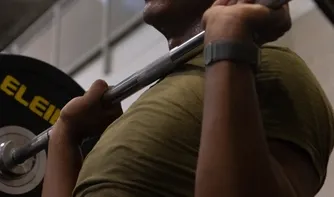
Front Squat Alternatives: 8 Best Swaps | Combat Fitness
Front Squat Alternatives: The Best Substitutes (Including No-Mobility and Knee-Friendly Options)
The best front squat alternative for most lifters is the goblet squat. Behind it come the Zercher squat, safety-bar squat, landmine squat, heels-elevated back squat, belt squat, dumbbell front squat, and front-foot-elevated split squat. Each one keeps what makes the front squat worth doing: an upright torso, heavy anterior core demand, and quad-dominant loading.
We program these swaps into our tactical fitness programs whenever an athlete’s wrists, shoulders, or knees won’t tolerate the front rack. This guide covers why each front squat substitute works, which ones suit mobility limits and bad knees, your barbell, dumbbell, and machine options, and how to program the swap so the training effect carries over.
The quick list:
Goblet squat: the default swap, no wrist demand.
Zercher squat: the heaviest front-loaded barbell option.
Safety-bar squat: best for cranky shoulders.
Landmine squat: the most knee-friendly loaded pattern.
Heels-elevated back squat: maximum quad bias on a barbell.
Belt squat: leg loading with zero spinal load.
Dumbbell front squat: the same pattern, lighter and wrist-friendly.
Front-foot-elevated split squat: single-leg quad strength.
Key Takeaways:
The front squat is usually limited by the front-rack position, not the legs, so the right alternative removes the rack demand and keeps the upright, quad-dominant pattern.
The goblet squat and Zercher squat are the closest matches because the load stays in front of the body.
For bad knees, controlled tempo, a box to set depth, and the landmine or belt squat usually beat heavier, deeper variations.
Swap like for like: same slot in the week, same rep range, load reset by effort, run for a full training block.
Why Look for a Front Squat Alternative?
A front squat alternative makes sense when the front-rack position, not your legs, is what limits the lift. The two most common reasons are wrist, elbow, or shoulder mobility that won’t let the bar sit on the shoulders, and knees that complain under deep loaded flexion. No barbell and the need for variety come next.
What the Front Squat Trains
With the bar on the front of the shoulders, your torso has to stay upright or the bar rolls off. That position drives the quads hard and forces the anterior core and upper back to resist folding forward. Research comparing the two lifts found the front squat produced similar muscle activation to the back squat with lower compressive forces at the knee, which is why coaches value it for knee-conscious strength work.
That upright, braced position is the same one you hold carrying a sandbag, a plate, or a casualty in front of your body. It is a core piece of functional strength for military performance, and any good substitute has to keep it.
The Front-Rack Problem
Holding the clean grip takes wrist extension, elbow flexibility, lat and triceps length, and thoracic extension. Miss any one of those and your wrists ache, the elbows drop, and the bar dumps forward. Before you abandon the lift, try a front squat alternative grip: the cross-arm grip or lifting straps looped around the bar both cut the wrist demand. If neither fixes it, sub the exercise. That is also the most common answer in front squat alternative threads on Reddit, and it is the right one.
The Best Front Squat Alternatives (8 Substitutes)
These alternative exercises to the front squat are ranked by how closely they keep the front-loaded, upright, quad-dominant stimulus.
1. Goblet Squat
Hold one dumbbell or kettlebell vertically against your sternum, elbows tucked inside the knees. The load sits in front, so the torso stays upright and the trunk and upper back work, with no wrist extension at all. Your grip and upper back will cap the load before your legs do, which makes the goblet squat best for volume work, newer lifters, and deload weeks.
2. Zercher Squat
Hold the bar in the crook of your elbows, close to your body. This is the most front-loaded barbell squat you can do, and it lets you train heavy without any wrist demand. Expect high upper-back and trunk loading. The elbows take a beating, so wrap the bar with a pad or towel. It carries over directly to lifting awkward loads like sandbags and stretchers.
3. Safety-Bar Squat
The safety squat bar’s yoke and forward handles take the shoulders and wrists out of the lift. Its camber pushes the load forward, so you have to fight to stay upright, which shifts the work toward the quads and upper back. If your shoulders, not your wrists, are the problem, this is the best barbell option.
4. Landmine Squat
Anchor one end of a barbell and hold the other at your chest. The bar’s arc guides you into an upright position and lets you sit back slightly, which most sore knees tolerate well. It is easy to learn and easy to load, but the ceiling is lower than a true barbell squat.
5. Heels-Elevated Back Squat
Put your heels on a slant board or small plates, or wear lifting shoes. Raising the heels allows more forward knee travel and a more upright trunk, which biases the quads. You keep full barbell loading, though the bar on your back means less anterior core demand than a front squat.
6. Belt Squat
The load hangs from a hip belt, so your spine and upper body carry nothing. That makes it the right choice when your back is fried from rucks or heavy pulling. You lose the trunk demand entirely, so pair it with loaded carries.
7. Dumbbell Front Squat
Rack two dumbbells on your shoulders, one end of each resting on the front delt. The pattern matches the barbell front squat, but your wrists stay closer to neutral. Load is limited by what you can clean into position.
8. Front-Foot-Elevated Split Squat
Stand in a split stance with the front foot on a low plate. Raising the front foot deepens knee flexion and keeps the torso upright, which loads the quads hard with a fraction of the bar weight. Unilateral training has produced strength gains comparable to bilateral squatting in trained athletes, and it exposes side-to-side imbalances.
To pick one, match the substitute to your limitation first and your equipment second. If you are deciding what program should house these lifts, our guide to choosing a strength & endurance program walks through what to look for.
Front Squat Alternatives for Bad Knees and Mobility Limits
Knee-friendly front squat alternatives control depth and speed rather than chase load. The landmine squat, belt squat, and a goblet squat to a box all keep the quads working while letting you own the range of motion. For mobility limits, any option without a front rack works.
If the front rack is the issue, the goblet, Zercher, safety-bar, landmine, and dumbbell front squats all keep the upright, quad-dominant quality without the wrist and shoulder demand.
Knees are less simple. Restricting forward knee travel reduces torque at the knee but shifts it to the hips and lower back, so neither extreme is free. Heels-elevated variations increase knee travel, which some knees tolerate well and others don’t. What works for most is a three-second lowering phase, a box set at the depth you control without pain, and load you can move without the knees caving.
If you were using a front hack squat as your substitute and it irritates your knees, the landmine and belt squat are the next steps down. For a front squat alternative at home, hold a loaded ruck at your chest for goblet squats, or use bodyweight split squats with a slow tempo. A front squat bodyweight alternative won’t build top-end strength, but it holds the pattern.
Persistent wrist, shoulder, or knee pain is a reason to see a physical therapist or sports medicine provider, not a reason to grind through it. Pain that changes how you move needs to be assessed before you load it.
Barbell Front Squat Alternatives
The best barbell front squat alternative is the Zercher squat if you want the load in front, or the safety-bar squat if your shoulders are the limiter. The heels-elevated back squat is the third option when you want maximum quad bias and the heaviest loads.
Each one solves a different problem. Use the Zercher when wrists are the problem and you want the anterior core work. Use the safety bar when shoulder rotation is the problem. Use heels-elevated back squats when you only care about quad strength and can supplement trunk work separately. All three are a strong front barbell squat alternative.
Dumbbell and Machine Front Squat Alternatives
The best dumbbell front squat alternative is the goblet squat, followed by the dumbbell front squat once you need more load. For machines, the hack squat, belt squat, and Smith-machine front squat all keep a quad-dominant pattern without balancing a free bar.
A front squat alternative with dumbbells works anywhere, which matters if you train in a deployed or austere gym. The hack squat machine fixes your torso angle and loads the quads hard, though it removes most trunk demand. We cover machine swaps in more detail in our hack squat alternative guide. The Smith-machine front squat is a reasonable option because the bar path removes the balance problem, though crossing your arms is still required. For a cable front squat alternative, hold a single handle at your chest and goblet squat away from the stack.
How Do You Swap the Front Squat in a Program?
Replace the front squat by matching its slot, rep range, and effort, not its weight. Keep the substitute in the same day and position in the session, use the same sets and reps, and reset the load by how hard the sets feel.
Keep the slot. If front squats opened your lower-body day, the substitute opens it too.
Match the rep range. Sets of 3 to 6 stay heavy. Sets of 8 to 12 stay in hypertrophy territory. Both ranges build muscle when sets are taken close to failure.
Reset load by effort. A goblet squat at RPE 8 is not the same weight as a front squat at RPE 8. Start conservatively and build.
Keep the pattern. Stay upright and quad-dominant. If the swap turns into a hip hinge, it is no longer a substitute.
Run it for a block. Give it 4 to 6 weeks before judging, so the adaptation shows up.
Retest if needed. If the front squat itself is a goal, work rack mobility in parallel and retest at the end of the block.
If you want a full session to plug the swap into, start with a strength workout for athletes built around compound lifts.
FAQ: Frequently Asked Questions
What is the best alternative to the front squat?
The goblet squat is the best alternative to the front squat for most lifters. It keeps the load in front, the torso upright, and the quads working, with no wrist demand. When you outgrow the dumbbell, move to the Zercher squat for heavy front-loaded barbell work.
What can I do instead of a front squat if I can’t hold the rack position?
Use a lift that removes the rack: the goblet squat, Zercher squat, safety-bar squat, landmine squat, or dumbbell front squat. Before you sub, try the cross-arm grip or lifting straps, since either one cuts the wrist extension the clean grip requires.
What are knee-friendly front squat alternatives?
The landmine squat, belt squat, and goblet squat to a box are the most knee-friendly options. Pair them with a slow lowering phase and a depth you control without pain. If knee pain persists or changes how you move, get assessed by a physical therapist before loading it.
What is a good barbell front squat alternative?
The Zercher squat is the closest barbell match because the load stays in front of the body. The safety-bar squat suits lifters with shoulder limits, and the heels-elevated back squat gives the most quad bias at the heaviest loads.
What is the best dumbbell or machine front squat alternative?
The goblet squat is the best dumbbell option, with the dumbbell front squat next once you need more load. On machines, the hack squat gives the strongest quad stimulus, the belt squat removes spinal loading, and the Smith machine removes the balance demand.
Do the alternatives train the same muscles as the front squat?
Mostly, yes. All of them train the quads, glutes, and adductors. The front-loaded options (goblet, Zercher, dumbbell front squat, landmine) also keep the anterior core and upper-back demand. The belt squat and hack squat train the legs but drop most of the trunk work, so add carries.
The right front squat alternative keeps the upright torso, the front-loaded trunk demand, and the quad-dominant pattern, while removing whatever is stopping you, whether that is the rack position, your knees, or the equipment in the room. Pick the one that matches your limitation, slot it where the front squat lived, and run it for a full block. If you want the whole lower-body plan built around it, our programs handle the exercise selection, progression, and recovery so you can focus on the training.
References:
Gullett JC, Tillman MD, Gutierrez GM, Chow JW. A biomechanical comparison of back and front squats in healthy trained individuals. Journal of Strength and Conditioning Research. 2009;23(1):284-292.
Yavuz HU, Erdağ D, Amca AM, Aritan S. Kinematic and EMG activities during front and back squat variations in maximum loads. Journal of Sports Sciences. 2015;33(10):1058-1066.
Contreras B, Vigotsky AD, Schoenfeld BJ, Beardsley C, Cronin J. A comparison of gluteus maximus, biceps femoris, and vastus lateralis EMG amplitude in the parallel, full, and front squat variations in resistance-trained females. Journal of Applied Biomechanics. 2016;32(1):16-22.
Schoenfeld BJ. Squatting kinematics and kinetics and their application to exercise performance. Journal of Strength and Conditioning Research. 2010;24(12):3497-3506.
Escamilla RF. Knee biomechanics of the dynamic squat exercise. Medicine and Science in Sports and Exercise. 2001;33(1):127-141.
Fry AC, Smith JC, Schilling BK. Effect of knee position on hip and knee torques during the barbell squat. Journal of Strength and Conditioning Research. 2003;17(4):629-633.
Hecker KA, Carlson LA, Lawrence MA. Effects of the safety squat bar on trunk and lower-body mechanics during a back squat. Journal of Strength and Conditioning Research. 2019;33(Suppl 1):S45-S51.
Sato K, Fortenbaugh D, Hydock DS. Kinematic changes using weightlifting shoes on barbell back squat. Journal of Strength and Conditioning Research. 2012;26(1):28-33.
Charlton JM, Hammond CA, Cochrane CK, Hatfield GL, Hunt MA. The effects of a heel wedge on hip, pelvis and trunk biomechanics during squatting in resistance trained individuals. Journal of Strength and Conditioning Research. 2017;31(6):1678-1687.
Speirs DE, Bennett MA, Finn CV, Turner AP. Unilateral vs. bilateral squat training for strength, sprints, and agility in academy rugby players. Journal of Strength and Conditioning Research. 2016;30(2):386-392.
Bloomquist K, Langberg H, Karlsen S, Madsgaard S, Boesen M, Raastad T. Effect of range of motion in heavy load squatting on muscle and tendon adaptations. European Journal of Applied Physiology. 2013;113(8):2133-2142.
Schoenfeld BJ, Grgic J, Ogborn D, Krieger JW. Strength and hypertrophy adaptations between low- vs. high-load resistance training: a systematic review and meta-analysis. Journal of Strength and Conditioning Research. 2017;31(12):3508-3523.
American College of Sports Medicine. Progression models in resistance training for healthy adults. Medicine and Science in Sports and Exercise. 2009;41(3):687-708.
Knapik JJ, Reynolds KL, Harman E. Soldier load carriage: historical, physiological, biomechanical, and medical aspects. Military Medicine. 2004;169(1):45-56.
Headquarters, Department of the Army. FM 7-22: Holistic Health and Fitness. Washington, DC; 2020.
Haff GG, Triplett NT, eds. Essentials of Strength Training and Conditioning. 4th ed. National Strength and Conditioning Association. Human Kinetics; 2016.
Disclaimer: This article is for educational purposes only and is not medical advice. Consult a qualified healthcare provider before starting a new exercise program, and stop any exercise that causes pain. If you have wrist, shoulder, or knee symptoms, get assessed by a physical therapist or sports medicine professional before loading the joint.


