
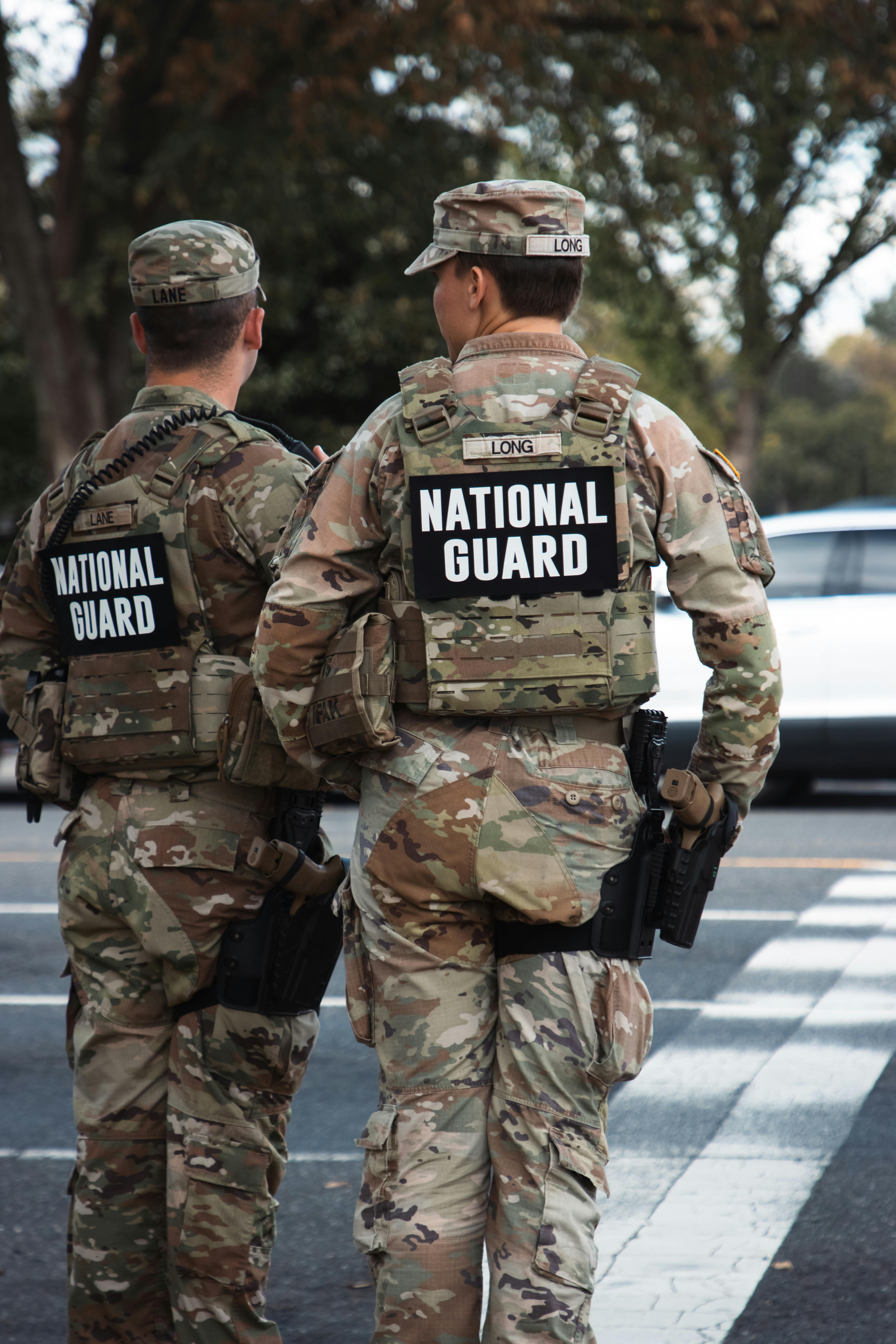
National Guard Ranger Battalion: The Part-Time Elite
Understanding the National Guard Ranger Battalion Role
Picture the software developer coding at your local coffee shop. Now, imagine that same person, just weeks later, parachuting from an aircraft on a moonless night, ready to conduct a mission alongside the most elite soldiers in the world. This isn't science fiction; it's the demanding reality for a special breed of citizen-soldier, redefining our understanding of the military.
This dual life exists inside a little-known corner of the Army National Guard. While public perception often limits the Guard to disaster relief, a handful of its infantry units, the unofficial National Guard Ranger battalions, hold their soldiers to the same punishing standards required to become an Army Ranger. These individuals balance full-time civilian careers with a military commitment that goes far beyond the typical "one weekend a month," proving that elite capability isn't confined to the full-time force.
This duality raises a question: how can someone be both a part-time soldier and a world-class warrior? The answer lies in the National Guard's Ranger-standard battalions, what some describe informally as a national guard ranger battalion culture. For Guard soldiers and civilians serious about building toward that standard, the RASP training program is built specifically for candidates preparing for Ranger Assessment and Selection.
Exploring the difference between earning the coveted Ranger Tab and serving in a full-time unit reveals why these forces are so vital and what it truly takes to live this extraordinary double life. For Guard soldiers looking for the full range of structured tactical training options, CF ONE training programs covers the complete program library.
What Does 'Ranger' Actually Mean? The Tab vs. The Regiment
The word "Ranger" can be confusing because, in the U.S. Army, it refers to two related but very different things. The popular idea of a Ranger comes from movies, elite, full-time commandos conducting daring missions. While that's one part of the story, the term also describes a prestigious qualification that soldiers from across the Army, including the National Guard, can earn. This distinction is the key to seeing how a "citizen-soldier" can also be a Ranger. For candidates with specific questions about Ranger prep program structure and what to expect during RASP, the RASP program buying guide walks through how to evaluate your options.
First, there is the Ranger Tab. Think of this black-and-gold patch as an expert certification, like passing the bar exam or earning a Ph.D. A soldier earns it by completing the grueling 62-day Ranger School, a course designed to push leaders to their absolute limits of physical and mental endurance. Earning the Tab is a mark of individual excellence and proves a soldier has exceptional grit, but it is not a job title.
Then, there is the 75th Ranger Regiment. This is a specific, full-time active-duty special operations unit, and serving in it is a job. To be assigned to the Regiment, a soldier must typically be Ranger-qualified. These are the soldiers who make up the Army's premier light infantry force, living and breathing the Ranger mission every day. Their commitment is a full-time, active-duty career, entirely separate from the National Guard. For candidates with detailed questions about RASP standards, training timelines, and what selection actually demands, the RASP program FAQ covers the most common questions in one place. People often ask, "are airborne rangers special forces"? The 75th Ranger Regiment is an elite special operations light infantry unit under U.S. Army Special Operations Command; "Special Forces" properly refers to the Green Berets, so Rangers are special operations but not the same as Special Forces.
If you're wondering "what does an army ranger do," duties center on direct-action raids, airfield seizures, special reconnaissance, and other high-risk missions that demand disciplined, small-unit leadership, skills Guard leaders bring back to their units. The full breakdown of RASP requirements, training phases, and what candidates need to know before attempting selection is covered in the US Army Ranger requirements and RASP guide.
This distinction is precisely where the National Guard fits in. Soldiers in Guard infantry units can volunteer for and pass Ranger School, earning the exact same Tab as their active-duty peers. They then bring those elite skills back to their part-time unit, transforming its capabilities. This creates a force of highly qualified leaders within the Guard, an accountant or a student who has proven they can lead under the most extreme pressure imaginable. Understanding what is tactical conditioning gives this leadership standard its physical foundation, the fitness qualities the Ranger standard is built on top of.
More Than a Marathon: The 62-Day Ordeal of Ranger School
Ranger School isn't something a soldier just shows up for. The ordeal begins on day one with the Ranger Physical Fitness Assessment (RPFA), the functional-fitness gate that replaced the old push-up-and-sit-up screening in April 2025. Students now face two parts: a roughly 14-minute combat-style circuit, an 800-meter run, 30 dead-stop push-ups, a 100-meter sprint, sixteen 40-pound sandbag lifts, a loaded farmer's carry, and a high-crawl-and-rush movement drill, capped by a second 800-meter run, followed by a 4-mile run inside 32 minutes and six chin-ups. It's a deliberately brutal screen, and it unfolds at the Ranger Training Brigade at Fort Benning, the Georgia post redesignated from Fort Moore in 2025.
Once accepted, soldiers enter a 62-day leadership laboratory designed to break them down and rebuild them. The school is famously divided into three distinct phases, each in a different, punishing environment:
Benning Phase: Held in the woodlands of Georgia, this phase focuses on squad-level tactics, physical endurance, and airborne operations.
Mountain Phase: Soldiers move to the rugged terrain of the Appalachian Mountains to learn military mountaineering and how to lead small units in high-altitude, unforgiving conditions.
Swamp Phase: The final test takes place in the coastal swamps of Florida, challenging soldiers with waterborne operations, extreme fatigue, and the constant mental stress of leading patrols through nearly impassable terrain.
The true test isn't just about navigating mountains or swamps; the school's real purpose is to forge leaders under duress. Instructors systematically deprive students of food and sleep, creating an environment of constant, overwhelming stress. The goal is to see if a soldier can still make clear decisions, motivate their peers, and lead a mission effectively when physically and mentally exhausted. It is a test of will, not just strength.
Graduates who complete this crucible have proven they can lead under the worst conditions imaginable. They don't just leave with a Tab; they leave with the unshakable confidence that comes from being tested to their absolute limit and not breaking. Candidates serious about arriving at Ranger School ready should understand hybrid training for military selection candidates, which addresses the specific strength and endurance balance this kind of extended selection demands.
Where Do These 'Part-Time Rangers' Serve?
A soldier with a Ranger Tab doesn't just return to any National Guard unit. They often find a home in a handful of select infantry battalions that actively seek out this level of expertise. While technically organized as standard infantry, these unique units, located in states like Texas, Indiana, and Georgia, operate under a demanding, Ranger-centric culture. The unwritten rule is that leaders are expected to be Ranger-qualified, creating an environment where excellence and extreme proficiency are the baseline.
These are not officially "Ranger" battalions, nor are they part of the famed 75th Ranger Regiment. A helpful analogy is to think of the 75th Ranger Regiment as the full-time professional sports team. These National Guard battalions are like a reserve team filled with athletes who have proven they can play at the same elite level, even though they hold down 9-to-5 jobs. They share a punishing standard, not a formal title.
By holding themselves to this higher benchmark, these National Guard battalions become a far more potent and capable force. Their purpose is to maintain a level of readiness that mirrors their active-duty counterparts, allowing them to integrate seamlessly into complex missions when called upon. This creates a uniquely powerful and flexible military asset. The science behind building the aerobic engine this level of readiness requires is covered in aerobic capacity for military selection, which explains why sustained cardiovascular output is the physical baseline for any Ranger-standard unit.
Why Does the Army Need Elite Soldiers Who Are Also Civilians?
The need for such units is rooted in the concept of "strategic depth." The Army's full-time special operations forces, like the 75th Ranger Regiment, are exceptional but limited in number and expensive to maintain. These National Guard battalions act as a deep bench of on-call specialists. During a major crisis or large-scale conflict, the Army can rapidly expand its elite combat power with soldiers already trained to the same exacting standard, giving commanders invaluable flexibility.
Beyond strategic planning, these units solve a critical personnel problem: retaining talent. The military invests immense resources to train a soldier to the Ranger standard. When that soldier decides to pursue a civilian career or education, their skills could be lost. The National Guard provides an off-ramp, allowing experienced individuals to transition to civilian life while continuing to serve at a high level. This ensures their years of training remain an asset to the nation.
Finally, this structure provides a dual benefit. While trained for high-intensity combat, these soldiers remain available for state-level emergencies. The same discipline and problem-solving skills honed for the battlefield make them an exceptionally effective force when responding to a hurricane or flood. They represent a force that is both a razor-sharp military tool and a dependable community asset.
From Boardroom to Battlefield: The Reality of a National Guard Ranger's Life
The slogan "one weekend a month, two weeks a year" is merely the starting point for soldiers in these elite infantry units. Upholding the intense physical and tactical standards demands a commitment that looks more like a second full-time job.
Instead of a single weekend, these soldiers often have multi-day training periods, sometimes several times a month. Their two-week annual training might become a month-long exercise in another country. To attend specialized military schools, like airborne or sniper school, they frequently must use personal vacation time from their civilian jobs. While their coworkers are at the beach, they are learning to survive in the mountains on minimal food and sleep.
This relentless schedule creates a life of constant juggling. A soldier might spend Wednesday in a boardroom presenting a project, then spend Saturday leading a squad through a grueling live-fire range. The mental switch from civilian to elite operator is demanding, requiring immense personal discipline and a supportive family. It is a profound sacrifice, redefining what it means to be a citizen-soldier. Managing training load across competing demands is covered in the training load management during selection prep guide, which directly addresses how to sustain high performance when life outside training doesn't stop.
The Citizen-Soldier Redefined: A New Appreciation for a Unique Force
The concepts of a 'weekend warrior' and an elite commando, once seen as worlds apart, are bridged by National Guard infantry battalions that hold themselves to the Ranger standard. The crucial difference lies between earning the Ranger Tab, a mark of personal excellence achievable by Guard soldiers, and serving full-time in the 75th Ranger Regiment. This distinction is the foundation of one of the military's most unique structures.
Beyond disaster relief, the National Guard includes a strategic asset: the Ranger-qualified guardsman. These experts provide the nation with incredible combat capability while maintaining civilian careers. This dual role fosters a profound appreciation for the personal dedication required to master two demanding worlds at once.
The accountant who is also an elite soldier is no longer a paradox, but a symbol of profound commitment. These individuals don't just redefine the term "citizen-soldier"; they embody a modern ideal where professional life and military service strengthen one another. They are the quiet professionals next door, ready for the nation's most demanding missions. Understanding what is a tactical athlete gives the Guard Ranger their proper professional identity, it defines exactly the kind of operator this dual life is building.
References
U.S. Army Infantry School / Maneuver Center of Excellence - new Ranger Physical Fitness Assessment (RPFA), implemented with class 06-25, April 21, 2025.
Task & Purpose, "Ranger School's new fitness test is tougher than ever, but nixes sit-ups," March 27, 2025.
Association of the U.S. Army (AUSA), "Army Unveils New Fitness Assessment for Ranger Students," April 2025.
U.S. Army, "Hegseth restores Fort Moore to Fort Benning," March 3, 2025.
***Disclaimer: This content is provided for general informational purposes only. Combat Fitness is not affiliated with the U.S. Department of Defense, and official standards may change at any time. Always consult official military publications for the most up-to-date requirements.***


