
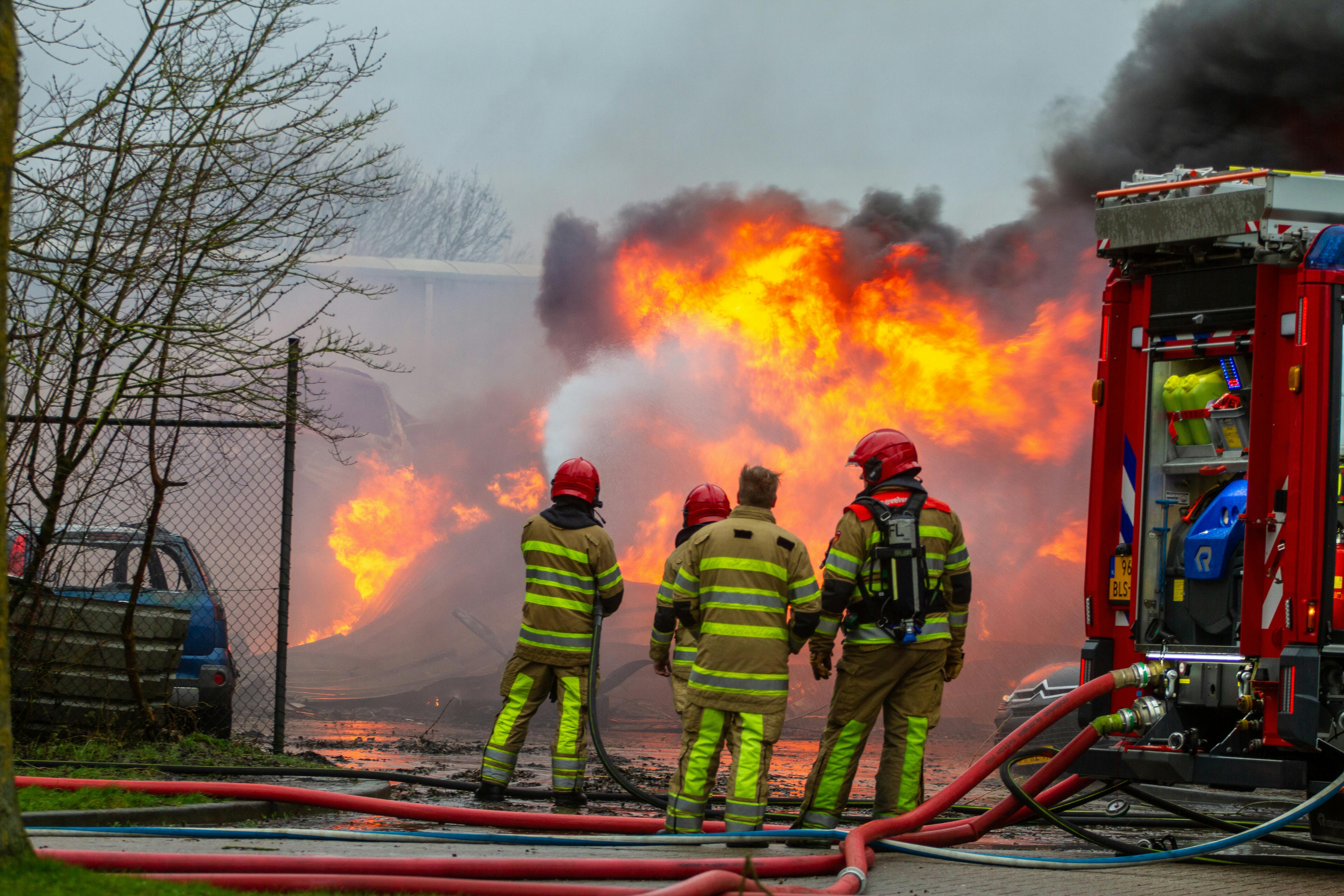
Firefighter Recovery: Train Around Shift Work & Sleep Loss
The Foundation of Firefighter Recovery
Firefighter recovery is one of the most misunderstood parts of tactical conditioning, and one of the most decisive. Most training programs obsess over the workout and treat recovery as an afterthought, but for firefighters that gets the priority backwards, which is why tactical fitness programs for first responders have to be built around recovery from the start. Shift work, overnight calls, extreme heat, and fragmented sleep mean the recovery side of the equation is constantly under attack. A great program built on the assumption of clean recovery will quietly fail on the firehouse floor, not because the training is wrong, but because the conditions it depends on never show up. This is why real tactical fitness coaching support plans for the firehouse floor and not the ideal week.
Shift work, night calls, heat exposure, psychological stress, and irregular sleep schedules all interfere with the body’s ability to adapt. This creates a situation where even well-designed training programs can fail, not because the workouts are wrong, but because recovery conditions are unpredictable. For firefighters, recovery is not just about foam rolling or stretching. It’s about managing the structural demands of the job.
Why Recovery Is Different for Firefighters
For most athletes, recovery is a scheduling problem. For firefighters, it's a structural one. A 24- or 48-hour shift can stack a 3 a.m. structure fire on top of a full day of apparatus checks and training, then hand you a 30-minute nap before the next tone drops. The body doesn't get to choose when it adapts, the call volume chooses for it. That's why firefighter recovery has to be engineered into structured tactical fitness programs from the outset, not bolted on afterward as a stretching routine or a foam-rolling session.
Most traditional training models assume a predictable schedule:
Train during the day
Eat regular meals
Sleep at night
Recover between sessions
Firefighters rarely operate under those conditions.
Common recovery disruptors include:
Overnight calls
Fragmented sleep
Rotating shifts
High heat exposure
Dehydration
Psychological stress
Long operational periods with minimal rest
Research consistently shows that shift work and sleep disruption negatively affect physical performance, recovery, and long-term health outcomes.
Firefighters in particular experience:
Reduced sleep duration
Lower sleep quality
Increased fatigue
Higher cardiovascular strain
These factors limit adaptation, even when training is structured correctly.
The Hidden Cost of Sleep Fragmentation
The problem isn't only total sleep lost, it's how that sleep gets broken up. Deep, slow-wave sleep is when most growth-hormone release and physical repair happen, and it concentrates in the first few hours of the night. That fragmentation is what makes surviving night shift work a skill of its own, because a 2 a.m. call doesn't just subtract two hours, it amputates the exact window the body uses to rebuild. Two firefighters can both log six hours, but the one woken twice recovers far less than the one who slept straight through. As Kecklund and Axelsson (2016) document, it's the fragmentation, not just the duration, that drives the health and performance cost.
Sleep is the primary driver of physical recovery. It supports:
Hormonal regulation
Muscle repair
Nervous system recovery
Cognitive performance
Emotional regulation
When sleep is fragmented, such as during overnight calls, the body never reaches full recovery.
Research in emergency service populations shows that:
Sleep restriction reduces physical performance
Reaction time declines
Injury risk increases
Decision-making becomes impaired
Even a single night of disrupted sleep can affect:
Strength output
Endurance capacity
Mood and motivation
Coordination and balance
Over weeks and months, these effects accumulate.
Heat and Dehydration: The Silent Recovery Killers
Firefighting is performed in extreme thermal environments. Structural firefighting gear traps heat, and interior operations rapidly elevate core temperature. Structural turnout gear and SCBA add roughly 45–60 pounds and seal in metabolic heat the body would normally shed. Core temperature can climb past 102°F during a single interior attack, and firefighters routinely lose one to two liters of sweat per evolution. That fluid deficit doesn't reset between alarms, it carries into the next shift and the next training session. Dehydration thickens the blood, raises heart rate at any given workload, and slows the clearance of metabolic byproducts, all of which blunt recovery long after the fire is out.
This creates several recovery challenges:
Increased cardiovascular strain
Accelerated fluid loss
Higher metabolic demand
Slower recovery between tasks
Studies show that firefighting tasks in full protective gear significantly increase physiological stress and energy expenditure. Without adequate hydration and cooling, recovery between shifts or training sessions becomes compromised.
Psychological Stress and Recovery
Physiologically, the body can't fully distinguish between a fireground threat and a training stimulus, both trip the same sympathetic "fight-or-flight" system. After a traumatic call, that system can stay switched on for hours, keeping cortisol elevated and heart-rate variability suppressed. Since recovery depends on the parasympathetic branch taking over, a nervous system stuck in high alert simply can't shift into repair mode. This is why a physically light shift can still leave a firefighter wrecked: the muscular load was low, but the psychological load kept the recovery machinery from ever turning on.
Firefighters are regularly exposed to:
Traumatic incidents
High-pressure decision-making
Long periods of alertness
Emotional strain from critical calls
Psychological stress directly impacts physical recovery.
Chronic stress can:
Elevate cortisol levels
Disrupt sleep patterns
Reduce immune function
Slow tissue repair
Increase fatigue
Research in tactical populations shows that stress and sleep disruption together have a compounded negative effect on performance and recovery.
Why Traditional Recovery Advice Falls Short
Most recovery advice quietly assumes you control your own clock. Firefighters don't. Telling a crew to "keep a consistent bedtime" is useless when the bedtime is dictated by a dispatcher. The fix isn't to chase the ideal eight-hour night that will never come, it's to build a body that recovers faster from whatever sleep it actually gets, and a training plan flexible enough to flex around the calendar instead of fighting it. Advice that ignores the operational reality of the job isn't just unhelpful; it sets firefighters up to fail. Many recovery strategies are designed for athletes with predictable schedules.
Typical advice includes:
Sleep 8–9 hours per night
Maintain consistent bedtimes
Follow structured nutrition routines
Schedule training around recovery windows
For firefighters, these recommendations are often unrealistic.
You can’t control:
When the alarm goes off
How long a call lasts
Whether you get uninterrupted sleep
The psychological demands of the job
This means recovery strategies must be structural and adaptive, not just based on ideal scenarios.
Structural Solutions for Firefighter Recovery
Understanding how recovery actually works makes it clear why firefighter programs should be desigend around the realities of the job instead of a pile of recovery tools.
1) Build a Strong Aerobic Base
A bigger aerobic engine is the single highest-leverage recovery tool a firefighter can build, because it works passively in the background. Better aerobic conditioning speeds the clearance of metabolic waste between tasks, lowers resting and working heart rate, and accelerates the parasympathetic rebound after exertion. Practically, that means a firefighter with a strong base drops back toward baseline faster between back-to-back evolutions, and recovers more completely overnight even when sleep is poor. It's the one quality that keeps paying out when every other recovery variable is outside your control.
Aerobic conditioning:
Improves recovery between tasks
Enhances cardiovascular efficiency
Reduces fatigue during long shifts
A strong aerobic base helps firefighters recover faster, even under poor sleep conditions.
2) Manage Training Load
Load management for firefighters is less about a rigid weekly template and more about reading the week you actually got. A simple rule works: when the shift wrecked you, the training has to give. After a sleepless 48 with multiple working fires, swapping a heavy squat session for easy aerobic work or mobility isn't backing off, it's protecting the adaptation you've already banked. Auto-regulation tools like rating each set's perceived effort, or cutting the session when bar speed drops, let firefighters train hard on good weeks without digging a hole on bad ones.
Training should account for:
Shift schedules
High-call periods
Poor sleep nights
Operational fatigue
Practical strategies include:
Reducing intensity after disrupted sleep
Adjusting volume during high-stress periods
Using auto-regulation when needed
3) Focus on Durability
Durability is what lets a firefighter absorb inconsistent recovery without falling apart. When sleep, hydration, and load are all unpredictable, tissue that tolerates a wide range of stress buys margin for error. Tendons, connective tissue, and joints that have been progressively loaded simply break down less when a shift forces a hard effort on poor recovery. Think of durability as a savings account: skip the years of gradual loading and you quietly rack up a durability debt that comes due the moment a brutal stretch of shifts forces a hard effort on poor recovery.
Durability training improves:
Joint resilience
Tissue tolerance
Workload capacity
Injury resistance
This helps firefighters handle inconsistent recovery without breaking down.
4) Prioritize Simple, Consistent Habits
The basics survive contact with the firehouse precisely because they're simple. A 20-minute nap before a likely-busy night can offset a chunk of the coming sleep debt without leaving you groggy. Morning sunlight after a night shift helps re-anchor a circadian rhythm that overnight calls keep dragging out of phase. None of this requires equipment or a perfect schedule, and that's the point. Under the chaos of shift work, the recovery habits that actually get done are the ones repeatable enough to survive a 3 a.m. tone-out and still happen the next day.
Instead of complex recovery protocols, focus on basics:
Hydrate regularly
Eat balanced meals
Take short naps when possible
Get sunlight exposure after night shifts
Maintain consistent training habits
Small, repeatable actions often have a bigger impact than elaborate recovery routines.
Common Recovery Mistakes
Training as if Recovery Is Perfect
The costliest recovery mistakes aren't dramatic, they're quiet assumptions that compound over a career. Firefighters who borrow programs built for nine-to-five athletes inherit a recovery model their schedule can't support, and the mismatch shows up months later as nagging injuries, stalled progress, or burnout that gets blamed on age. Recognizing these patterns early is most of the fix. The two below account for the majority of avoidable recovery failures we see in tactical populations, and both are fully within a firefighter's control once they're named.
Many firefighters follow programs designed for athletes with:
Normal sleep schedules
Predictable training times
Controlled environments
This leads to:
Overtraining
Chronic fatigue
Increased injury risk
Overreliance on Recovery Gadgets
Recovery gadgets aren't useless, they're just downstream of the variables that actually move the needle. A massage gun can ease a tight calf, but it can't manufacture the slow-wave sleep an overnight call stole. Cold plunges feel productive, yet a firefighter chronically under-recovered from poor load management won't plunge their way back to baseline. The hierarchy matters: fix sleep, hydration, and training load first, then let the tools fine-tune the margins. Gadgets reward firefighters who've already handled the structural basics—and quietly punish those using them to paper over the basics they've skipped.
Tools like:
Massage guns
Compression boots
Cold plunges
can be helpful, but they cannot fix:
Chronic sleep disruption
Poor load management
Excessive training stress
Structural changes matter more than gadgets.
Practical Takeaways
To improve recovery as a firefighter:
Build a strong aerobic foundation
Adjust training based on sleep and shift stress
Focus on durability and joint resilience
Keep recovery habits simple and consistent
Prioritize long-term capacity over short-term intensity
Prioritize long-term capacity over short-term intensity, because long-term performance and longevity for firefighters is built over years of consistent work, not single hard sessions. Put together, these strategies share one logic: control the controllables and build resilience for everything else. You can't schedule the alarm, shorten a working fire, or guarantee a full night's sleep, so the goal is a body and a training plan that hold up when those things go sideways. A firefighter with a deep aerobic base, durable tissue, smart load management, and a handful of repeatable habits doesn't need perfect conditions to keep performing. They've built recovery into the system itself, where the chaos of the job can't take it away.
Firefighter recovery is not about perfect conditions.
It’s about building a system that works despite imperfect conditions.
References
Kecklund, G., & Axelsson, J. (2016). Health consequences of shift work and insufficient sleep.
Fullagar, H. H. K., et al. (2015). Sleep and athletic performance.
Taylor, N. A. S., et al. (2012). Physiological burden of firefighting PPE.
Smith, C. D., Cooper, A. D., Merullo, D. J., Cohen, B. S., Heaton, K. J., Claro, P. J., & Smith, T. (2019).Sleep restriction and cognitive load affect performance on a simulated marksmanship


