
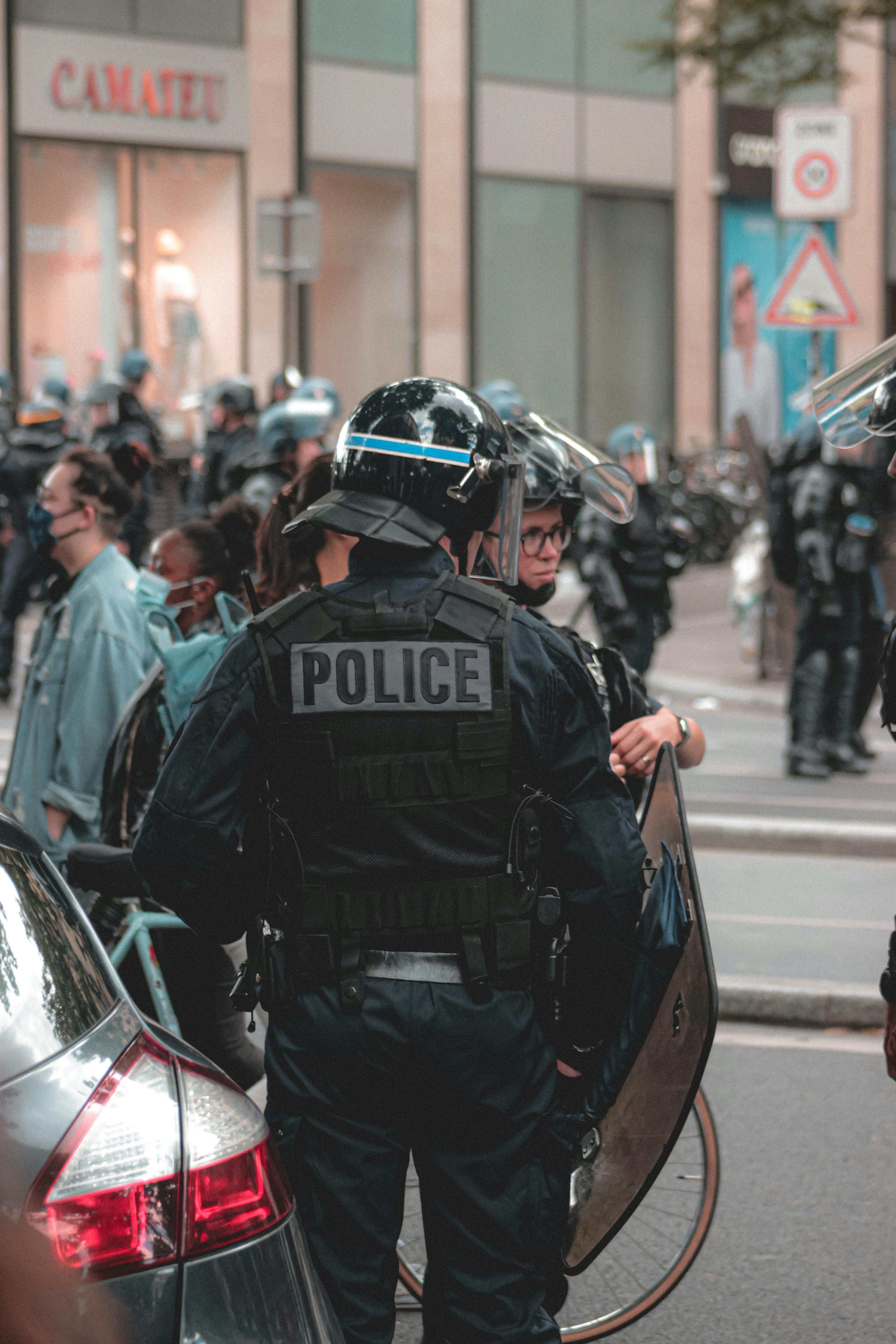
Hybrid Training for Law Enforcement: Strength + Endurance
Hybrid training for law enforcement combines strength, endurance, and work capacity into one balanced system, and it is the most complete way for police officers to prepare for the unpredictable physical demands of the job. Instead of focusing only on lifting or only on running, hybrid programs develop the ability to be strong, fast, and durable across the full range of tasks a shift can throw at you.
Law enforcement work rarely happens in ideal conditions. Officers may sit in a vehicle for hours, then suddenly need to sprint, wrestle, carry equipment, or control a suspect. Hybrid training prepares the body for these mixed and unpredictable physical demands. Purpose-built law enforcement training programs that apply these principles are available in our Combat Fitness law enforcement training programs.
The Physical Demands of Law Enforcement
Police work requires more than just passing a fitness test. The fitness test measures isolated physical qualities under controlled conditions. The job tests multiple physical qualities simultaneously under unpredictable conditions with no warm-up and no ideal timing. These are fundamentally different challenges.
What officers must be physically prepared for:
Short, explosive sprints from a standing or seated start
Physical altercations that require sustained force production and positional strength
Load carriage with duty gear across variable terrain and duration
Climbing, crawling, or jumping in street clothes and equipment
Long shifts with minimal recovery and unpredictable physical demands throughout
These tasks demand multiple fitness qualities working together simultaneously:
Strength for force production in physical encounters
Power for explosive first-step speed and rapid movement
Aerobic capacity for sustained effort and recovery between demands
Muscular endurance for repeated high-effort tasks within an incident
Mobility and durability for joint health across a career of demanding physical work
A single-mode training approach rarely prepares officers for this reality. The officer who only lifts is strong but fades. The officer who only runs can sustain effort but lacks force. The officer who trains across all domains with a structured hybrid approach is the one who can perform when the job demands it. For officers who want to explore the full range of structured tactical training options available, Combat Fitness training programs covers the complete program library.
What Hybrid Training Means
This is not a theoretical concern: Hickson (1980) first documented the interference effect, showing that strength gains are blunted when high-volume endurance work is added without structure, which is precisely the failure a well-built hybrid program is designed to avoid. The challenge is not doing more. It is doing the right things in the right proportions with the right recovery built in. For officers evaluating which hybrid training program best fits their performance goals and scheduling constraints, the hybrid training program buying guide walks through exactly how to choose the right option.
A well-structured hybrid program for law enforcement includes four integrated components:
1. Strength Training
Strength forms the structural foundation of every other physical quality. It builds force production capacity that transfers to physical encounters, reduces the relative effort cost of every movement, and provides the structural resilience that protects joints and connective tissue across the career. Without adequate strength, every other quality is limited.
2. Aerobic Training
Aerobic development supports recovery between high-intensity efforts, reduces fatigue during long shifts, and builds the cardiovascular efficiency that allows the body to reset between demands. For officers who face repeated efforts across a shift rather than a single peak event, aerobic capacity is what determines whether the tenth effort of the day looks like the first. For officers with specific questions about hybrid training program structure and what integrated strength-endurance development looks like in practice, the hybrid training program FAQ covers the most common questions in one place.
3. Work Capacity and Conditioning
Work capacity development bridges the gap between gym fitness and on-the-job performance. It develops the ability to perform repeated high-effort tasks with incomplete recovery, which is the specific physiological demand law enforcement places on the body. This is distinct from either pure strength or pure aerobic training.
4. Mobility and Durability Work
Mobility and durability work is the component most often cut when time is limited, and the one whose absence is most felt across a long career. Joint health maintenance, movement quality preservation, and structural resilience work protect the physical capability that all other training develops.
The goal of a hybrid program is not to maximize one single quality. It is to build a balanced, capable, and resilient officer who can perform across the full range of physical demands the job presents.
Why Single-Focus Training Falls Short
Single-focus training produces single-dimension athletes. In controlled environments and standardized tests, this can look adequate. In real law enforcement scenarios where the demand is always mixed and never predictable, it fails in specific and consistent ways. Understanding what is hybrid training gives every officer reading this post the complete foundational definition of the training approach described throughout, explaining what hybrid training is, what distinguishes it from single-focus programs, and why it produces the multi-domain capability that law enforcement performance requires.
Strength-Only Training
The officer who only lifts weights develops the force production capacity that physical encounters require, but the supporting qualities degrade without stimulus.
What happens without aerobic and conditioning work:
Aerobic fitness declines progressively without dedicated stimulus
Recovery between efforts slows as aerobic capacity drops
Long-duration efforts become difficult as both aerobic base and work capacity erode
This officer may be strong in a gym context but fatigues quickly when the physical demand is sustained or repeated.
Cardio-Only Training
The officer who only runs or performs endurance work develops the aerobic base and fatigue resistance that long shifts require, but lacks the force production capacity that physical encounters demand.
What happens without strength work:
Absolute strength remains low, limiting performance in confrontations
Injury risk increases as connective tissue and structural resilience go underdeveloped
Performance in physical encounters suffers precisely when it matters most
This officer may sustain effort well but cannot produce the force that physical control situations require. Understanding what is tactical conditioning gives the conditioning component of this hybrid framework its full operational definition, explaining what conditioning means for tactical athletes and why it occupies a distinct and essential role alongside strength and aerobic development.
The Hybrid Solution
Hybrid training bridges both gaps simultaneously:
Strength supports physical confrontations and load carriage efficiency
Aerobic capacity supports long shifts and repeated effort recovery
Conditioning develops the short bursts of high intensity that on-duty scenarios demand
This creates a more complete and operationally useful fitness profile than either single-focus approach can produce.
Key Components of a Hybrid Program
1. Foundational Strength
Strength is not just about force production in a gym. It is the structural base that makes every other quality more effective and every movement more efficient. Stronger muscles reduce the relative cost of each movement, stronger connective tissue tolerates higher loads without breakdown, and stronger core and hip musculature supports the posture and power transfer that physical performance requires.
Focus areas for law enforcement strength development:
Squats or step-ups for lower body force production and structural resilience
Deadlift or hinge patterns for posterior chain development and load carriage support
Push and pull movements for upper body force production in confrontation scenarios
Loaded carries for integrated strength endurance and grip development
Core stability for force transfer and trunk protection under fatigue
These movements build the structural resilience and total-body strength that form the base of operational capability.
2. Aerobic Base Training
The aerobic base is not an optional extra for law enforcement conditioning. It is the physiological infrastructure that determines how well the body recovers between the high-intensity demands of the job. An officer with a strong aerobic base recovers faster between calls, experiences less fatigue accumulation across a shift, and arrives at each physical demand with more capacity available.
Examples of effective aerobic base work:
Easy-paced running at genuinely low intensity where conversation is comfortable
Cycling as a low-impact alternative that builds aerobic capacity without joint stress
Rowing for full-body aerobic development with minimal lower extremity impact
Rucking at moderate load and easy pace that builds specific load carriage capacity
This type of training should form the backbone of the weekly program, comprising the majority of total training volume. It is the least exciting component and the most important one for long-term performance. The specific aerobic demands of law enforcement operational performance and how to develop the aerobic base that supports repeated effort capacity across a shift are covered in aerobic capacity in law enforcement, which translates these principles directly into the performance demands officers face on the job.
3. High-Intensity Work Capacity
Conditioning sessions prepare officers for the short, intense tasks that define physical law enforcement performance. These sessions do not replicate the aerobic base work. They target the anaerobic and mixed-energy systems that power explosive, high-effort tasks and teach the body to recover and repeat under fatigue.
Examples of work capacity sessions appropriate for law enforcement:
Short sprint intervals that develop first-step speed and explosive power
Circuit training that combines strength and conditioning demands in rapid succession
Mixed-modality conditioning that challenges multiple systems simultaneously
Timed work-rest efforts that replicate the unpredictable effort-recovery pattern of on-duty demands
These sessions simulate real-world physical demands more directly than either pure strength or pure aerobic work. They should be used deliberately, typically one to two sessions per week, rather than as the default training mode.
4. Mobility and Durability
Law enforcement officers face specific structural challenges that make mobility and durability work essential rather than optional. Extended vehicle time creates hip flexor and posterior chain restriction. Heavy gear loading stresses joints across an entire shift. Repetitive stress from the physical demands of the job accumulates into chronic injury patterns that end careers prematurely when not managed.
What officers face that drives mobility and durability requirements:
Extended sitting during vehicle patrol that creates pattern-specific restrictions
Heavy gear loading that stresses the hip, knee, and lower back across shift hours
Repetitive physical stress from recurring duty demands
What mobility and durability work delivers:
Maintained joint health that allows full range of motion under load and fatigue
Reduced injury risk by addressing restrictions before they become liabilities
Improved movement quality that supports better performance efficiency in every other training domain
Benefits of Hybrid Training for Officers
The benefits of a well-structured hybrid program extend beyond fitness test scores. They appear in the quality of on-duty performance, the durability of the officer's career, and the capacity to perform when the situation demands it regardless of what the preceding hours looked like.
What a structured hybrid program delivers:
Better on-duty performance: officers can sprint, grapple, and carry loads more effectively because the full physical profile is developed rather than one dimension of it
Improved fatigue resistance: aerobic capacity reduces exhaustion during long shifts so later-shift performance matches early-shift performance
Lower injury risk: strength and durability work protect joints and connective tissue from the accumulated stress of a demanding physical career
Faster recovery between efforts: aerobic development allows the body to reset between high-intensity demands so repeated efforts remain effective rather than degrading
Common Hybrid Training Mistakes
These three mistakes are the most common ways that otherwise well-intentioned hybrid programs fail to produce the results officers need. Each is recognizable and preventable with informed programming.
Doing Too Much High Intensity
The instinct in competitive and tactical environments is to equate hard training with productive training. For hybrid programs, this instinct produces chronic fatigue that undermines every other quality.
What too many hard sessions produces:
Accumulated fatigue that suppresses adaptation in all domains
Reduced recovery capacity that compromises both training quality and on-duty readiness
Elevated injury risk from tissue stress that never fully resolves
Most weekly training volume should be at low to moderate intensity. Hard sessions are the stimulus. Easy sessions are where adaptation consolidates. This distribution mirrors what Seiler and Kjerland (2006) observed in elite endurance athletes, who perform the large majority of their training at low intensity rather than chasing hard efforts every session.
Ignoring Strength
Some hybrid programs in law enforcement contexts focus heavily on conditioning, circuits, and cardio while neglecting the strength foundation that makes all other work more effective.
What happens when strength is neglected:
Lower force production in physical encounters that require it most
Higher injury risk as structural resilience goes underdeveloped
Reduced performance precisely in the physical scenarios the job demands most
Strength training is not optional in a complete law enforcement hybrid program. It is the base that everything else is built on.
Lack of Structure
Random workouts done without progression do not produce the consistent adaptation that hybrid training is designed to achieve. Structure is what converts individual sessions into a development program.
What random training without progression produces:
Inconsistent results that plateau because adaptation requires progressive stimulus
Unnecessary fatigue from sessions that do not build on each other
Limited long-term improvement despite continued effort and time investment
Hybrid training must follow structured progression to deliver its full benefit. The components are not enough on their own. The sequence and progression across weeks and months is what produces the compounding adaptation that career-long performance requires. The structural framework for programming strength and endurance training together without one undermining the other is covered in a framework for concurrent training, which gives officers the programming architecture for developing all four hybrid components in sequence without producing the chronic fatigue that unstructured hybrid training typically creates.
Practical Takeaways
A complete hybrid program for law enforcement does not require maximum time or maximum effort. It requires the right distribution of effort across the right qualities with appropriate recovery built in.
Key programming parameters for law enforcement hybrid training:
Train strength 2-3 times per week using compound, functional movements
Build a strong aerobic base as the majority of weekly training volume
Include 1-2 conditioning sessions weekly targeting work capacity and repeated effort capacity
Prioritize mobility and recovery as programmed components rather than afterthoughts
Progress training gradually across weeks and months so tissue adaptation keeps pace with demand
Hybrid training is not about doing everything at once. It is about developing multiple physical qualities in a structured, balanced way that prepares officers for the full range of demands the job presents. The specific strength-endurance demands of law enforcement tasks, including how to develop the force production capacity that physical encounters require, are covered in strength-endurance for law enforcement tasks, which connects the hybrid training principles in this post to the specific occupational performance demands officers face. For officers whose primary constraint is shift work and variable scheduling, conditioning for shift-based LEO schedules applies these hybrid principles to the specific recovery and scheduling constraints that rotating and irregular shifts create.
References
Hickson, R. C. (1980). Interference of strength development by simultaneously training for strength and endurance. European Journal of Applied Physiology and Occupational Physiology, 45(2–3), 255–263.
Seiler, S., & Kjerland, G. Ø. (2006). Quantifying training intensity distribution in elite endurance athletes: is there evidence for an "optimal" distribution? Scandinavian Journal of Medicine & Science in Sports, 16(1), 49–56.


