
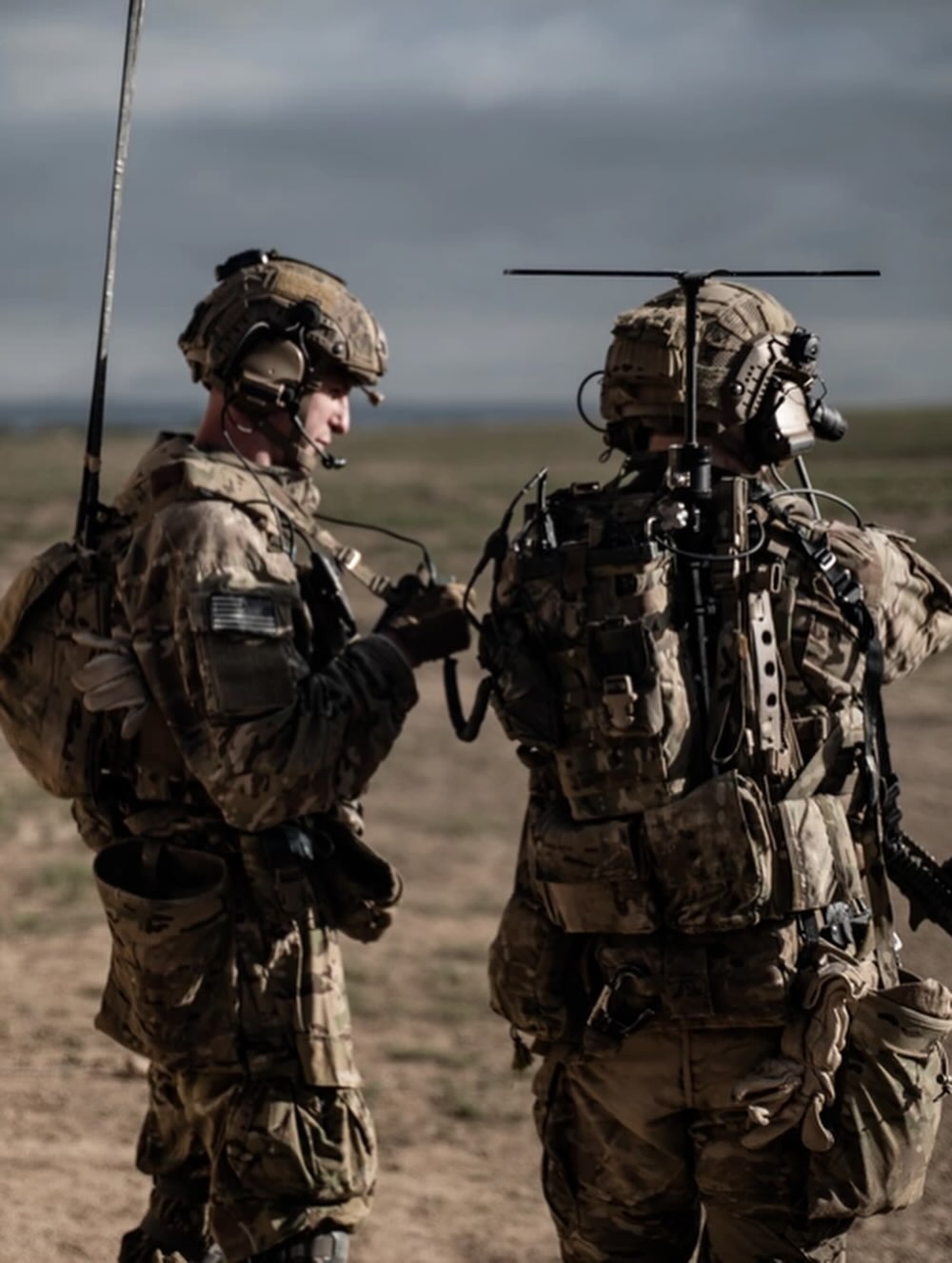
18E MOS: Army Special Forces Communications Sergeant
18E in the Army: The Special Forces Communications Sergeant (MOS) Explained
The 18E in the Army, "Eighteen Echo", is the Special Forces Communications Sergeant, the Green Beret responsible for keeping an Operational Detachment Alpha (ODA) connected anywhere on earth. If you're asking "what is 18E in the Army," it's the MOS that owns every link in the chain: short-range team radios, long-range high-frequency nets, satellite communications, and the encryption that keeps all of it out of enemy hands. The 18-series MOS structure was formalized in the late 1980s, and the Communications Sergeant role has evolved with secure, long-range comms ever since. This guide breaks down the 18E's duties, training pipeline, and the fitness standard behind the green beret, the same physical bar our Combat Fitness military training programs are built to help you clear.
Before you ever specialize, you have to survive the pipeline, and our complete SOF training and selection guide lays out exactly what that road demands. That road runs straight through selection, which is why our SFAS assessment prep guide breaks down the standards you'll be measured against long before you touch a radio.
What Does an 18E Do on a Special Forces Team?
Within Career Management Field 18, the 18E sits alongside the Weapons Sergeant (18B), Engineer Sergeant (18C), and Medical Sergeant (18D) on a 12-man ODA, and most teams carry two 18Es, not one. That redundancy is deliberate: if the detachment splits into two six-man elements, each half keeps a Communications Sergeant and never loses contact with command. The 18E builds and runs the entire signal architecture, from short-range team nets up to the C4I links that reach an Advanced Operating Base, and is expected to keep them alive in jamming, terrain shadow, and equipment failure.
For a small team operating far from support, communications aren't a convenience, they're the lifeline that calls in fires, medevac, resupply, and extraction. That's why the 18E is trained to install, operate, and maintain everything from FM and AM team radios to HF, VHF, UHF, and SHF systems, plus the antennas, burst-transmission gear, and cryptographic equipment behind them. The Communications Sergeant also advises the detachment commander directly on the comms plan, drafts the signal annexes for each mission, and trains indigenous and partner forces to operate the same systems, a core unconventional-warfare task that sets the 18E apart from a conventional signal soldier.
18E Training: Inside the Communications Sergeant Course
Becoming an 18E requires extensive, MOS-specific training that runs after a candidate has already earned the right to be there. The Special Forces Communications Sergeant course, a roughly 14-week Program of Instruction taught by E Company, 1st Battalion, 1st Special Warfare Training Group (Airborne) at the U.S. Army John F. Kennedy Special Warfare Center and School, drills three core competency areas before culminating in a field exercise known as MAX GAIN, where students prove they can run a full comms plan under tactical pressure:
Radio Operation and Maintenance: Understanding and operating high-frequency (HF), very high-frequency (VHF), and ultra-high frequency (UHF) radios.
Satellite Communications: Learning to set up and operate satellite communication systems for long-range connections.
Encryption and Security: Ensuring all communications are secure and cannot be intercepted by adversaries.
A Green Beret First, a Communications Expert Second
The 18E is not just a radio operator. Every Communications Sergeant is first a fully tabbed Green Beret, airborne-qualified, a capable swimmer (the pipeline includes a 50-meter swim test in uniform and boots), and trained in weapons, demolitions, and small-unit tactics like every other man on the team. The comms expertise sits on top of that foundation, which is why the 18E can plan, secure, and troubleshoot networks while still pulling a full share of the detachment's combat load.
The 18E in the Field: Comms Under Pressure
Mission success often hinges on whether the team can talk, to each other, to higher, and to supporting aircraft, at the exact moment it matters. The 18E keeps that link alive: re-establishing a downed net mid-movement, switching frequencies to beat interference, and adjusting the comms plan as the situation on the ground changes. Beyond the radios, the Communications Sergeant is the team's resident technical problem-solver, diagnosing balky equipment, improvising antennas from available materials, and advising teammates on which system gives the best shot at a clean signal for a given mission. On a team where every man wears two hats, the 18E's second hat is often "make the impossible connection work."
Adapting Comms to the Environment
Terrain dictates the comms plan. Dense jungle canopy and triple-layer foliage soak up VHF and UHF, pushing the 18E toward HF skywave and long-wire antennas to bounce a signal over the horizon. Open desert offers range but punishes gear with heat and dust and leaves transmissions exposed to enemy direction-finding. Dense urban terrain creates multipath reflection and dead zones between buildings. A capable Communications Sergeant reads the environment first and chooses frequency, antenna, and power accordingly, the difference between a team that stays linked and one that goes dark at the worst possible moment.
Challenges 18E Soldiers Face in the Field
The job carries pressures most signal roles never see, because an 18E is solving them in austere environments, often under a time limit measured in minutes. The three challenges below define the day-to-day reality of the MOS:
Equipment can fail, and signals can be blocked. The 18E must have the problem-solving skills to quickly address these issues and find alternative solutions.
Operating in combat zones or behind enemy lines adds a layer of complexity and danger. The 18E must ensure that all communications are secure to prevent interception by enemy forces.
Technology is continuously evolving, and so must the skills of an 18E. Continuous learning and training are required to stay ahead of technological advancements and threats.
How to Become an 18E: The Special Forces Pipeline
The road to wearing the 18E identifier is long, and the communications specialty is only assigned partway through the pipeline, your performance in training, plus prior experience, helps decide which 18-series MOS you're awarded. For the full breakdown of selection and the Q-course, see our Green Beret training path and 18X contract guides; the overview below shows where the 18E fits.
Every soldier begins with basic training, followed by AIT. For the 18E role, specialized training in communications is required, focusing on both theoretical knowledge and practical skills.
Before becoming a Green Beret, soldiers must pass the SFAS. This rigorous selection process tests physical endurance, mental toughness, and the ability to work as part of a team.
Once selected, soldiers attend the Special Forces Qualification Course (SFQC, or "Q-course"), where they earn the green beret and Special Forces Tab. It's during this phase that candidates are streamed into their 18-series specialty, 18E candidates branch off into the ~14-week Communications Sergeant course, while the broader Q-course continues to qualify them as Green Berets. Athletes preparing for this pipeline can see how we structure it in our Army Special Forces training program.
Is the 18E Right for You?
The 18E is the communication backbone of an ODA, the Green Beret who makes sure the team can call for fires, medevac, and extraction when it counts. If you've got a head for technology and you solve problems under pressure, the Special Forces Communications Sergeant route rewards it like few jobs in the Army. And for anyone drawn to the most selective corners of the special operations world, the Delta Force legacy shows just how far an 18-series foundation can carry a soldier. But the green beret comes before the keypad: every 18E first has to pass selection and the Q-course, and that's a physical bar long before it's a technical one. If you're training toward it, our Special Forces selection prep is built for exactly this pipeline.
Understanding the 18E role shows why communications is treated as a combat function in Special Forces, not a support afterthought, and how much training stands behind the soldier running the radios. Whether you're weighing an 18-series career or mapping out where the Communications Sergeant fits among the ODA's specialties, the 18E is one of the clearest examples of how technical mastery and tactical fitness combine on a Green Beret team. (MOS structures and training timelines can change, figures here reflect the most current Army information as of 2026.)
18E Army FAQ
What does “18E Army” mean, and why is it important in Special Forces?
“18E” is the Military Occupational Specialty (MOS) for a Special Forces Communications Sergeant in the U.S. Army’s Green Berets. These soldiers plan, protect, and sustain mission-critical communication networks so teams can coordinate, adapt, and share information securely, even in hostile or remote environments. Their work is foundational to mission success.
How did the 18E role develop historically?
The 18-series MOS structure was formalized in the 1980s, and the 18E designation has evolved in step with advances in secure, long-range communications. Over time, the role has expanded from basic radio operation to comprehensive, secure network planning and management for Special Forces missions.
What systems and skills does an 18E manage?
18E soldiers install, operate, and maintain a wide range of communications equipment, including HF, VHF, and UHF radios; satellite communications systems; and encryption and security tools. They ensure reliable, secure connectivity across varied conditions and troubleshoot issues to keep information flowing.
What is the training and selection path to become an 18E?
Candidates complete basic training and Advanced Individual Training (AIT), then undergo specialized communications instruction. They must pass Special Forces Assessment and Selection (SFAS) and, once selected, attend the Special Forces Qualification Course (SFQC), where 18E candidates receive extensive, role-specific communications training.
What challenges do 18E soldiers face in the field, and how do they address them?
They contend with equipment failures, signal blockage, and the need to maintain secure communications in combat or behind enemy lines. 18Es solve problems rapidly, implement alternate solutions, enforce encryption and security, and continuously update their skills. They also adapt strategies to different environments, jungle, desert, or urban, based on how terrain and conditions affect signals.


