
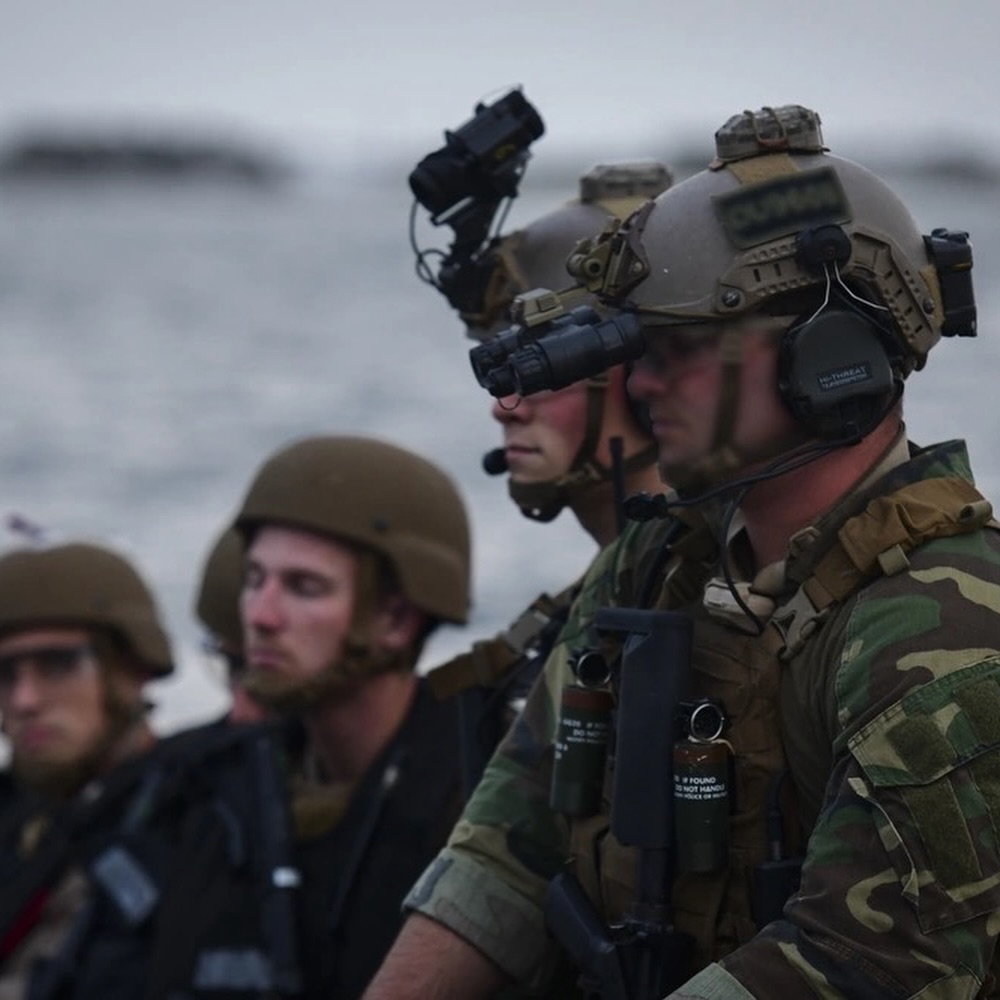
Durability in Aging Tactical Populations (Complete Guide)
How to Build Physical Resilience Over a Long Tactical Career
Aging does not remove the demands of tactical performance, it raises the cost of being unprepared for them. For aging tactical athletes, durability is the deciding factor in who stays operational and who breaks down, and it has little to do with effort. Durability is physical resilience under repeated stress, sustained over a long career. As recovery slows and tissue tolerance drops, the margin between productive training and injury narrows. Closing that margin is the entire purpose of our tactical training programs, which are built to keep aging athletes durable rather than simply worked hard.
Over time, tactical athletes face:
Accumulated stress
Reduced recovery capacity
Increased injury risk
The difference between those who remain capable and those who break down is not effort.
It is durability.
More specifically:
Physical resilience under repeated stress over time
This guide breaks down:
What physical resilience actually is
How durability changes with age
How injury risk evolves over time
How to build and maintain durability across a long career
What Is Physical Resilience?
Physical resilience is the ability to:
Absorb stress, recover from it, and continue performing without breakdown
It is closely related to durability, but slightly broader.
Components of Physical Resilience
Physical resilience is not a single quality you either have or lack. It is built from several trainable components that interact, and aging erodes some faster than others. Tissue tolerance and recovery capacity tend to decline first, while movement efficiency and stress adaptation can be preserved, or even improved, with deliberate work. For aging tactical athletes, the goal is not to chase every component equally but to defend the ones that fade fastest. The components below are the levers worth tracking across a long career:
Tissue tolerance
Recovery capacity
Movement efficiency
Fatigue resistance
Stress adaptation
Key Difference
Durability focuses on:
Withstanding stress
Physical resilience focuses on:
Withstanding stress and recovering from it effectively
Tactical Context
In aging tactical populations, resilience becomes critical because:
Stress accumulates over years
Recovery becomes less efficient
Margin for error decreases
What Is Durability in Performance Training?
Durability is the ability to:
Withstand repeated physical stress without injury or breakdown
Durability Over Time
In practical terms, durability is what lets you absorb a hard ruck, a heavy lift, or a high-volume week and come back ready to train again, not sidelined by a tweaked back or a flared joint. It is the difference between a program you can repeat for years and one that quietly accumulates damage. Before committing to one, it is worth seeing how the top tactical programs compare, because the wrong fit accumulates damage faster than any single hard week. Durability is trainable, but it is also perishable: the same load that built it in your twenties can overwhelm it in your forties if recovery and progression are not adjusted to match.
Early career:
High tolerance
Faster recovery
Later career:
Lower tolerance
Slower recovery
What Changes with Age
The physiology behind these shifts is well documented. From roughly age 30, adults lose an estimated 3–5% of muscle mass per decade, a process that accelerates after 60 (Larsson et al., 2019). Connective tissue becomes stiffer and slower to remodel, and the nervous system recovers less efficiently between hard efforts. None of this makes aging athletes fragile, but it does mean the same training stimulus lands differently. The practical changes that matter most for durability are below:
Increased sensitivity to load
Greater impact of fatigue
Reduced tissue resilience
Key Insight
Durability is not fixed.
It must be:
Maintained, rebuilt, and managed over time
How Aging Changes Durability
Aging does not eliminate durability, capable athletes train hard well into their forties, fifties, and beyond. What changes is how durability is developed and sustained. Recovery has to be planned rather than assumed, load has to be earned rather than spiked, and small warning signs have to be acted on early instead of trained through. For many aging athletes, getting that structure right is easier with guidance, and choosing the right tactical coach is often the difference between a plan that adapts and one that quietly breaks them down. The four shifts below explain why an approach that worked a decade ago will, left unchanged, slowly stop working, and what each shift demands in return.
1. Reduced Recovery Capacity
Longer recovery between sessions
Greater fatigue accumulation
2. Increased Injury Risk
Lower tolerance to sudden load changes
Greater impact of poor mechanics
3. Accumulated Wear and Tear
Previous injuries
Chronic tightness or imbalances
4. Reduced Margin for Error
Small mistakes have larger consequences
Key Insight
As you age:
Precision becomes more important than intensity
A Framework for Injury Risk Management
Injury risk rises with age, but it is not random. Effective injury risk management for aging athletes starts from a simple fact: most overuse injuries trace back to how training load is applied, not to age itself. Research on the acute-to-chronic workload ratio suggests injury risk climbs when a given week's training load runs well above the recent four-week average, with the lowest risk in a moderate band of roughly 0.8 to 1.3 (Gabbett, 2016). The six steps below turn that principle into a repeatable system for managing risk across a long tactical career:
Step 1: Manage Training Load
Avoid:
Sudden spikes
Excessive volume
Progress gradually.
Step 2: Monitor Fatigue
Watch for:
Persistent soreness
Reduced performance
Increased effort for the same output
Step 3: Maintain Movement Quality
Fatigue increases:
Compensation patterns
Poor mechanics
Focus on efficient movement.
Step 4: Prioritize Recovery
What Is Recovery?
Recovery is where aging athletes win or lose the long game. The training session is only a stimulus, adaptation happens afterward, during rest, sleep, and proper fueling. As recovery capacity declines, the same workout requires more downstream resources to absorb, which is why older athletes often need an extra day, a lighter de-load week, or better sleep hygiene to keep progressing. Understanding the recovery needs of aging athletes, and treating recovery as an active part of the program rather than an afterthought squeezed around it, is one of the highest-leverage adjustments an aging tactical athlete can make.
A younger athlete can chase performance and absorb the cost; an older one has less margin to spend, and stress that is never repaid compounds into durability debt that eventually comes due. Treating recovery as an active part of the program, not an afterthought squeezed around it, is one of the highest-leverage adjustments an aging tactical athlete can make.
Recovery is the process through which your body:
Repairs
Restores
Adapts
Step 5: Adjust Proactively
Modify training based on:
Fatigue
Stress
Performance
Step 6: Address Issues Early
Small problems become large problems if ignored.
The Durability-Performance Tradeoff
Every gain in peak performance is bought with stress, and stress is exactly what wears durability down, so the two pull against each other, and that tension sharpens with age. A younger athlete can chase performance and absorb the cost; an older one has less margin to spend. The skill is not avoiding hard training but spending intensity where it returns the most, and protecting durability everywhere else. Managed well, performance and longevity reinforce each other instead of competing.
The Tradeoff
Higher performance requires:
Greater stress
Higher intensity
But increases:
Injury risk
Fatigue
Aging Consideration
Older athletes must:
Balance performance with sustainability
Practical Application
Use intensity strategically
Prioritize consistency
Avoid unnecessary risk
Key Insight
Longevity requires:
Managing the balance between pushing performance and protecting durability
Building Durability in Aging Tactical Athletes
Building durability after the early-career years is less about novel methods and more about disciplined application of fundamentals. The athletes who stay capable for decades are rarely the ones doing the most exotic training, they are the ones who train consistently, progress patiently, and refuse to let recovery, mobility, or aerobic work slide. Aerobic capacity in aging athletes is the quiet engine behind durability. The seven principles below are not a program; they are the framework a durable program is built on. Each one becomes more important, not less, the longer a tactical career runs.
1. Train for Consistency
Consistency over time builds resilience.
2. Progress Gradually
Avoid rapid increases in:
Volume
Intensity
Frequency
3. Maintain Aerobic Capacity
Aerobic capacity is the quiet engine behind durability. A strong aerobic base speeds recovery between efforts, blunts fatigue across long days, and expands the work you can repeat without breaking down, all of which matter more as recovery slows with age. It does not require chasing race times; steady, moderate conditioning is enough to protect the base. Letting aerobic fitness erode is one of the most common and costly mistakes aging tactical athletes make, because it undercuts every other quality at once.
Supports:
Recovery
Fatigue resistance
Work capacity
4. Strengthen Supporting Structures
Big lifts get the attention, but durability is often decided by the smaller structures around the joints, the tendons, stabilizers, and connective tissue that absorb force and keep mechanics clean under load. These tissues adapt more slowly than muscle and respond best to controlled, deliberate loading rather than maximal effort. Prioritizing joint stability and muscular balance is not accessory fluff for aging athletes; it is the foundation that lets heavier, faster work happen safely. Neglect it, and the first failure point is usually a joint, not a muscle.
Focus on:
Joint stability
Muscular balance
Controlled loading
5. Prioritize Movement Quality
Efficient movement reduces:
Stress
Injury risk
6. Integrate Recovery Into Training
Recovery is not separate.
It is part of the system.
7. Adapt to Life Stress
Training must reflect:
Work demands
Sleep
Overall stress
Common Mistakes in Aging Tactical Populations
Most durability problems in aging athletes are not caused by doing too little, they are caused by doing the right things at the wrong time, or refusing to adjust an approach that has stopped fitting. The mistakes below are common precisely because they once worked. Recognizing them early is far cheaper than rehabbing the injury they eventually produce:
1. Training Like They Are Still Early Career
Leads to:
Excess fatigue
Increased injury risk
2. Ignoring Recovery Needs
Recovery becomes more important with age.
3. Chasing Intensity
At the expense of:
Consistency
Durability
4. Neglecting Movement Quality
Poor mechanics increase injury risk.
5. Not Adjusting Load
Same training approach leads to breakdown over time.
Tactical Application
For military, law enforcement, and first responders, durability is not a fitness preference, it is an occupational requirement. The job does not scale its demands to match your recovery, and time off to heal is rarely on offer. That is why an aging tactical athlete's training has to prioritize staying available over chasing peak numbers: a capable operator who is healthy every week outperforms a stronger one who is hurt every month. Durability is what keeps readiness from eroding as the years and the mileage accumulate:
Aging tactical athletes must:
Maintain readiness
Sustain performance
Manage increasing constraints
Durability allows:
Continued training
Reduced injury risk
Long-term capability
Programs that ignore durability:
Fail over time
Final Takeaway
Durability in aging tactical athletes is never automatic, it is the result of deliberate, repeated decisions about load, recovery, and movement quality. Understand what physical resilience is, how durability shifts with age, how injury risk evolves, and how to manage recovery and load, and you can keep performing long after peers who relied on raw effort have broken down. The aim is not to dominate a single session today. It is to remain capable, resilient, and operational for years:
If you understand:
What physical resilience is
How durability changes with age
How injury risk evolves
How to manage recovery and load
You can sustain performance over time.
Because the goal is not just to perform now.
The goal is to:
Remain capable, resilient, and operational over the long term
FAQ Section
What is durability in aging tactical athletes?
Durability is the ability to withstand repeated physical stress without injury, even as recovery capacity declines with age.
What is physical resilience?
Physical resilience is the ability to absorb stress, recover from it, and continue performing effectively.
Does durability decrease with age?
It can, but it can also be maintained or improved with proper training, recovery, and load management.
How can aging athletes reduce injury risk?
By managing training load, prioritizing recovery, maintaining movement quality, and addressing issues early.
What is the biggest mistake aging tactical athletes make?
Training with the same intensity and volume as earlier in their career without adjusting for recovery and adaptation.
How important is recovery as you age?
Extremely important. Recovery becomes one of the primary drivers of performance and durability.
References
Gabbett, T. J. (2016). The training–injury prevention paradox: should athletes be training smarter and harder? British Journal of Sports Medicine, 50(5), 273–280.
Larsson, L., Degens, H., Li, M., et al. (2019). Sarcopenia: Aging-Related Loss of Muscle Mass and Function. Physiological Reviews, 99(1), 427–511.


