
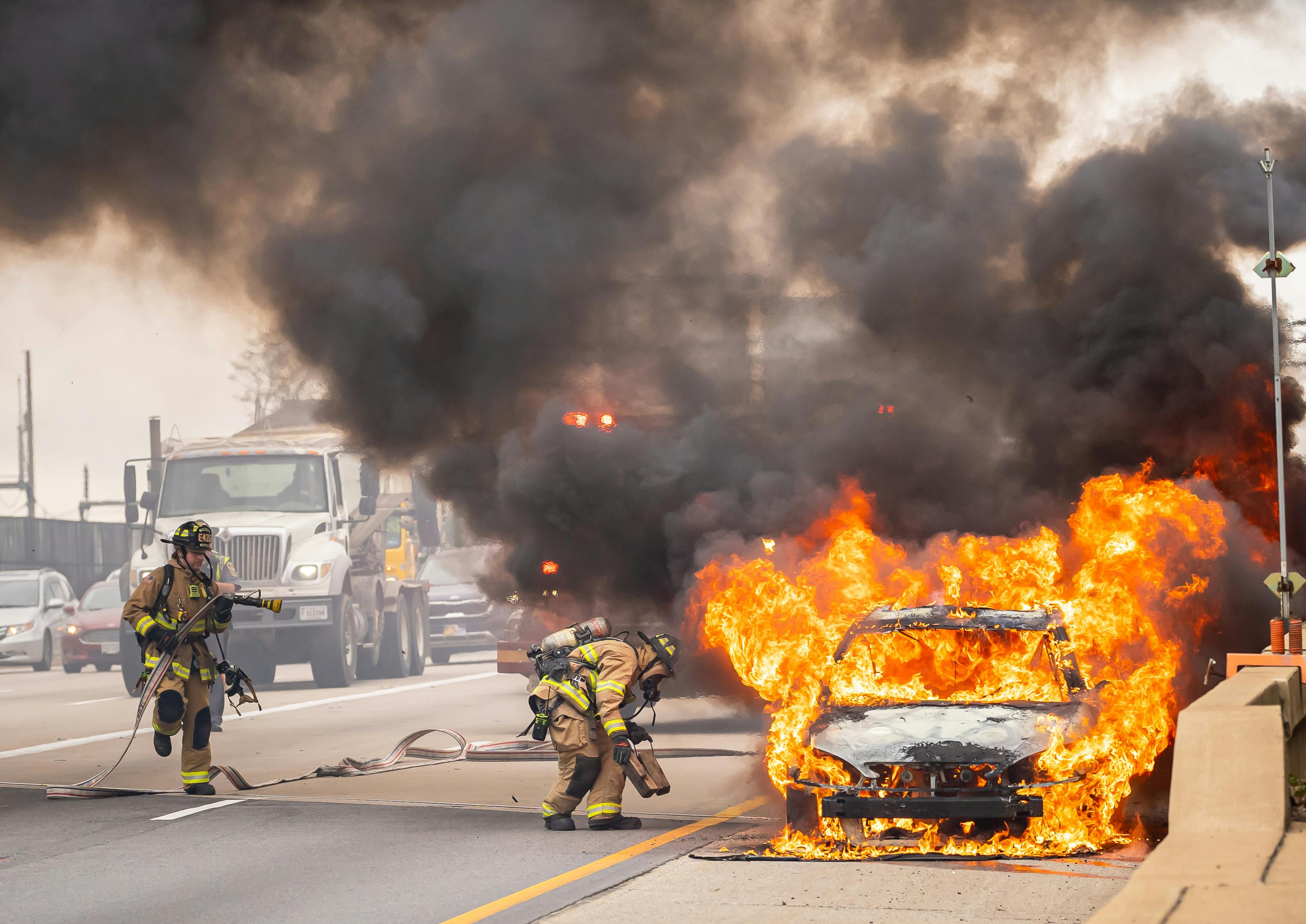
Aerobic Capacity for Firefighters: VO2 Max & Training
Why Aerobic Capacity Matters in Firefighting
Aerobic capacity is the single most decisive physical quality for firefighters, and the fire service treats it that way, it is the one fitness quality written into the medical standard that governs whether you are cleared for essential job tasks.
The number most firefighters know is 42 ml/kg/min, roughly 12 METs. That figure came from the older version of NFPA 1582, where 12 METs was the level at or above which no restrictions applied, not, as it is often repeated, a bare minimum. Below it, the old standard escalated: 10 to 12 METs triggered counseling, 8 to 10 triggered individualized evaluation and possible restriction, and 8 or below was a recommendation for full restriction from essential tasks.
That scheme no longer applies. NFPA issued Tentative Interim Amendment 22-2 on 30 November 2023, effective 20 December 2023, replacing the MET thresholds entirely with percentile-based criteria. The current framework sets the 50th percentile as the appropriate aerobic capacity target for firefighting activities, and the 35th percentile as the minimum, below which restrictions apply to most essential job tasks. For pre-employment candidates with certain medical conditions, the standard requires at least the 50th percentile for the general population, standardized by age and biological sex.
The practical difference matters. A fixed ml/kg/min number treats a 24-year-old and a 54-year-old identically. A percentile does not. If your department still talks in METs, they are working from a standard NFPA moved on from, and the number you should actually know is where your aerobic capacity sits against the general population for your age and sex.
Aerobic capacity determines how efficiently your body delivers and uses oxygen during sustained work, which directly drives how well you hold up under repeated bouts of physical and mental stress on scene. Firefighting means long stretches of moderate-to-high-intensity effort with little rest, usually in extreme heat, heavy turnout gear, and unpredictable conditions, exactly the environment where a weak aerobic base fails first.
Aerobic capacity supports not just how long you can work, but how well you recover between efforts. Firefighters who want a program built specifically around these demands can explore our CF ONE tactical fitness programs. In practical terms, aerobic capacity affects how well you move up stairs with a hose pack, how quickly you recover after dragging a casualty, how effectively you transition between tasks, and how resilient you are toward fatigue over the duration of a shift or incident.
There is a safety dimension here that goes beyond performance. Sudden cardiac events account for roughly half of all on-duty firefighter line-of-duty deaths, and low aerobic capacity is one of the clearest modifiable risk factors behind that statistic. Building a strong aerobic base is not just about working longer on scene, it is about protecting the cardiovascular system the job repeatedly drives to its limit. For firefighters, conditioning the engine is genuinely a survival skill, not a vanity metric.
Which is exactly why the order of operations matters. The reason NFPA's aerobic requirement sits inside a medical standard rather than a fitness one is that the population most likely to benefit from hard conditioning overlaps heavily with the population most at risk during it. If you are returning from a layoff, carrying cardiovascular risk factors, over 40, or have ever had chest discomfort, unusual breathlessness, palpitations or lightheadedness on exertion, get cleared by a physician before starting high-intensity work, through your department's occupational medical program if you have one. That is not a formality on this job. It is the single most evidence-supported thing on this page.
Understanding what aerobic capacity is, how it develops, and how to train it specifically for firefighting makes preparation purposeful and results more sustainable.
What Aerobic Capacity Means for Firefighters
Aerobic capacity refers to your body’s ability to deliver, extract, and use oxygen during sustained exercise. It includes the efficiency of your cardiovascular and respiratory systems as well as how effectively your muscles use oxygen to produce energy.
Aerobic capacity is often expressed as VO2 max, but it is more than a number. It underlies the energy systems that allow you to sustain effort, recover faster between high intensity bouts, and resist early onset fatigue.
A firefighter with strong aerobic capacity:
Recovers faster between tasks
Maintains effort longer in heat and load
Performs repeated high-intensity efforts without collapse
Handles transitions between work and recovery more efficiently
For common questions about how to structure a training program around these qualities, the military fitness program FAQ covers the most important variables tactical and emergency service athletes need to understand before committing to a program. Aerobic capacity is not the same as bodybuilding endurance or slow jogging endurance. It is functional, adaptive, and specific to the demands of real physical work.
How Firefighters Actually Get Tested
Knowing that aerobic capacity matters is not the same as knowing your number. Here is how the fire service measures it and what the result means.
The distinction between predicted and measured is the one worth understanding. Sub-maximal tests estimate your VO₂max from how your heart rate behaves at known workloads. They are safe, quick, need no mask, and can be run at the station, which is why departments use them, but they carry real error, and things like caffeine, sleep, illness, heat, and medication all move heart rate independently of fitness. A directly measured test costs more and requires a lab, and it gives you the actual figure.
Reading a percentile result. Under the current standard your result is expressed as a percentile against the general population for your age and biological sex, not as a raw threshold. Two firefighters can post identical ml/kg/min figures and land in different percentile bands if they are twenty years apart in age. If your department reports a raw number and you want to know where you stand under the current framework, ask what percentile it corresponds to, that is the number the standard now speaks in.
If your number came back low, it is worth knowing two things. First, aerobic capacity is among the most trainable qualities in the body, this is not a fixed trait, and meaningful movement in 8 to 12 weeks of structured work is normal rather than exceptional. Second, a low result on a sub-maximal test is not a diagnosis; it is an estimate, and it is worth re-testing under consistent conditions before drawing conclusions. What it should trigger is a conversation with your department's medical officer and a structured plan, not a crash program of hard intervals starting Monday.
How Aerobic Capacity Supports Firefighting Tasks
Firefighting operations are rarely linear. Tasks can include climbing stairs, hauling hoses, forcible entry, dragging hoses, victim carries, stair climbs with equipment, and multi-hour structured response activities. These tasks demand both strength endurance and endurance under load.
Strong aerobic capacity supports:
Faster recovery between high intensity efforts
Higher sustained effort with less perceived fatigue
Better heat tolerance due to more efficient circulation
Sustained decision making under physical stress
The research backs this up, and it is worth going through in detail because it is the study everything else in this field is built on.
Gledhill and Jamnik (1992) instrumented firefighters performing real fireground tasks and measured what those tasks actually cost. Two findings define the job.
The hardest tasks demanded a mean VO₂ of 41.5 ml/kg/min - about 85% of the firefighters' VO₂max. That is near-maximal sustained output, held for minutes, in gear, in heat. Peak blood lactate during those operations ran from 6 to 13.2 mM, which tells you the anaerobic system was being drained hard at the same time.
But 90% of demanding operations required only about 23 ml/kg/min - roughly 50% of VO₂max. Most of the job is moderate. The problem is that the fraction which isn't moderate is the fraction where people get hurt and killed, and it arrives without warning.
Notice the first number: 41.5 ml/kg/min. That is where the familiar 42 figure comes from, it is the measured oxygen cost of the hardest fireground work, rounded, and it converts to the 12 METs the old standard used. It was never an arbitrary line.
Which makes the authors' own recommendation worth knowing: Gledhill and Jamnik proposed a minimum VO₂max standard for firefighter applicants of 45 ml/kg/min, deliberately above the measured cost of the work, because a standard set at the cost of the hardest task leaves you performing that task at 100% of capacity with nothing in hand.
That is the whole argument for reserve. A firefighter sitting exactly at the old 42 benchmark is running the hardest tasks at the edge of their ceiling, no margin for heat, for a second call, for a bad night's sleep, for the search taking longer than planned. A firefighter with a deeper base performs the identical task at a lower percentage of max, clears the byproducts faster, and arrives at the next effort with something left. That gap is the difference between finishing a search with capacity in reserve and gassing out halfway through.
Firefighting is a series of demands on the body. Aerobic capacity is the foundation that allows all other qualities to function without collapse. For a full breakdown of what aerobic capacity is and the physiological systems it encompasses, the parent post provides the essential context for everything covered in this guide.
Adaptation and Aerobic Development
Aerobic adaptation occurs through repeated exposure to sustained activity with progressive challenge. The body responds to cardiovascular demands by increasing:
The efficiency of circulation
Stroke volume of the heart
Mitochondrial density in muscle tissue
Capillary networks that deliver oxygen to muscle fibers
These adaptations take time and consistency. Improvements in aerobic capacity begin with a base of lower intensity sustained efforts and build toward higher intensities and integrated tasks over weeks and months. Aerobic improvements also mean faster recovery between bouts of intensity. That means you can push hard, recover, and push again, a common pattern in firefighting operations.
How to Train Aerobic Capacity for Firefighting
Improving aerobic capacity is not only about running more. It is about targeted stimulus that reflects the demands and constraints of firefighting.
Here are effective methods to boost aerobic capacity:
Steady State Aerobic Work
Longer sessions at moderate intensity such as easy runs, bike sessions, or row intervals build the aerobic base. These sessions increase the efficiency of oxygen delivery and utilization.
Examples:
30 to 60 minutes of sustained movement at conversation pace
Low intensity ruck walks with moderate weight for time
These sessions build the foundation for more demanding work later in the cycle. For firefighters, this base work is what lets you operate at a sustainable percentage of your maximum during long-duration incidents, extended overhaul, wildland assignments, or back-to-back calls across a single shift. The larger your aerobic base, the lower the relative cost of any given fireground task, which means heat builds more slowly, your heart rate settles faster between efforts, and you reach the end of a long incident with usable capacity still in reserve rather than running on fumes.
Interval Training
Interval training involves alternating higher intensity efforts with recovery periods. These workouts improve both aerobic capacity and recovery efficiency.
Examples include:
3 minutes hard with 2 minutes easy recovery
Repeated shuttle runs with brief rest
Bike or row intervals with moderate rest between efforts
Intervals train your body to recover faster between hard efforts, a critical component of firefighting. This maps almost perfectly onto the rhythm of real fireground work, where a firefighter sprints a hose lay or forces a door, drops back to a steadier pace, then spikes again for a victim drag. Interval training rehearses that exact pattern of hard effort and incomplete recovery, building the specific ability to repeat near-maximal bouts without performance falling off a cliff on the third or fourth round. It is the closest gym proxy there is to the metabolic chaos of an actual structure fire.
Integrated Metabolic Conditioning
Workouts that combine metabolic conditioning with functional movement (for example, sled pushes, kettlebell swings, bodyweight circuits between run segments) improve aerobic capacity while integrating strength endurance.
These sessions better reflect the real work patterns encountered on the job.
Rucking or Loaded Aerobic Sessions
Carrying weight during aerobic sessions simulates operational demands. Rucking with gear develops cardiovascular endurance jointly with muscular endurance under load, which is directly applicable to fireground tasks.
Turnout gear, an SCBA, and a charged hoseline can add 50 to 75 pounds to a firefighter's frame before any rescue or tool load is factored in. Training aerobically under weight teaches the body to deliver oxygen efficiently while carrying that burden, so the gear stops being a separate tax on your conditioning and instead becomes a load your engine is already calibrated to move. That carryover is far more specific to the job than any amount of unloaded running.
Progressive Aerobic Development
Aerobic training should be progressive. That means gradually increasing:
Duration
Intensity
Complexity of movement patterns
Load under aerobic conditions
Track progress through measurable markers such as pace at a given heart rate, distance covered, or recovery heart rate between intervals. Progress should be steady but not overwhelming.
Common Mistakes to Avoid
Several common mistakes limit aerobic development:
Training only high intensity
This leads to fatigue accumulation without sustainable development.
Training only low intensity
This builds base fitness but misses adaptions that happen at higher intensities.
Neglecting recovery
Aerobic training still stresses the body and requires rest to adapt.
Neglecting specificity
Running alone may help aerobic capacity, but without load or functional movement integration, the transfer to duty tasks will be limited.
Avoid these errors by balancing intensity, specificity, and recovery. For the fire service specifically, the costliest mistake is treating conditioning as seasonal, training hard for a fitness test, then letting the base erode until the next one. Aerobic capacity is a maintained quality, not a one-time achievement. Departments and individuals who hold a year-round aerobic floor carry lower cardiac risk and recover faster from the unpredictable, high-output calls the job throws at them.
How Life and Duty Stress Interact With Aerobic Development
Training stress does not occur in isolation. Sleep disruption, shift work, occupational stress, heat exposure, and emotional load compound total stress. Aerobic training should be planned around these factors, not in spite of them.
When life or duty stress is high, aerobic training must be adjusted to preserve recovery and avoid breakdown. Monitoring readiness, sleep patterns, and fatigue ensures training improves capacity without causing chronic stress.
The Takeaway
Aerobic capacity is essential for firefighting operations. It is foundational to sustained physical performance, rapid recovery, resistance to fatigue, and functional capability under stress.
Train with intention
Progress with purpose
Recover to adapt
When aerobic capacity is developed methodically, it becomes dependable performance ability on the job. Two sibling posts apply this directly to the specific demands of fireground work: work capacity demands of firefighters examines the total physical output requirements of firefighting operations, while strength-endurance for fireground tasks covers the muscular endurance qualities that work alongside aerobic capacity on the job.
Frequently Asked Questions
How long does it take to improve aerobic capacity?
Improvements can begin in 4 to 6 weeks with consistent, progressive training. Deeper adaptation continues with ongoing work over 8 to 12 weeks and beyond.
Can strength training improve aerobic capacity?
Strength training supports muscular efficiency and movement economy, which indirectly supports aerobic work. It should be part of an integrated program, not a replacement for aerobic training.
Should aerobic sessions be done every day?
Not necessarily. Aerobic work should be balanced with recovery and duty demands. Quality and progression matter more than frequency alone.
Is aerobic capacity more important than strength for firefighting?
Both matter. Aerobic capacity allows sustained effort and faster recovery between tasks, while strength ensures heavy physical tasks can be performed effectively. The best performers develop both.
What VO2 max do firefighters actually need?
The current NFPA framework no longer sets a single number. It sets percentiles, the 50th percentile against the general population for your age and sex as the appropriate target, and the 35th percentile as the minimum below which essential-task restrictions apply. The older 42 ml/kg/min figure came from the 12-MET benchmark in the previous version of the standard, and it traces back to research measuring the hardest fireground tasks at 41.5 ml/kg/min.
How is firefighter VO2 max tested?
Most departments use a sub-maximal treadmill or Stepmill protocol, commonly the WFI assessments or the Gerkin protocol, which estimate VO₂max from your heart rate response at known workloads. A directly measured test uses gas analysis with a mask during a maximal effort, and is more accurate but requires a lab or clinic. Ask your department which protocol they use before you train for it.
Is my VO2 max score good enough for the fire service?
That depends on your age, your sex, and which version of the standard your department applies, which is why a raw number on its own tells you less than it looks like it does. Take the result to your department's medical officer and ask what percentile it represents. If it's low, aerobic capacity is one of the most trainable qualities there is, and structured work moves it meaningfully inside a few months.
References
Gledhill, N., & Jamnik, V. K. (1992). Characterization of the physical demands of firefighting. Canadian Journal of Sport Sciences, 17(3), 207–213
National Fire Protection Association. (2023). Tentative Interim Amendment 22-2 to NFPA 1582: Standard on Comprehensive Occupational Medical Program for Fire Departments. Issued 30 November 2023, effective 20 December 2023.


