
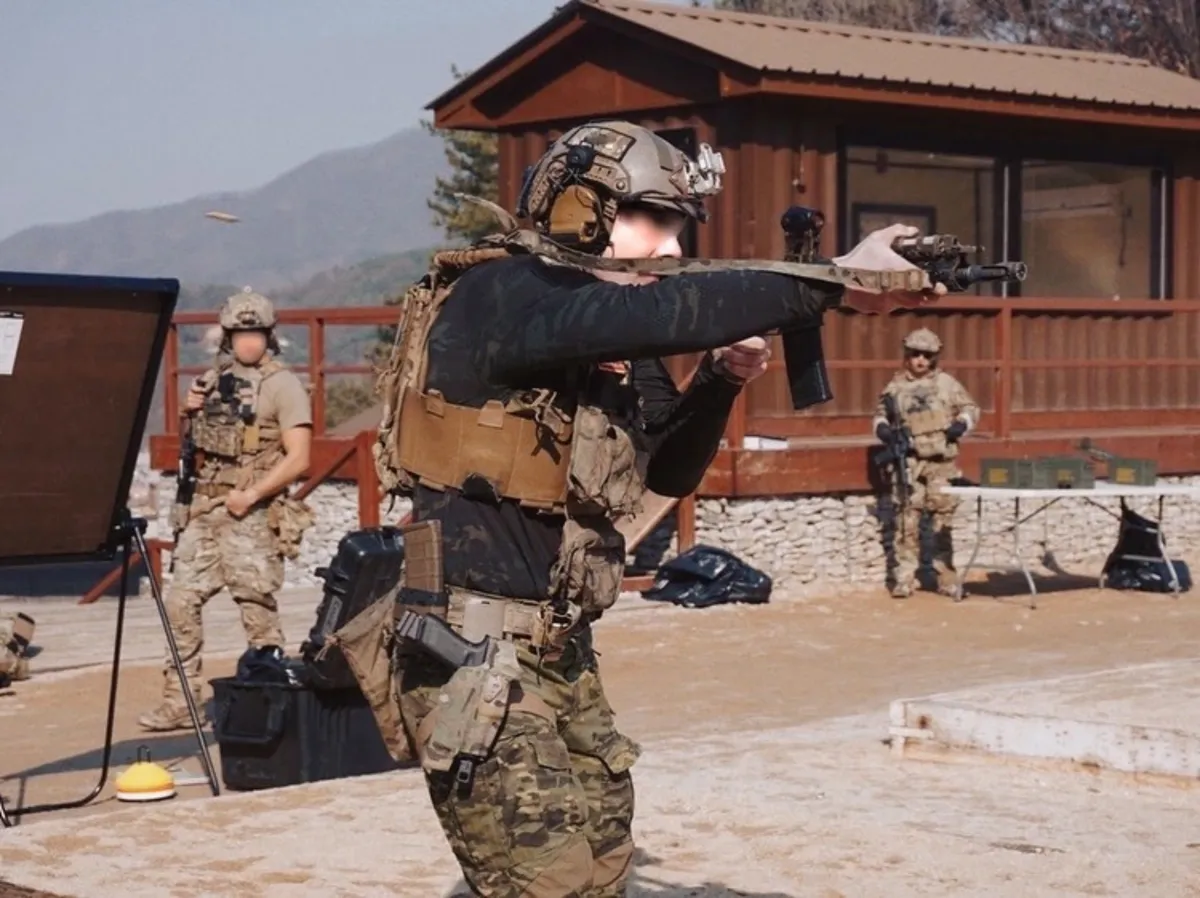
What Is Work Capacity? Definition, Components & Training
Work capacity is your ability to perform physical work repeatedly, recover between efforts, and sustain output over time. It is one of the most important, and often misunderstood, qualities in training. Many athletes focus instead on:
Maximal strength
Speed
Endurance
Test scores
But in real-world environments, performance is rarely determined by a single effort. Instead, it depends on the ability to perform repeated efforts, recover, and keep working over time. Athletes who want to train specifically for this quality can explore our CF ONE work capacity programs. That single quality, total work performed, not peak effort in one rep, is what work capacity measures, and it separates athletes who perform once from athletes who perform all day.
Which "Work Capacity" Do You Mean?
The phrase carries three unrelated meanings, and if you arrived here from a search you may want a different one.
In physics, the capacity to do work is energy. Work itself is force applied over distance, W = F × d, measured in joules or newton-meters. If that's the answer you needed, that's it, everything below is about something else.
In employment and business English, working capacity usually means a person's or an organization's capability to perform a role, or the hours and output a contract commits them to. It turns up in HR documents, occupational health assessments and employment contracts. Legal dictionaries are the right source for that one.
In training and exercise physiology, work capacity means the total amount of physical work you can produce and recover from across a session, a shift, or a selection course. That is what this article is about, and it's the sense used by strength coaches, tactical trainers and sports scientists.
The three senses share an intuition, how much can this system actually do, but nothing else. The rest of this covers the training one.
The Basic Definition
Work capacity refers to:
Your ability to perform physical work repeatedly, recover between efforts, and sustain output over time.
The term isn't ours and it isn't new. It comes out of Soviet sports science, and the definition most coaches still work from is Mel Siff's, in Supertraining: work capacity is "the general ability of the body as a machine to produce work of different intensity and duration using the appropriate energy systems." The phrase "as a machine" is doing real work in that sentence. Siff is describing the whole system's output, not any one component of it, and "the appropriate energy systems" is why the quality resists being trained by one method. Everything below is an elaboration of that definition for a tactical context.
Notice what this definition does not say. It is not a single number, a one-rep max, or a finish time. Work capacity is a ceiling on total output: how much hard work you can accumulate across a session, a shift, or a selection course before performance falls apart. Two athletes can post an identical deadlift or two-mile time and have completely different work capacities, the difference shows up on rep eight of a circuit, on the third evolution of the day, or in how fast they are ready to go again.
It combines several qualities, including:
Strength
Endurance
Aerobic fitness
Anaerobic capacity
Recovery ability
Fatigue resistance
In simple terms, work capacity answers the question:
How much work can you do, and how long can you keep doing it?
Work Capacity vs Strength and Endurance
Work capacity is closely related to both strength and endurance, but it is not the same as either one.
Strength
Strength is:
The ability to produce force
Measured by maximal lifts
Focused on peak output
Endurance
Endurance is:
The ability to sustain effort over time
Measured by distance or duration
Focused on long-term output
Work capacity
Work capacity is:
The ability to repeat efforts
Perform under fatigue
Recover quickly between tasks
It sits at the intersection of strength and endurance. This is why work capacity is so often confused with its neighbors. Strength and endurance are inputs; work capacity is what those inputs let you actually produce under repeated, fatiguing demand. You can be exceptionally strong and still gas out in a circuit, or have a deep aerobic base and still fold the moment a task gets heavy. Work capacity is the bridge between the two, and it is the quality that most closely predicts how you hold up in the real world.
For example:
A strong athlete may lift heavy once, but fatigue quickly.
An endurance athlete may last long, but struggle with heavy tasks.
An athlete with high work capacity can lift, move, carry, and repeat efforts over time.
And GPP
If you came up through powerlifting or strongman, you will have met this quality under a different name: GPP, or general physical preparedness. The two overlap heavily and are often used interchangeably, but the emphasis differs. GPP describes the broad base of fitness an athlete builds outside their specialty, the sled drags and accessory work that support the main lifts without being them. Work capacity describes what that base lets you produce, the total volume you can absorb, repeat and recover from.
In practice, GPP is the training category and work capacity is the outcome you're measuring. If your GPP work isn't raising the amount of quality work you can do in a week, it isn't doing its job.
Why Work Capacity Matters
In many environments, performance is not based on a single maximal effort.
Instead, athletes must:
Perform repeated tasks
Work under fatigue
Recover between efforts
Sustain output over time
This is especially true for:
Tactical athletes
They must:
Carry equipment
Perform repeated tasks
Operate under fatigue
Recover between efforts
Sustain performance for long durations
Hybrid athletes
They often:
Combine strength and conditioning
Perform circuits or intervals
Sustain output across long sessions
In both cases, work capacity determines real-world performance. If you're evaluating which program structure best develops this quality, the tactical fitness program buying guide walks through how to match training design to work capacity goals.
The Components of Work Capacity
Work capacity is built from several systems working together.
1. Aerobic capacity
The aerobic system:
Supports recovery between efforts
Sustains long-duration work
Reduces fatigue accumulation
The aerobic system is the single biggest driver of work capacity, because it dictates how fast you clear fatigue between efforts, athletes with a deep aerobic base recover quicker, accumulate less fatigue, and can therefore do more total work in a session. A full breakdown of what aerobic capacity is and how it functions within this system is worth understanding before building any work capacity program.
2. Strength
Strength:
Determines how much force you can produce
Reduces relative effort during tasks
Improves efficiency under load
Stronger athletes often fatigue more slowly during submaximal work.
3. Anaerobic capacity
The anaerobic system:
Fuels high-intensity efforts
Supports repeated bursts of activity
Contributes to work tolerance under fatigue
4. Recovery ability
Recovery capacity determines:
How quickly you can repeat efforts
How well you handle multiple sessions
How sustainable your training is
This is influenced by:
Aerobic fitness
Sleep
Nutrition
Stress levels
How Work Capacity Is Developed
Work capacity is built through a combination of training methods.
Aerobic base training
Examples:
Zone 2 running (roughly 60–70% of max heart rate)
Cycling
Rowing
Rucking
Purpose:
Improve recovery
Build endurance
Support repeated efforts
Strength endurance work
Examples:
Moderate-load, higher-rep lifting
Circuits
Complexes
EMOM sessions
Purpose:
Sustain force over time
Improve fatigue resistance
High-intensity conditioning
Examples:
Interval training
Tactical circuits
Repeated sprint work
Purpose:
Increase anaerobic capacity
Improve repeated effort performance
Rough dosing for each of the three, so this is buildable rather than just describable. Aerobic base: three to five sessions a week, thirty to ninety minutes, at a pace you could hold a conversation through, in heart-rate terms roughly 120 to 150 beats per minute for most people, low enough that you can keep breathing through your nose. Strength endurance: two to three sessions, moderate loads at twelve or more reps, rest intervals kept short. High-intensity conditioning: one to two sessions only, in work-to-rest ratios around 1:2 or 1:3, ten to twenty seconds of hard effort against thirty to sixty seconds of recovery, because this is the most expensive item on the list and the easiest to overdo.
The ratio matters more than the individual numbers. Most weeks should be predominantly easy aerobic volume with a small fraction of genuinely hard work, not an even split.
Effective work capacity programs usually combine all three. Understanding what training load is and how to manage it across these methods is essential for making consistent progress without breakdown. The mistake most people make is running only one of these three. A pure conditioning grind builds a gas tank but no force production; pure strength work raises your ceiling but never teaches you to repeat efforts. The athletes with the highest work capacity train all three concurrently and, just as importantly, sequence them so the hard days and easy days don't collide.
Signs of High Work Capacity
Athletes with strong work capacity typically:
Recover quickly between sets
Handle long training sessions
Perform repeated efforts consistently
Maintain output under fatigue
Train frequently without breakdown
They may not always be the strongest or fastest, but they are:
Reliable and sustainable performers.
Signs of Low Work Capacity
You may lack work capacity if you:
Fatigue quickly during circuits
Struggle with repeated efforts
Recover slowly between sets
Experience major performance drop-offs
Feel overwhelmed by longer sessions
These are often signs that:
Aerobic fitness is limited
Strength endurance is low
Recovery capacity is underdeveloped
Work Capacity in Tactical Environments
For tactical athletes, work capacity is not a training preference, it is an occupational requirement. Soldiers, law enforcement officers, and firefighters rarely face a single maximal effort; they face repeated tasks under load, across long shifts, with no control over when the next demand arrives.
They must:
Perform repeated tasks
Carry external loads
Operate under fatigue
Recover between efforts
Sustain performance over long shifts
In these environments, work capacity often determines:
Operational effectiveness
Injury risk
Long-term readiness
A slightly slower but high-capacity athlete is often more effective than a faster but fragile one. The post on work capacity demands of firefighters illustrates exactly how these principles apply in one of the most demanding tactical environments.
Common Mistakes in Work Capacity Training
Too much intensity
Constant high-intensity training can lead to:
Chronic fatigue
Plateaued performance
Increased injury risk
No aerobic base
Without aerobic development:
Recovery is limited
Fatigue accumulates quickly
Work capacity stays low
Random workouts
Unstructured training often leads to:
Inconsistent progress
Poor recovery
Inefficient adaptation
One line on the first of those. The fatigue that comes from too much intensity resolves with a lighter week; pain that localises to one joint or tendon, or soreness that is severe and disproportionate after a single high-volume session, does not, and needs looking at by a qualified professional rather than programming around. Circuits and high-rep conditioning are the sessions where people most often overshoot what they've built up to, particularly when returning after time off.
Work capacity improves best through structured, progressive training. One concept that directly shapes how structure should be applied is training density, how much work is packed into a given timeframe and why it matters for work capacity development.
The Key Takeaway
Work capacity is the ability to:
Perform repeated efforts
Recover between tasks
Sustain output over time
Strength gives you force.
Endurance gives you duration.
Work capacity determines how much total work you can actually perform.
If you only train for a single number, a max lift, a mile time, a test score, you are optimizing for the rep that almost never decides real outcomes. Work capacity is the quality that decides them. Build it deliberately, with structure, and the test scores tend to follow on their own. In tactical, hybrid, and real-world environments, work capacity is often the quality that defines true performance. The contrast post on conditioning vs cardio draws a distinction that shapes how every component of work capacity should be trained.
Common Questions About Work Capacity
What Does Work Capacity Mean in Fitness?
It means the total amount of physical work you can produce and recover from over a given period, a session, a shift, or a training week. It is distinct from strength, which is force in a single effort, and from endurance, which is duration at a submaximal pace. Work capacity is the output those two qualities combine to allow under repeated, fatiguing demand.
What Is the Capacity to Do Work Called?
In physics, the capacity to do work is energy. That's a different question from the one this page answers, in training, work capacity is a trainable physical quality rather than a physical constant, and it describes what an athlete can produce rather than the potential stored in a system.
Is Work Capacity the Same as GPP?
Close but not identical. GPP, or general physical preparedness, is the training category, the broad base of work an athlete does outside their specialty. Work capacity is the outcome that training produces: how much quality work you can absorb and repeat. GPP is how you train it; work capacity is what you measure.
How Long Does It Take to Improve Work Capacity?
Noticeable change in eight to twelve weeks of consistent, structured training, because much of the early gain comes from the aerobic and recovery side rather than from structural adaptation. The ceiling keeps rising for years, but it rises at the pace of the slowest component, which for most people is the aerobic base.
References
Siff, M. C. (2003). Supertraining (6th ed.). Supertraining Institute.
Verkhoshansky, Y., & Siff, M. C. (2009). Supertraining (6th ed., expanded). Verkhoshansky.
Zatsiorsky, V. M., & Kraemer, W. J. (2006). Science and Practice of Strength Training (2nd ed.). Human Kinetics.


