
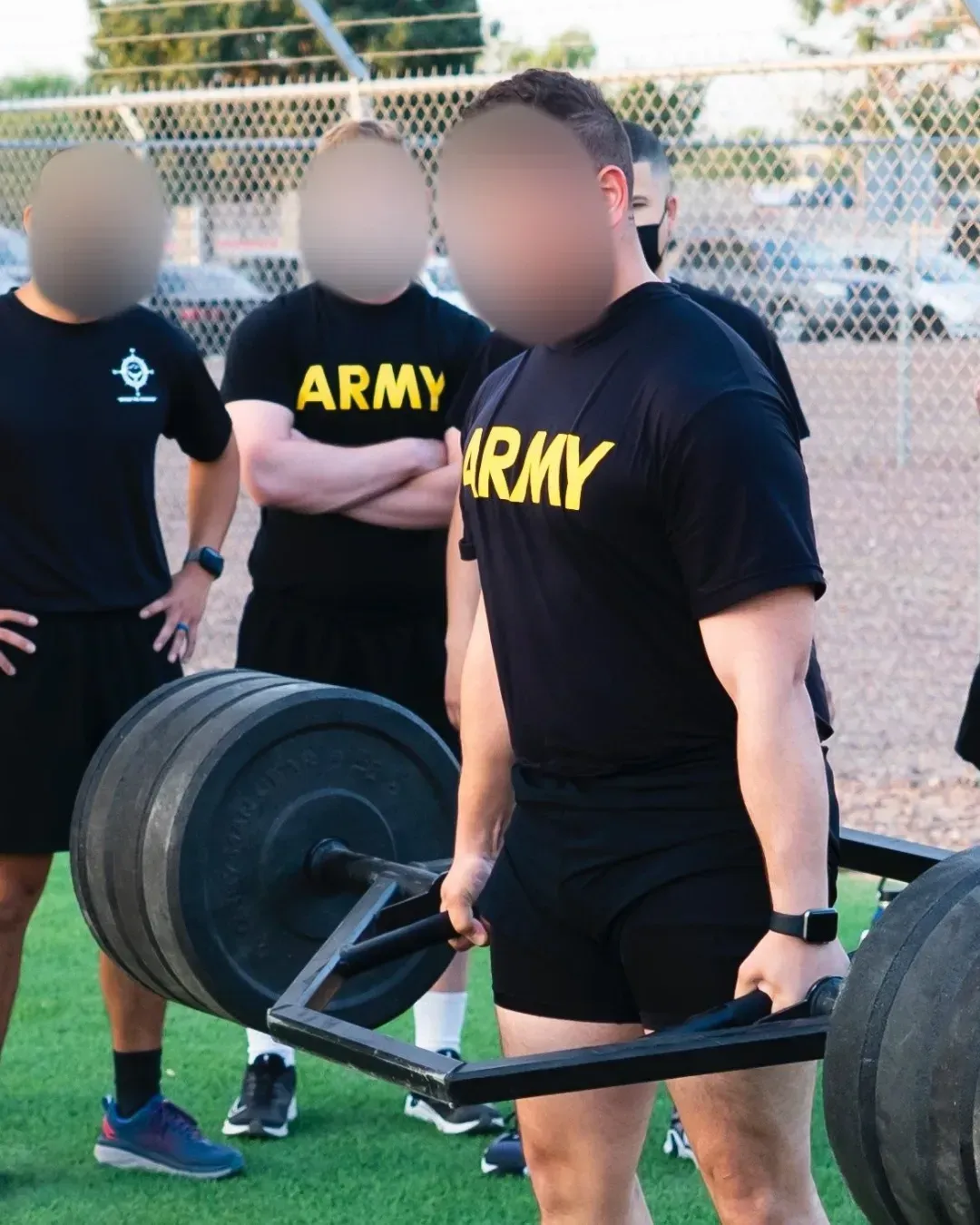
Maintaining Strength as You Age: Tactical Athlete Guide
How to Stay Strong While Endurance Becomes the Priority
Maintaining strength as you age is entirely possible. Strength does not disappear with age, but it does become easier to lose if it is not maintained properly.
For tactical athletes, this creates a challenge:
Endurance demands increase
Recovery capacity decreases
Training time becomes limited
So the question becomes:
Can you maintain strength while focusing on endurance?
The answer is yes. But only if training is structured correctly.
This guide breaks down how strength changes with age, the difference between strength and power, how to maintain strength alongside endurance training, and how to prioritize training without sacrificing long-term performance. Programs built around that kind of intelligent structure are what CF ONE training programs are designed to deliver.
Strength and Aging: What Actually Changes
Aging affects strength, but not in the way most people assume. The common belief is that strength simply declines and there is little to be done about it. The reality is more nuanced and considerably more actionable.
What does decline with age:
Maximal strength potential gradually decreases
Rate of force development declines
Recovery between heavy sessions slows
What can be maintained with proper training:
High levels of relative strength
Functional strength for tactical tasks
Strength endurance
The key insight is that loss of strength is not automatic. It is usually the result of reduced training stimulus, poor recovery, or mismanaged priorities rather than an inevitable consequence of getting older. Athletes who maintain consistent, appropriately intense strength training retain far more capability than those who reduce intensity or abandon strength work entirely when endurance becomes the priority. For athletes evaluating which tactical fitness program best supports long-term strength maintenance alongside endurance development, the tactical fitness program buying guide walks through exactly how to choose the right option.
Strength Training vs Power Training
This distinction is critical for aging tactical athletes and it is one that most training programs handle poorly. Treating strength and power as interchangeable leads to programs that develop neither effectively.
Strength training focuses on maximal force production through heavy lifts, lower rep ranges, and controlled movements. Power training focuses on speed of force production through explosive lifts, jumps, and sprints. Both matter. Both decline with age. But they decline at different rates.
What changes with age:
Power declines faster than strength
Power must be trained intentionally to be maintained
Strength can be maintained with lower volume but only if intensity is preserved
The practical implication is straightforward. An athlete who maintains heavy strength work but never trains explosively will retain the ability to produce force but lose the ability to produce it quickly. For tactical athletes who need to sprint, change direction, and respond to sudden demands, power maintenance is not optional. It requires its own deliberate training stimulus. For athletes with specific questions about tactical fitness program structure and what sustainable long-term training looks like in practice, the tactical fitness program FAQ covers the most common questions in one place.
Can You Maintain Strength While Focusing on Endurance?
The short answer is yes, but only under specific conditions. Three factors determine whether strength is maintained or lost during endurance-focused training phases:
Sufficient intensity must be maintained in strength sessions
Total training load must be managed within recovery capacity
Recovery must be prioritized as a non-negotiable training element
The limiting factor is rarely the endurance training itself. It is the athlete's ability to recover from combined training stress. This is called the adaptive capacity ceiling, and understanding it is what separates athletes who successfully maintain strength through endurance phases from those who lose it.
Every athlete has a ceiling: the total amount of stress they can recover from and adapt to at any given time. When endurance training is added to a strength program, total stress increases. If combined stress exceeds adaptive capacity, fatigue accumulates, performance declines, and strength drops. This is why strength loss during endurance phases is so common. It is not caused by the endurance training directly. It is caused by exceeding the recovery capacity to handle both simultaneously. Understanding how aging affects training adaptation gives this framework its physiological foundation, explaining exactly how the body's adaptive responses change with age and why the recovery capacity ceiling becomes the central variable to manage as athletes get older.
The Performance Longevity Model
Long-term performance requires balancing training load, recovery, and durability across time. Strength fits into this model as a supporting quality rather than the primary target in every training phase.
How strength supports long-term performance:
Supports structural durability
Improves movement efficiency under load
Reduces injury risk across the career
How endurance training interacts with strength maintenance:
Increases total training load
Competes for the same recovery resources
Can suppress strength adaptations if volume is not managed
The goal is not to maximize strength. The goal is to maintain an effective level of strength over time, the level required to support durability, movement efficiency, and injury resistance, without creating so much training load that endurance development or recovery is compromised. The structural framework for building and sustaining all of these qualities across a career is covered in the performance longevity model, which maps how strength, endurance, durability, and recovery interact across the full arc of a tactical athlete's career rather than within a single training block.
The Interference Effect
When combining strength and endurance training, interference can occur. Understanding when it happens and how to manage it determines whether the combination produces balanced development or chronic fatigue.
When interference is most likely to occur:
Volume in both domains is too high simultaneously
Recovery between sessions is insufficient
Sessions are poorly scheduled with heavy demands stacked back-to-back
How to manage the interference effect:
Separate strength and endurance sessions when possible, ideally by several hours or on different days
Prioritize the key session for each quality and protect it with adequate recovery before and after
Control total weekly volume so that combined stress stays within adaptive capacity
The interference effect is a programming problem, not an inevitable outcome. Athletes who manage session sequencing and total load intelligently can develop and maintain both qualities simultaneously without meaningful interference. Understanding what is performance longevity gives every athlete reading this post the complete professional definition of the goal this entire framework is building toward: not peak performance at one moment in time, but sustained high capability across the full length of a career.
Training Prioritization Framework
You cannot maximize everything at once. The most productive approach at any given time is to define a primary goal and deliberately maintain secondary qualities rather than trying to develop all of them simultaneously.
Step 1: Define your primary goal. This determines whether the current phase is endurance-focused, strength-focused, or balanced.
Step 2: Maintain secondary qualities at an appropriate maintenance volume. If endurance is primary, reduce strength volume but maintain intensity. If strength is primary, reduce endurance volume to what is needed for maintenance.
The key principle for maintenance phases:
Reduce volume
Maintain intensity
Do not drop to light weights and call it maintenance
Step 3: Manage total load so that combined training stress stays within your adaptive capacity.
Step 4: Adjust based on feedback. Monitor:
Performance trends across both domains
Fatigue levels between sessions and across weeks
Recovery quality as an indicator of whether load is appropriate
The underlying principle is that training is not about doing everything. It is about doing the right amount of the right things at the right time. The practical question of whether age limits how much aerobic adaptation is still possible is answered directly in does age limit aerobic adaptation, which gives athletes the evidence-based answer to one of the most common concerns about training as careers progress.
Practical Strength Maintenance Strategies
These six strategies allow athletes to maintain meaningful strength levels through endurance-focused training phases without adding unnecessary fatigue or competing with aerobic development.
The most important principle runs through all of them: intensity preservation is non-negotiable. You can reduce volume significantly and still maintain strength. You cannot reduce intensity to light loads and expect strength to hold.
Practical strategies:
Maintain intensity: use moderate to heavy loads even with lower frequency and volume
Reduce volume: one to three sessions per week is often sufficient for maintenance
Focus on key movements: prioritize compound lifts and functional patterns that transfer to tactical demands
Avoid frequent failure training: training to failure increases fatigue cost without meaningful additional strength stimulus in a maintenance context
Integrate intelligently with endurance sessions: plan scheduling to minimize interference and allow recovery between demanding sessions in each domain
Monitor strength levels: if strength declines rapidly, the first culprits are excessive total load and insufficient recovery, not the endurance training itself
Common Strength Maintenance Mistakes
These five mistakes are responsible for the majority of strength loss that aging tactical athletes experience during endurance-focused training phases. Each one is preventable with informed programming.
Mistakes to avoid:
Dropping strength training completely: leads to rapid strength loss that takes far longer to rebuild than it took to lose
Reducing intensity too much: light weights do not maintain strength effectively, only heavy enough loads drive the neural and structural adaptations that preserve strength
Excessive volume: creates unnecessary fatigue that compromises both strength and endurance development simultaneously
Poor scheduling: stacking hard sessions in both domains without recovery compounds fatigue and prevents adaptation in either
Ignoring recovery: recovery is the limiting factor in combined training, not effort or willingness to train hard
The pattern across all five mistakes is the same: they all involve either doing too much or recovering too little. Fixing either one produces immediate improvement. The broader question of how to balance short-term performance pressure against the long-term progress that actually builds a durable career is addressed in short-term performance vs long-term progress, which draws the precise line between training that produces immediate results and training that produces the sustained capability this post is building toward.
Tactical Application
Aging tactical athletes face a specific version of this challenge: their job demands do not decrease as their recovery capacity does. Load carriage requirements, physical task standards, and operational demands remain constant while the body's ability to absorb and recover from training stress gradually diminishes.
Strength supports the tactical mission in three ways:
Supports load carriage efficiency by reducing the relative effort cost of each movement under load
Improves movement efficiency so operational tasks require less energy and produce less breakdown
Reduces injury risk by maintaining the structural durability that protects joints and connective tissue under repeated demand
These must be balanced with increasing endurance demands and declining recovery capacity. The athletes who navigate this successfully are not the ones who maximize every quality simultaneously. They are the ones who maintain each quality at the level required for the mission while managing total load within their recovery ceiling. The full picture of how tactical readiness evolves and is maintained across a career is covered in tactical readiness across the lifespan, which addresses the specific ways training must evolve as careers progress to maintain the physical standards the job requires without accumulating the breakdown that ends careers prematurely.
Final Takeaway
Strength can be maintained with age. But only if intensity is preserved, volume is controlled, and recovery is prioritized. Athletes who understand the difference between strength and power, respect their adaptive capacity ceiling, and apply a deliberate prioritization framework can maintain strength without sacrificing endurance development.
The goal is not to maximize one quality. The goal is to sustain multiple qualities over time without breakdown.
FAQ Section
Can you maintain strength as you age?
Yes. Strength can be maintained with consistent training even as maximal potential gradually declines, provided intensity is preserved and recovery is managed.
How often should aging athletes train for strength?
Typically one to three times per week is sufficient for maintenance, depending on total training load from all sources.
Do you need heavy weights to maintain strength?
Yes. Moderate to heavy loads are necessary. Light weights do not provide the mechanical stimulus required to maintain strength levels.
Does endurance training reduce strength?
It can if total training load exceeds recovery capacity, but it does not inherently reduce strength when programming is managed intelligently.
What is the biggest mistake when combining strength and endurance?
Excessive combined volume and poor recovery management. The solution is reducing volume while maintaining intensity in both domains.
What declines faster with age, strength or power?
Power declines faster than strength and must be trained intentionally with explosive movements to be maintained.


