
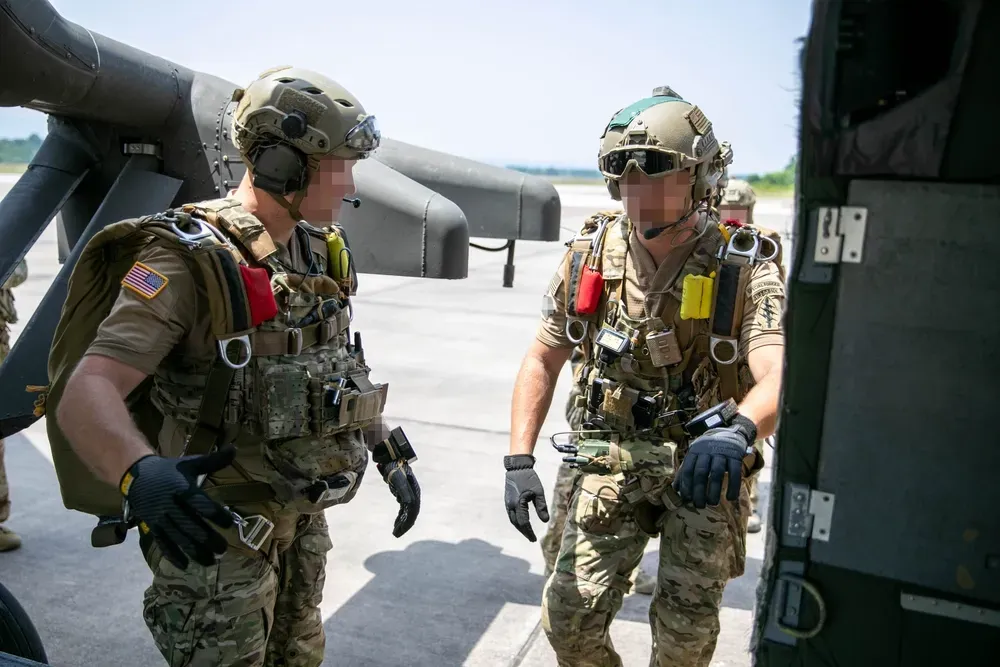
What Is Performance Longevity? A Tactical Athlete's Guide
Performance Longevity, Defined
Performance longevity is the ability to train hard, stay healthy, and perform at a high level for years, not just for a single test cycle or deployment. Most training programs chase short-term results instead:
Faster run times
Bigger lifts
Better test scores
Short-term weight loss
Peak competition performance
While these goals are important, they often overlook a critical concept: performance longevity. Athletes who want programming designed around long-term capability rather than short-term peaks can explore our CF ONE long-term training programs. Performance longevity is what determines whether an athlete can stay strong, capable, and operational not just for months, but for years or even decades.
The Basic Definition
Performance longevity refers to:
The ability to maintain a high level of physical performance over an extended period of time without chronic injury, burnout, or decline.
It includes:
Long-term consistency
Injury resistance
Sustainable training habits
Recovery capacity
Adaptability over time
In simple terms, performance longevity answers the question:
Can you keep performing at a high level year after year?
This is what separates durable capability from raw fitness. Plenty of athletes can hit a peak number once, a fast two-mile, a heavy deadlift, a maxed-out test score. Far fewer can still hit respectable numbers five or ten years later without a string of injuries and layoffs in between. Performance longevity measures the area under that curve, not the height of a single spike. For a tactical athlete, the height of one peak matters less than the ability to stay operational, week after week, across a full career.
Why Performance Longevity Matters
Many athletes and tactical operators fall into a short-term mindset. They:
Train extremely hard for a test or event
Push intensity beyond sustainable levels
Ignore recovery and durability
Achieve short-term performance gains
Then get injured, burned out, or inconsistent
This cycle leads to:
Repeated layoffs
Chronic injuries
Declining performance
Shortened careers
In contrast, athletes who train for longevity:
Improve more gradually
Stay healthier
Accumulate more quality training
Reach higher long-term performance levels
This pattern is well documented in the training-load research. Gabbett's work on the "training-injury prevention paradox" found that sudden spikes in workload, an acute week roughly 1.5 times higher than what an athlete is conditioned for, raised injury risk in the following week by two to four times, while high workloads built gradually were actually protective (Gabbett, 2016). The pattern holds in uniform: in U.S. Army basic combat training, soldiers entering with lower aerobic fitness carried roughly 1.4 to 2.4 times the injury risk of fitter recruits (Knapik et al., 2001). Across both athletic and tactical populations, the research consistently shows that:
Consistent training reduces injury risk.
Sudden workload spikes increase injury risk.
Higher chronic workloads are associated with better resilience.
This highlights the importance of long-term, sustainable training. The takeaway is not "train less." It is "train in a way your body can absorb." A workload your system is prepared for builds capacity; the same workload dumped on an underprepared athlete in a single week buys an injury instead. Longevity-minded programming closes that gap deliberately, raising the chronic baseline slowly so today's hard week is tomorrow's easy one. For athletes evaluating which program structure best supports this approach, the tactical athlete program buying guide breaks down what to look for in a longevity-focused training plan.
The Three Pillars of Performance Longevity
Performance longevity is usually built on three major foundations. None of them is a single workout or a supplement, they are systems you develop over months and protect over years. Treat them as a stool: weaken one leg and the other two cannot hold you up. An athlete with elite durability but no recovery capacity still breaks down; an athlete with great recovery but a chaotic, unstructured program never accumulates the consistent training that longevity demands. The three foundations below work together.
1. Durability
Durability refers to:
Tissue tolerance
Injury resistance
Ability to handle repeated stress
Durable athletes:
Train consistently
Recover effectively
Rarely miss long periods due to injury
Durability is built through:
Gradual workload progression
Strength training
Aerobic base development
Consistent training habits
In practice, durability is mileage banked over time. The soldier who has rucked progressively heavier loads for two years has tissue that tolerates a bad day; the one who jumped straight to a heavy ruck last week does not. You cannot buy durability in a training block, you earn it across many of them, which is exactly why it is a longevity quality and not a peaking one.
Durability also has a joint component that pure strength work does not automatically cover. Tendons, ligaments, cartilage, and joint capsules tolerate load best when they are regularly asked to produce force through a full range of motion, not just through the middle of it. An athlete who only ever loads a partial range gradually loses access to the ends of it, and the positions they can no longer control are exactly the ones that injure them when a ruck strap shifts or a foot lands wrong. Deliberate work through full ranges, loaded where you can manage it, is what keeps the joints as durable as the muscle attached to them.
2. Recovery capacity
Recovery capacity determines how quickly you can:
Return to baseline after a session
Handle repeated training days
Perform under fatigue
It depends on:
Aerobic fitness
Sleep quality
Nutrition
Stress management
Training structure
Athletes with strong recovery systems can train more frequently and effectively. Recovery capacity is the quiet multiplier. Two athletes can run identical programs, but the one who sleeps seven-plus hours, eats enough, and manages stress will absorb more of that work and show up able to train again sooner. Over a year, that difference compounds into far more quality sessions banked, and quality sessions banked is most of what long-term performance actually is. Recovery is not the reward for training; it is part of the training.
Nutrition sits on that list for a reason, and it is the input most often treated as optional. Under-fueling does not announce itself as a nutrition problem. It shows up as a recovery problem: sessions that used to feel routine start feeling heavy, soreness lingers a day longer than it should, and progress stalls despite the program being sound. The mechanism is simple enough, tissue repair, hormone production, and glycogen replacement all draw on material you either supplied or didn't. An athlete who trains for longevity but eats like someone trying to lose weight for a photo is quietly capping their own recovery capacity, and the ceiling shows up years later rather than next week.
3. Sustainable training structure
Programs built for longevity:
Progress gradually
Include deload phases
Balance intensity and volume
Prioritize consistency over extremes
These systems avoid:
Chronic fatigue
Sudden workload spikes
Overuse injuries
Burnout
A simple example: a longevity-structured block might run three weeks of progressive loading followed by a deload week at roughly 50–60% of peak volume, then repeat at a slightly higher baseline. It feels slower in the moment, and it is, but the athlete is still training in month eight while the "every week is max effort" crowd is three weeks into a forced layoff. Structure is what converts hard work into sustainable progress instead of a countdown to breakdown.
Performance vs Longevity
Performance and longevity are connected, but they don’t always move in the same direction. It is worth being honest about the trade-off rather than pretending it doesn't exist, because most writing on this subject quietly does.
Training for a peak and training to last are not the same job. Peaking means deliberately accepting a period where you carry more fatigue than you can fully recover from, because the goal is one date on the calendar and everything is arranged around it. That is a legitimate strategy, selection courses, tests, and competitions all reward it, and it works precisely because it is temporary. The failure mode is not peaking. It is peaking as a permanent setting.
Longevity-focused training makes the opposite trade. It caps how far you push into unrecoverable fatigue, which means you will not hit the number you might have hit under a dedicated peak. What you get in exchange is that you are still training in month twelve, month sixty, and year fifteen, and the cumulative work those years contain will usually produce a higher ceiling than the peak you gave up.
The practical resolution is that these are settings, not identities. Spend most of the year training for longevity, and peak deliberately two or three times when something actually depends on it. The athlete who peaks year-round is not more committed than the one who doesn't; they are just spending a resource they will need later.
Figure 1.1 - Performance-focused versus longevity-focused training. A performance-focused model works to a horizon of one event or test date; a longevity-focused model works to years and a full career. Performance training is pushed to and past the recovery ceiling, while longevity training is kept below it most weeks. Under a performance model recovery is something fitted around the training; under a longevity model recovery is part of the training. Progression is aggressive and front-loaded in one, gradual and ramped in the other. Injury exposure is accepted as a cost in a performance model and actively minimized in a longevity model. Performance is measured by the best single number; longevity by the number you can still repeat in five years. A performance model is correct when a specific date genuinely matters, a selection course, a physical fitness test, a competition, and a longevity model is correct for everything else, which is most training years. The practical diagnostic is what recovery is for: if a training week contains no protected recovery, it is a performance model regardless of intent. This is the same logic as optimizing the worst usable day rather than the best single day, applied across a career rather than a week. Framework for programming decisions, not a performance standard or medical advice.
High performance, low longevity
This athlete:
Peaks quickly
Achieves impressive short-term results
Trains at very high intensity
But:
Gets injured frequently
Burns out mentally or physically
Struggles with consistency
This is the athlete who tests well in March and is on the injured list by June. The numbers look impressive on any single day, but the calendar tells a different story: more time spent rehabbing or detraining than building. In a tactical career, where readiness has to be there on an unscheduled day, that profile is a liability no matter how high the peak.
Moderate performance, high longevity
This athlete:
Trains consistently for years
Rarely gets injured
Maintains stable performance
Improves gradually over time
In the long run, the second athlete usually surpasses the first. The math is undramatic but decisive. Steady, uninterrupted improvement across years beats a high peak punctuated by injuries every time, because the consistent athlete keeps adding to a base that never gets torn down. The flashy athlete keeps restarting from zero. Five years out, the "moderate" athlete is usually stronger, more durable, and still training, which is the whole point. The contrast post on short-term performance vs long-term progress explores exactly why this happens and what it means for how you structure training.
How Performance Longevity Is Measured
Longevity resists measurement for an obvious reason: the thing you want to know takes years to reveal itself, and by the time it has, the decisions are already made. But there are proxies that tell you early whether you are on the right trajectory.
Sessions completed as prescribed. The least glamorous metric and the most predictive one. Over a twelve-week block, how many sessions went as written versus were missed, cut short, or modified around a niggle? An athlete completing the large majority of prescribed work is building longevity whether or not any single session was impressive.
Weeks lost per year. Count the weeks in the last twelve months where injury, illness, or burnout stopped you training. This is the number that separates the two athletes in the section above, and most people have never actually counted it.
Time to return to baseline. After a genuinely hard session, how long until you feel normal again? Watch this number across a training year. If a session that used to cost you a day is now costing three, recovery capacity is falling, and that is a longevity signal long before it becomes an injury.
The chronic-to-acute relationship. The workload comparison behind Gabbett's finding above, this week's training stress against what you've been averaging, is the most practical field check on whether progression is a ramp or a cliff. You don't need software to run it. You need to know whether this week is a modest step up from your recent normal or a leap.
Trajectory, not level. The most honest question in this whole article is not "how fit are you?" It is "is your fitness at forty higher or lower than it was at thirty-five, and what direction is the line moving?" Level tells you about today. Slope tells you about longevity.
The Long-Term Training Model
Athletes who achieve performance longevity typically follow a model built on:
Consistency
Regular weekly training
Minimal long layoffs
Consistency is the model's load-bearing wall, and it is the one most people underestimate because it produces nothing visible in any given week. Its value is entirely cumulative. Training four times a week for three years beats training six times a week for four months and then stopping, every time, and it isn't close. The practical implication is that the best program is not the most aggressive one you can survive, it is the most demanding one you can repeat when work is bad, sleep is short, and motivation is gone.
Gradual progression
Slow increases in volume and intensity
Avoidance of sudden spikes
This is where the research cited earlier translates directly into programming. If a week roughly one and a half times harder than what you're conditioned for multiplies injury risk in the week that follows, then the design rule writes itself: increase, then hold long enough to absorb the increase before moving again. The mistake is almost never the size of any single week in isolation. It is the size of the gap between that week and the ones behind it, which is why returning from time off at the volume you left at, rather than the volume you can currently handle, injures so many people.
Aerobic base development
Low-intensity conditioning
Improved recovery and endurance
The aerobic base is the most underrated leg of the model for tactical athletes, who tend to over-index on strength and intensity. A larger aerobic engine clears fatigue faster between efforts, supports higher training frequency, and as the military injury data shows, independently lowers injury risk. It is also the quality that decays slowest with age, which makes it the smartest long-term investment a career athlete can make.
Strength training
Structural resilience
Joint stability
Force production
Strength earns its place in a longevity model for a reason that has nothing to do with what you can lift. Muscle mass and strength both decline with age unless actively defended, and that decline is what turns an ordinary demand into an injurious one. A stronger muscle crossing a joint absorbs load that would otherwise concentrate on the tendon and ligament, and progressive loading toughens those tissues directly over time. The target is not an elite number. It is enough reserve that the demands of the job sit well below your ceiling instead of at it, which is precisely what keeps a routine task from becoming the one that hurts you at forty-five.
Planned recovery phases
Deload weeks
Reduced training blocks
Stress management
Planned recovery is the part athletes skip first and regret longest. A deload taken on schedule costs you one week of reduced volume. A deload forced on you by an injury costs six, and you come back below where you started. The distinction that matters is planned, recovery built into the calendar before it is needed, not negotiated with yourself when you already feel wrecked. By the time you feel like you need a deload, you needed it two weeks ago. This creates a sustainable performance trajectory. The performance longevity model provides a structured framework for applying these principles across a full training career.
Performance Longevity at 25, 35, and 45
The principles don't change across a career. The margins do.
In your twenties, the body forgives almost everything. Recovery is fast, tissue tolerance is high, and the cost of bad decisions is deferred rather than waived. This is the stage where longevity is easiest to build and easiest to ignore, because nothing you do wrong hurts yet. The athletes who are still capable at forty are, overwhelmingly, the ones who built a chronic training base in this decade and avoided the injuries that leave a permanent mark. The single highest-leverage thing you can do at twenty-five is not get badly hurt.
In your thirties, the margin narrows and the schedule tightens at the same time. Recovery takes longer, career and family compress available training hours, and the aggressive approach that worked at twenty-four starts producing niggles instead of progress. This is where most people either learn to program deliberately or start the slow drift out of training entirely. It's also where the compounding from the previous decade becomes obvious, the athlete with ten years of consistent base behind them is training well, and the one who peaked and crashed repeatedly is managing symptoms.
In your forties and beyond, the priorities invert. Strength and muscle mass now require active defense rather than passive maintenance, recovery becomes the binding constraint on everything else, and full-range joint work moves from optional to essential. What holds up best is the aerobic base, it declines slowest and stays trainable longest, which is exactly why the earlier section calls it the smartest long-term investment. Peak numbers will move down. Capability need not, and the gap between a well-trained forty-five-year-old and an untrained one is wider than the gap at twenty-five.
For a tactical athlete the practical version is short: build the base early, program deliberately in the middle, and defend strength and recovery late. Same three pillars throughout, just a different one doing the heavy lifting at each stage.
Signs You Are Training for Longevity
You are likely on a longevity-focused path if you experience:
Consistent weekly training
Few major injuries
Gradual performance improvements
Good recovery between sessions
Stable motivation over time
None of these signs is flashy, and that is the point. A longevity-focused training year often looks boring from the outside, show up, progress a little, recover, repeat. But boring is what compounds. If you can string together months of consistent work without the body or the motivation falling apart, you are almost certainly on the right path, even if no single week feels heroic.
Signs You Are Sacrificing Longevity
You may be sacrificing long-term performance if you experience:
Frequent injuries
Chronic soreness
Burnout or loss of motivation
Repeated training layoffs
Plateaued performance despite hard training
These are often signs that:
Short-term intensity is overriding long-term sustainability.
If two or three of these are stacking up at once, treat it as data, not weakness. Chronic soreness plus stalled numbers plus fading motivation is the body filing a complaint about workload it cannot absorb. The fix is rarely more grit, it is usually a deload, more sleep, and a slower progression. Athletes who learn to read these signals early are the ones who are still training a decade later.
One qualification worth taking seriously. This same cluster, persistent fatigue, soreness that won't clear, motivation gone, performance falling despite the work, is also how several medical conditions present, and no amount of smarter programming resolves those. If the pattern persists after you have genuinely corrected sleep, fueling, and progression, or if pain is sharp, localized, or worsening rather than diffuse and improving, get assessed by a qualified medical or sports-medicine professional before continuing to treat it as a training problem.
Performance Longevity in Tactical Environments
Tactical athletes must:
Perform under fatigue
Carry external loads
Work long hours
Train consistently
Stay operational for years
In these environments, performance longevity is critical. An operator who stays healthy, maintains consistent fitness, and performs reliably over time is often more effective than someone who peaks early and gets injured frequently. The complete guide to performance longevity for career military applies these principles directly to the demands and constraints of a military career.
Longevity is not just a performance factor, it’s a career factor. Consider two operators ten years into a career. One trained for peaks, impressive when healthy, but sidelined often enough that he has missed real time and lost a step. The other trained for longevity: rarely his unit's strongest on any single day, but always available, always serviceable, never the one being worked around. Over a deployment cycle, the second operator delivers far more usable capability. In a profession where the test date is unscheduled, being reliably ready beats being occasionally exceptional.
Frequently Asked Questions
What is performance longevity?
Performance longevity is the ability to maintain a high level of physical performance over an extended period, years or a full career, without chronic injury, burnout, or decline. It rests on three pillars: durability, recovery capacity, and a sustainable training structure.
What is the difference between training for performance and training for longevity?
Performance training accepts a period of fatigue you cannot fully recover from in order to peak for a specific date. Longevity training caps how far you push past that recovery ceiling, trading a lower peak for the ability to keep training for years. They are settings rather than identities, most of the year should be longevity-focused, with deliberate peaks when something actually depends on it.
Can you train for performance and longevity at the same time?
Largely, yes. The two overlap far more than they conflict: consistency, gradual progression, an aerobic base, and strength serve both. The conflict appears only at the extremes, where peaking demands accepting fatigue and injury exposure that a longevity-first approach would not.
What is tactical longevity?
Tactical longevity is performance longevity applied to military, law enforcement, and first-responder careers, where the demand is not one maximal effort but sustained readiness across years of unscheduled tests, deployment cycles, and operational tempo. Availability matters more than peak output.
How do you measure performance longevity?
Practical proxies include sessions completed as prescribed over a block, weeks lost per year to injury or burnout, how long it takes to return to baseline after a hard session, and whether your training load is progressing as a ramp rather than a spike. Trajectory across years matters more than any single test result.
How long does it take to build performance longevity?
It is not a block you complete. Recovery capacity responds within weeks, tissue durability over months, and workload tolerance over years of accumulated chronic training. The useful reframe is that longevity is not built and then held, it is the ongoing result of how you train, which is why the model above emphasizes what you can repeat rather than what you can survive.
The Key Takeaway
Performance longevity is the ability to:
Train consistently
Stay injury-resistant
Recover effectively
Perform at a high level for years
Short-term performance is impressive.
Long-term performance is what truly matters.
Athletes who train for longevity stay healthier, improve steadily and reach higher long-term potential. The two sibling concepts that underpin everything in this post are physical resilience, the body's ability to absorb and recover from stress, and durability in performance training, which explains how that resilience is built and maintained over time.
References
Gabbett, T. J. (2016). The training–injury prevention paradox: should athletes be training smarter and harder? British Journal of Sports Medicine, 50(5), 273–280
Knapik, J. J., Sharp, M. A., Canham-Chervak, M., Hauret, K., Patton, J. F., & Jones, B. H. (2001). Risk factors for training-related injuries among men and women in basic combat training. Medicine & Science in Sports & Exercise, 33(6), 946–954


