
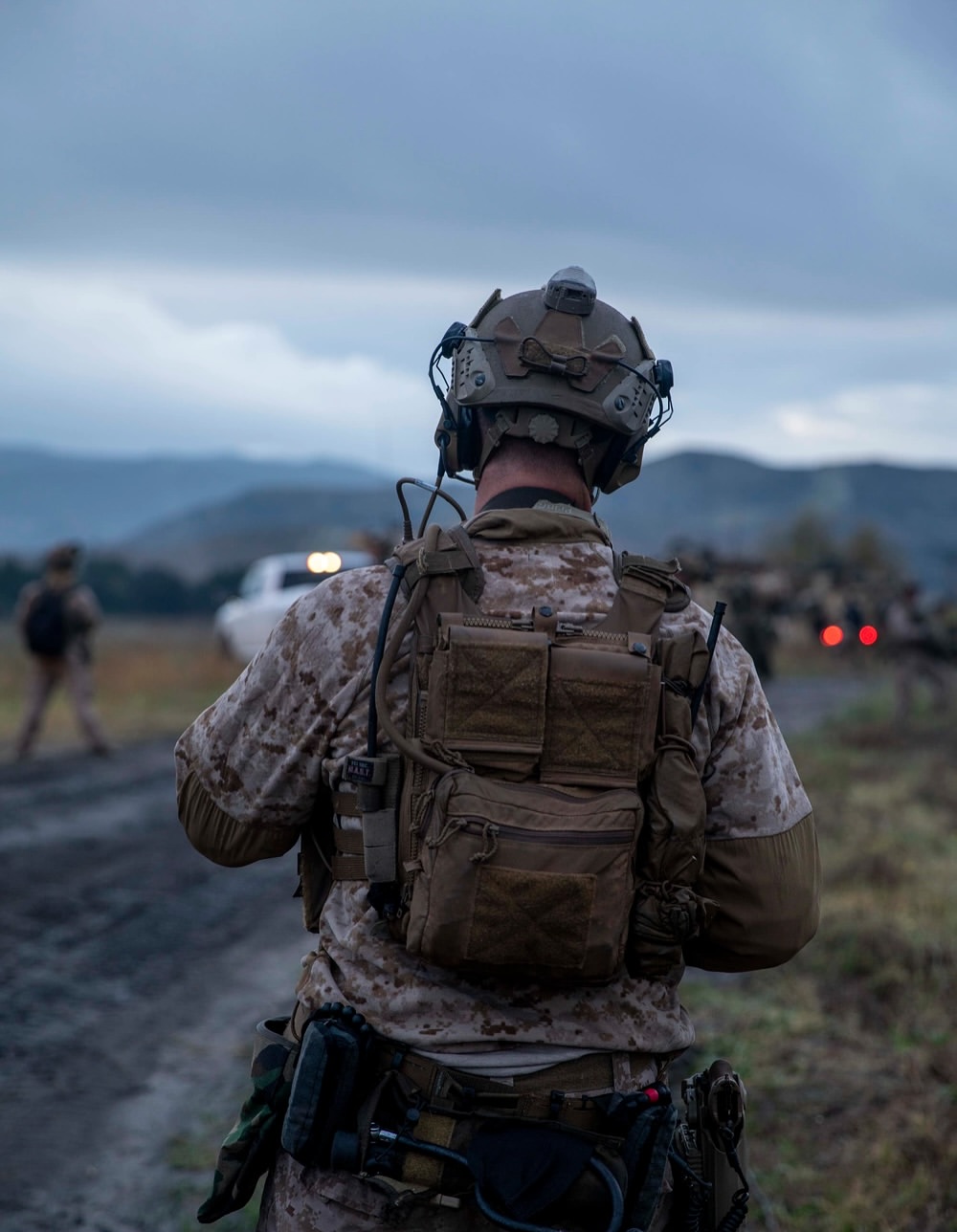
Performance Longevity for Career Military Personnel
Why Military Careers Break People - and What Prevents It
Most training is built for short-term performance, selection, a course, a test. But performance longevity for career military personnel is a different problem entirely, because military careers are not short-term.
They are:
Years of training
Repeated deployments
Ongoing physical demands
Accumulated wear and tear
The problem is this:
What gets you through selection is not always what sustains you for a career
Military personnel who want programming designed around long-term capability, not just short-term peaks, can explore our CF ONE career military programs.
Many high performers early on:
Burn out
Break down
Lose capability over time
This is a failure of performance longevity.
And it is not a rare failure. Writing in 2025, Lt. Gen. Mary Izaguirre, the 46th Surgeon General of the Army, and Brig. Gen. Deydre Teyhen laid out the scale of it: roughly 55% of soldiers experience a musculoskeletal injury every year, and about 70% of those are overuse injuries, not accidents, not combat, but the slow accumulation this page is about. Those injuries cost the Army around 10 million limited-duty days annually and $577 million in patient care.
The number that should stop a career soldier, though, is this one: 38% of injured soldiers go on to sustain a subsequent duty-limiting injury. Getting hurt once is the strongest predictor of getting hurt again. Durability debt compounds, and the interest rate is measurable.
Musculoskeletal injury, MSKI, in the Army's own shorthand, is the mechanism by which careers quietly end. Not dramatic failures. A knee that never quite came back, a back that flares under a ruck, a shoulder that took two years to become a permanent profile. Nearly all of it accumulated in training, over years, from load applied faster than the body could absorb it.
This guide breaks down:
What performance longevity actually means
How recovery and training load influence long-term outcomes
The durability–performance tradeoff
How to train for sustained capability across years, not just events
What Is Performance Longevity?
Performance longevity is the ability to:
Maintain high levels of physical and operational performance over an extended period of time
This includes:
Sustained strength and conditioning
Injury resistance
Consistent training capacity
Adaptability to changing demands
In practice, performance longevity is what separates the operator still deployable at year fifteen from the one quietly managed onto light duty. It is not a single fitness number. It is the capacity to keep training, keep recovering, and keep showing up ready across changing roles, units, and operational tempos. Most personnel never plan for it, they train for the next event and assume the body keeps pace. The ones who last treat long-term capability as a trainable asset, not a guarantee.
For career military personnel evaluating how to structure training around these demands over the long haul, the deployment training program buying guide covers how to choose a program that supports sustained capability across deployment cycles.
Short-Term vs Long-Term Performance
Short-term performance focuses on:
Peak output
Maximum intensity
Immediate results
Long-term performance focuses on:
Sustainability
Consistency
Adaptation over time
The two lists look like a preference. They aren't. They're two different jobs, and almost everyone in uniform is handed the first one and left to work out the second alone. Selection, a school, a test, a workup, every formal milestone in a military career is a short-term performance problem with a date on it, and the training culture that grows around those dates is built entirely for peaking.
Nothing in that culture teaches you what to do in the eighteen months between milestones, which is where most of a career actually happens, and where longevity is either built or spent.
Key Insight
You do not need to be at your peak at all times.
You need to:
Stay capable, durable, and ready across the full span of your career
The foundational concept behind everything this guide covers is what performance longevity is, the parent framework that defines why career-span thinking is fundamentally different from event-based training.
What Is Recovery?
Recovery is the process through which your body:
Repairs tissue
Restores energy systems
Rebalances the nervous system
It is the foundation of longevity. Worth being precise about what that means, because "recovery" has been flattened into a product category. It is not a supplement, a massage gun, or a cold plunge. It is the window during which the adaptation you paid for in training actually gets built. Training is the stimulus and the damage; recovery is where the body reads that signal and constructs something better. Skip it and you keep the damage and lose the adaptation, which is not neutral, it's a net loss.
For a soldier, the practical version is unglamorous: sleep is the intervention with the largest effect and the least equipment. Everything else on the recovery list is real and secondary.
Recovery and Career Timeline
Over a career:
Recovery capacity changes
Stress accumulates
Adaptation slows
This means recovery becomes:
More important
More intentional
More strategic
The shift is gradual enough that most people miss it until it has already cost them. At twenty-two you can absorb a terrible week, no sleep, bad food, a brutal field problem, and be more or less fine by Wednesday. The recovery happens without being managed, which teaches you the wrong lesson: that it doesn't need managing.
At thirty-four the same week takes ten days to clear, and if you keep stacking weeks the way you did at twenty-two, you never clear it at all. Nothing dramatic marks the transition. The capacity to recover passively just quietly stops covering for you, and the habits that were merely suboptimal become the thing that ends things.
Key Insight
Early in a career, you can get away with poor recovery. Later, you cannot.
What Is Training Load?
Training load is the total stress placed on your body from training.
It includes:
Volume
Intensity
Frequency
Density
Those four variables are the reason "I only lift three times a week" tells you almost nothing. Load is the product of all of them, and a soldier can hold session count perfectly steady while the actual stress doubles, heavier bars, shorter rest, longer rucks, a field exercise stacked on top. The number of workouts stayed the same. The load didn't.
That's also why load has to be tracked as a total rather than per session. The unit that matters is the week and the month, and every physical thing you do belongs in it, including the things nobody counts as training.
Training Load Over Time
Short-term:
You can tolerate spikes
Long-term:
Repeated spikes lead to breakdown
The Problem
Many military personnel train in cycles of:
High load
Minimal recovery
Repeat
Over time, this creates:
Accumulated fatigue
Increased injury risk
Reduced performance capacity
This is not gym-bro caution, it is one of the most replicated findings in sports science. Gabbett's research on training load and injury showed that it is rarely high workload itself that breaks athletes down, but sharp spikes in load relative to what the body has been prepared for. Chronic workloads built gradually can actually protect against injury, while sudden ramps drive injury risk two to four times higher. Over a career, the lesson is blunt: how you arrive at a workload matters more than the number on the page.
Hold that next to the Army's own injury numbers and the picture sharpens. If roughly 70% of soldier musculoskeletal injuries are overuse injuries, then the majority of what removes soldiers from duty is not accident and not combat. It is load applied faster than tissue could adapt to it, the exact failure mode Gabbett describes, playing out across a force of hundreds of thousands.
Which means the single highest-leverage thing a career soldier can do for their own longevity has nothing to do with how hard they train. It's about how quickly they change how hard they train.
Key Insight
Training load is not just about what you can handle today. It is about what you can sustain over years.
The Durability–Performance Tradeoff
This is one of the most important concepts for career longevity.
The Tradeoff
Maximizing performance often requires:
High intensity
High volume
Aggressive progression
But these increase:
Fatigue
Injury risk
Wear and tear
Durability Focus
Prioritizing durability means:
Controlled progression
Strategic recovery
Sustainable training
But may limit:
Short-term peak performance
The Balance
You cannot maximize both at all times.
You must:
Shift between performance and durability depending on context
The word doing the work there is context. This is not a personality type or a training philosophy you pick once and defend. It's a dial you're supposed to be turning, deliberately, in response to what the next six months actually require.
The failure isn't choosing wrong. It's never choosing, leaving the dial wherever it was set the last time something mattered, usually pinned hard toward performance because that's where selection left it. Years pass with the dial untouched, and the durability side of the ledger goes unpaid the entire time. Nobody notices, because the bill arrives late and arrives as an injury rather than as a training decision.
The soldiers who last are not the ones who found the perfect balance. They're the ones who kept moving it.
Example
Pre-selection phase:
Higher performance focus
Post-selection or long-term phase:
Higher durability focus
Key Insight
Longevity comes from managing this tradeoff over time.
The Performance Longevity Model
To sustain performance across a career, you need to balance three key variables:
1. Training Load Management
Avoid excessive spikes
Progress gradually
Adjust based on recovery
2. Recovery Optimization
Prioritize sleep
Fuel appropriately
Manage stress
3. Durability Development
Build tissue tolerance
Maintain movement quality
Train consistently
Interaction of the Three
Training load drives adaptation
Recovery enables adaptation
Durability supports continued training
If any one fails:
Performance declines
These three variables are not independent dials you can max out one at a time. Push training load without matching recovery and adaptation stalls; protect durability but neglect load and capacity quietly erodes. Picture a soldier ramping ruck volume hard for a deployment workup, the load drives adaptation, but only if sleep and fueling let tissue rebuild, and only if movement quality holds under fatigue. Pull any one lever out of balance and the other two stop paying off. Longevity lives in how all three are managed together over months and years.
Key Insight
Longevity is not built through intensity.
It is built through balance and consistency over time.
The Army Already Wrote This Down
If the model above sounds like doctrine, that's because the Army arrived at almost the same conclusions and published them.
FM 7-22: Holistic Health and Fitness is the field manual, and H2F is the program that operationalizes it, human performance teams embedded at brigade level with strength coaches, physical therapists, dietitians, cognitive specialists and equipment. It's built on five domains: physical, mental, nutritional, sleep, and spiritual readiness. Line those up against the three variables above and the overlap is close to exact, H2F simply separates recovery into its sleep and nutrition components and adds the mental and spiritual dimensions this page doesn't cover.
The relevant point for an individual soldier is that the approach has been measured. Comparing brigades with H2F teams against similar brigades without them across fiscal 2021 to 2023, the Army's Center for Initial Military Training reported 14% lower growth in musculoskeletal injuries, 6,489 fewer injured soldiers, and 30% lower growth in injuries lasting more than 90 days. ACFT passing rates ran 23% higher. Separately, where FM 7-22 has been properly integrated, Army medical leadership reports a 45% reduction in injury risk, and soldiers recovering from orthopedic surgery inside an H2F unit returned to duty at 93% against 75% without one.
Two things follow from that. First, this isn't a fringe position, it's the Army's own conclusion about how to keep people serviceable, backed by force-wide data. Second, and more usefully: if you're not in an H2F-resourced unit, the principles are published and free. FM 7-22 is a public document. The soldier who reads it and applies it individually is doing what the program does institutionally, without waiting for a team to arrive at their brigade.
Phases of a Military Career
Performance strategy should evolve. It helps to know roughly when. Abt and colleagues (2016) measured strength, body composition, aerobic capacity and lactate threshold across 253 US Army soldiers, grouped by both age and years of service, and found the decline concentrated in one specific window. Soldiers with 11 to 15 years of service, aged 30 to 34, carried higher body fat and showed lower aerobic capacity and lactate threshold than younger soldiers with fewer years in. The authors' recommendation was direct: training should be aimed at maintaining these characteristics specifically to offset the loss of readiness at that point.
That window is worth sitting with, because it is not late. Eleven to fifteen years is a staff sergeant or a senior captain, mid-career, often the most operationally useful years a soldier has, and typically the point at which training becomes something fitted around a job rather than part of it.
Nothing happens to you at year eleven. It happened across the ten before it. Which means the phase to act in is the one before the decline shows up, not the one where it does.
Early Career
Focus:
Building capacity
Developing strength and conditioning
Expanding work capacity
Risk:
Overtraining
Poor recovery habits
Mid Career
Focus:
Maintaining performance
Managing load
Improving efficiency
Risk:
Accumulated fatigue
Emerging injuries
Late Career
Focus:
Preserving capability
Minimizing injury risk
Maintaining readiness
Risk:
Reduced recovery capacity
Chronic issues
Key Insight
The same training approach should not be used across all phases.
Common Mistakes That Kill Longevity
None of the five below look like mistakes while you're making them. Each one is a habit that worked, right up until the conditions it depended on quietly changed.
1. Training Like You Are Always Preparing for Selection
Leads to:
Excessive intensity
Chronic fatigue
Burnout
This is the most common and the hardest to see, because the training that got you selected is the training you have the most evidence for. It worked once, at the only moment anyone was grading it. The problem is that it was designed to be survivable for a fixed number of weeks, and a career is not a fixed number of weeks.
2. Ignoring Recovery
Recovery is treated as optional instead of essential.
Usually not as a decision. It gets treated as the flexible item in a schedule where nothing else is flexible, the thing that gives when duty, family, and training all want the same hours.
3. Accumulating Durability Debt
Small issues ignored become major problems over time. And the interest is documented: 38% of soldiers who sustain a duty-limiting injury go on to sustain another one. The first injury is rarely the expensive one. It's the one that makes the second one likely.
The guide to durability debt in military training examines exactly how these compound issues develop, and the practical strategies to prevent them across a career.
4. No Long-Term Plan
Training is reactive instead of structured. Most military training calendars are written by someone else and arrive with a month's notice. That's a reason to have a plan of your own, not a reason not to.
5. Chasing Short-Term Performance
At the expense of long-term capability.
Practical Strategies for Performance Longevity
1. Train for Consistency
Consistency over time is more valuable than short bursts of intensity. Three genuinely sustainable sessions a week across ten years beats six sessions a week across eight months followed by a year off with an injury. It isn't close, and it never has been.
2. Manage Training Load Proactively
Avoid:
Sudden increases
Unnecessary volume
Proactively is the operative word. Loads spike for reasons outside your control, a workup, a school, a field problem, so the management has to happen in what you can control, which is everything you add on top.
3. Prioritize Recovery Daily
Even small improvements matter:
Sleep
Nutrition
Hydration
4. Maintain Movement Quality
Focus on:
Efficient mechanics
Controlled execution
Movement quality is the first thing to degrade under fatigue and the last thing anyone checks. It's also the most reliable early warning you get, if your positions are getting sloppy at loads you used to handle cleanly, that's information arriving before an injury does.
5. Adjust Based on Life Stress
Training should reflect:
Work demands
Operational tempo
Personal stress
6. Use Periodization
Cycle between:
Higher intensity phases
Lower intensity phases
7. Address Issues Early
Do not ignore:
Pain
Tightness
Movement limitations
"Address early" needs a second half, because most people read it as manage it yourself, sooner. That isn't what it means.
Tightness that eases with movement and soreness that fades within a few days are training signals, adjust load, add mobility work, sleep more. Pain that is sharp, localized, worsening, or still present once the fatigue has cleared is a different category, and no amount of programming is the right tool for it. Get it looked at by a physician, physical therapist, or your unit's H2F team if you have one.
The reason to do it early is not caution. It's arithmetic. Time-to-care is the variable that most changes the outcome, Army medical leadership reports profile lengths dropping from 75 days to 27, and permanent-profile risk from 36% to 9%, where soldiers reach care quickly rather than eventually. The instinct to wait and see is the single most expensive habit in this entire guide.
Tactical Application
Military personnel must remain capable across:
Training cycles
Deployments
Changing roles
This requires:
Adaptability
Resilience
Long-term planning
Programs that focus only on short-term performance:
Fail over time
The practical difficulty is that a military career gives you almost no control over the physical demands and almost total control over what you add to them. Deployments, workups, schools and PT sessions arrive on someone else's calendar. What you do with the remaining hours is yours.
So the planning happens in that gap. Not building a perfect program, building one flexible enough that a surprise field problem is an adjustment rather than a derailment, and disciplined enough that you don't stack your own hard training on top of a week the Army already made hard.
The Long-Term Perspective
The goal is not:
To be the fittest for a short period
The goal is:
To remain capable, resilient, and ready for the duration of your career
Key Insight
Longevity is a competitive advantage.
Most people:
Burn out
Break down
Fade over time
Those who manage longevity:
Stay effective
Maintain capability
Continue to perform
"Competitive advantage" is not a figure of speech here. With more than half the force picking up a musculoskeletal injury in any given year, simply remaining available is a differentiator. The soldier who is deployable, uninjured and still training at year fifteen is not competing against the version of himself at twenty-two. He's competing against a peer group that has been steadily thinned by attrition nobody planned for.
Being the fittest person in the unit for one year is worth very little. Being available for all twenty is worth almost everything.
Final Takeaway
Performance longevity is built through:
Managing training load
Prioritizing recovery
Developing durability
Balancing performance and sustainability
If you understand:
What recovery actually is
How training load accumulates
How the durability–performance tradeoff works
You can build a system that supports long-term success.
Because the goal is not just to perform now.
The goal is to:
Stay capable for the entire mission, not just the first phase
For personnel returning from deployment who need to rebuild performance systematically, the post-deployment phase guide provides a structured framework for restarting training without compounding the wear already accumulated.
Frequently Asked Questions
What is performance longevity in military training?
Performance longevity is the ability to maintain high levels of physical capability and readiness over an extended military career.
Why do many military personnel break down over time?
Due to accumulated fatigue, poor recovery, excessive training load, and unmanaged durability debt.
How important is recovery for long-term performance?
Recovery is critical. Without it, adaptation cannot occur and fatigue accumulates over time.
What is the durability–performance tradeoff?
It is the balance between maximizing short-term performance and maintaining long-term durability and sustainability.
How should training change over a career?
Early career focuses on building capacity, mid career on managing load, and late career on maintaining capability and minimizing risk.
What is the biggest mistake for longevity?
Training for short-term performance without considering long-term sustainability and recovery.
References
Abt, J. P., Perlsweig, K., Nagai, T., Sell, T. C., Wirt, M. D., & Lephart, S. M. (2016). Effects of age and military service on strength and physiological characteristics of U.S. Army soldiers. Military Medicine, 181(2), 173–179.
Gabbett, T. J. (2016). The training–injury prevention paradox: Should athletes be training smarter and harder? British Journal of Sports Medicine, 50(5), 273–280.
Izaguirre, M., & Teyhen, D. (2025, August 28). A wholly healthy approach: 5 tenets of H2F aim to keep soldiers in the fight. Association of the United States Army.


