
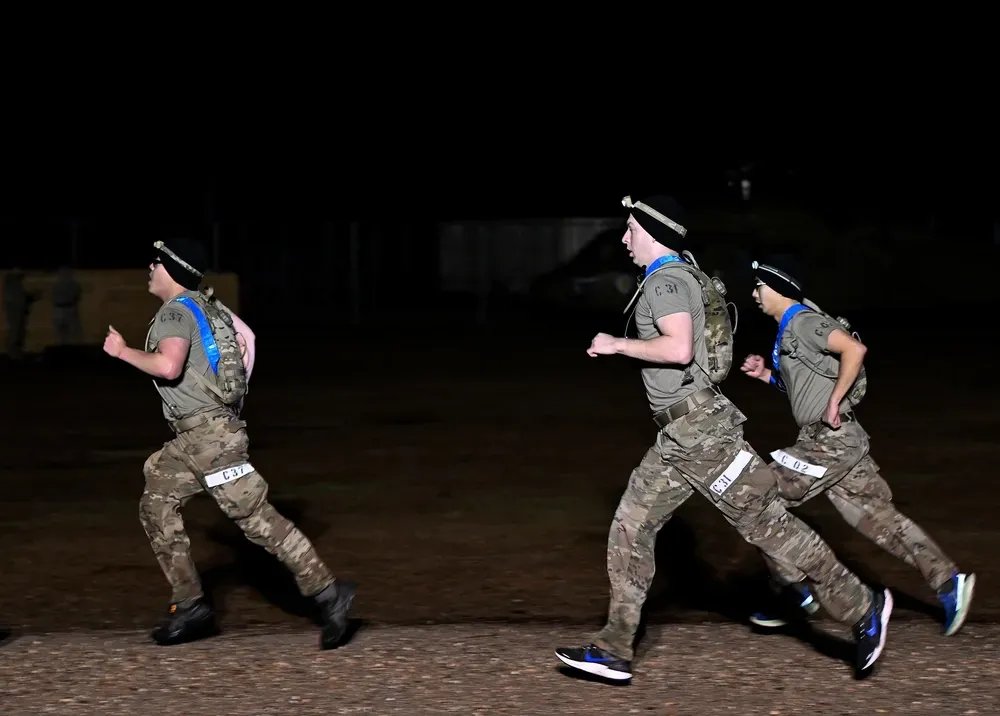
Is Zone 2 Training Enough for Tactical Athletes? | Combat Fitness
Zone 2 training has become the most talked-about method in endurance and tactical fitness circles, and for good reason. Low-intensity aerobic work is the most efficient way to build an aerobic base, improve recovery, and increase long-term durability, qualities every tactical athlete needs. But popularity has bred a misconception: that Zone 2 alone is sufficient preparation for the job.
For military personnel, law enforcement officers, firefighters, and selection candidates, the question matters more than it does for the average gym-goer:
Is Zone 2 training alone enough to prepare you for the demands of the job?
The short answer is no.
Zone 2 builds the aerobic engine, but operational performance demands four physical qualities, and Zone 2 only develops one of them. The other three, strength, power, and high-intensity work tolerance, require deliberate training that low-intensity cardio cannot replace, no matter how many hours you accumulate. Athletes who want a complete program built around all four qualities can explore our CF ONE tactical fitness programs.
What Is Zone 2 Training? (And Why It Matters)
Zone 2 refers to low-intensity aerobic training, sometimes called LISS (low-intensity steady state) or Z2, performed at a pace your body can sustain almost indefinitely without accumulating fatigue. Heart rate zones are usually calculated as a percentage of max heart rate (HRmax) or heart rate reserve (HRR), and Zone 2 sits in the band where:
You can still breathe through your nose.
You can hold a conversation.
Your heart rate stays in a steady, moderate range.
In a standard five-zone model, Zone 2 typically sits around 60–70% of maximum heart rate. At this intensity your body burns predominantly fat for fuel and produces minimal lactate, which is why you can hold the pace for hours without crashing.
Two cautions on the numbers, because they trip people up.
First, zone models disagree. Three-zone, five-zone, and seven-zone systems draw the boundaries in different places, so "Zone 2" on your watch may not mean what it means in an article. The percentages are proxies for a physiological state, not the state itself.
Second, the popular alternative formula gives a different answer. You'll often see the Maffetone method, 180 minus your age, recommended as an aerobic training ceiling. It is a useful tool, but it is not equivalent to 60–70% of max heart rate. For a 40-year-old, 60–70% works out to roughly 108–126 bpm, while 180 − 40 gives 140 bpm, about 78% of estimated max, which most five-zone systems would call Zone 3.
Maffetone is also not the bare formula. The method adjusts 180 − age by training history and health: subtract if you're recovering from illness, on medication, injured, or training inconsistently; add a small amount if you've trained consistently for two years or more without problems. Used without those modifiers, it will put many people above true aerobic pace.
The practical resolution is the same one that always applies here: trust the physiology over the arithmetic. If you can hold a full conversation in complete sentences and could keep going considerably longer than you plan to, you're in the right place, whatever the formula says.
Common Zone 2 activities include:
Easy running
Brisk walking
Rucking at a steady pace
Cycling or rowing at a controlled effort
This type of training improves:
Mitochondrial density
Fat oxidation
Aerobic efficiency
Recovery capacity
These are essential qualities for long-term endurance and resilience. At the cellular level, Zone 2 drives mitochondrial biogenesis and capillarization, the body builds more energy-producing machinery and more blood vessels to feed it. That's why aerobic base work compounds: every additional Zone 2 hour you put in this month makes next month's higher-intensity sessions more productive. The mechanism is well documented in endurance research, including Meixner et al. (2025), whose work on Zone 2 intensity variability informs the heart rate ranges used here.
Why Zone 2 Matters for Tactical Athletes
Zone 2 builds the aerobic base that supports everything else a tactical athlete does. Strength sessions, intervals, ruck marches, and back-to-back operational days all draw from the same aerobic engine, and the bigger that engine, the longer and harder the athlete can work before performance degrades.
For tactical athletes specifically, Zone 2 delivers four direct returns:
It helps tactical athletes:
Recover faster between efforts
Maintain output during long operations
Reduce fatigue over time
Improve overall work capacity
The carryover is most obvious in the kinds of events where output has to be sustained over hours, not seconds:
Long patrols
Extended operations
Selection courses
Multi-hour training days
Without this foundation, higher-intensity work becomes harder to sustain, and the harder sessions are precisely the ones that produce the strength, power, and anaerobic capacity tactical operations actually demand. Pihlainen et al. (2022) found that combined strength and endurance training produced significantly better operational performance in military populations than either modality alone, which is why programming Zone 2 in isolation undersells what an athlete is capable of building. For athletes evaluating which program best develops this foundation alongside the other qualities tactical performance requires, the tactical fitness program buying guide breaks down what a complete tactical training plan should include.
The Problem With Zone 2-Only Training
Zone 2 improves low-intensity steady-state endurance, but tactical environments rarely cooperate by staying low-intensity. The defining feature of operational work, whether it's a CQB stack, a fire attack, a foot pursuit, or the final ruck of a selection course, is that effort spikes without warning and stays spiked.
The real-world tasks tactical athletes actually face look more like:
Real-world tasks often involve:
Short, intense bursts of effort
Heavy load carriage
Repeated sprints or climbs
Fighting, dragging, or lifting
Rapid transitions between effort levels
None of those tasks are aerobic in the Zone 2 sense. They rely on physical qualities Zone 2 leaves untouched:
Anaerobic capacity
Strength
Power
Strength endurance
High-intensity work tolerance
Zone 2 training alone does not develop these qualities. An athlete who runs 90% of their weekly volume at conversational pace will arrive at selection, or at a tactical incident, with a deep aerobic tank and a shallow ability to access power, sustain force under load, or recover between repeated high-output efforts. That gap is exactly where tactical careers get derailed.
Tactical Performance Is Multi-Modal
Tactical athletes operate in environments that demand multiple physical systems firing at once, often in unpredictable sequence. The aerobic system carries the workload during long-duration tasks, the anaerobic system handles the spikes, strength endurance resists fatigue under load, and power generates the explosive output that decides outcomes when seconds matter.
Figure 1.1 - What Zone 2 training actually builds. Four physical qualities tactical work demands, with what each does, how it is trained, an operational example, and whether Zone 2 develops it. Aerobic capacity sustains output over hours and drives recovery between efforts, trained by Zone 2 volume plus threshold work, this is the one Zone 2 builds. High-intensity conditioning, which tolerates and repeats efforts above threshold, requires intervals and hard circuits; Zone 2 does not build it, though it does speed recovery between those efforts because phosphocreatine resynthesis is oxygen-dependent. Strength and strength endurance require lifting and loaded carries. Power and explosive capacity require jumps, sprints and short maximal efforts. Zone 2 develops one of the four, necessary, but nowhere near sufficient. Sources: Takahashi et al., European Journal of Applied Physiology (1995); Mendez-Villanueva et al., PLOS ONE (2012).
One of four. That's the whole argument of this article, and it's why hours of easy running don't substitute for the rest.
A program that prepares an athlete for that reality must develop all four:
1. Aerobic Capacity (Zone 2 and beyond)
Long efforts
Recovery between tasks
Sustained movement under load
2. High-Intensity Conditioning
Intervals
Tempo efforts
Threshold training
Short, intense circuits
3. Strength and Strength Endurance
Lifting
Loaded carries
Bodyweight endurance
Task-specific strength
4. Power and Explosive Capacity
Jumps
Sprints
Short, high-output efforts
Zone 2 only covers one of these four areas, roughly 25% of what tactical performance actually demands. The polarized training model used by most successful endurance and tactical programs allocates 70–80% of weekly volume to Zone 2 and 20–30% to high-intensity work above lactate threshold, with strength and power layered as their own dedicated sessions. Understanding how Zone 2 training actually works at the physiological level makes it clear both why it matters and why it cannot carry the full load of tactical preparation on its own.
What Happens If You Only Train Zone 2?
This isn't theoretical. Athletes who rely exclusively on low-intensity training develop a predictable performance profile, strong in one direction, soft in every other. Watch what happens when a Zone 2-only athlete is asked to perform tactical work:
Good steady-state endurance
Low fatigue at easy paces
Decent long-duration output
But the moment intensity climbs above conversational pace, the same athletes struggle with:
Sprint efforts
Repeated high-intensity tasks
Load carriage under stress
Strength-dependent tasks
Time-pressured scenarios
This creates a gap between fitness on paper and performance in reality. A high VO₂max number or a sub-7-minute mile means very little if the same athlete can't carry a 70-pound ruck up a hill at pace or move a casualty 50 meters under stress. Vaara et al. (2022) catalogued exactly which physical attributes drive performance in essential military tasks, and aerobic capacity is one of several, never the standalone predictor.
The Right Role of Zone 2 in Tactical Training
Zone 2 should be treated as a foundation, not the entire structure. Think of it the way an operator thinks about marksmanship fundamentals: non-negotiable, programmed regularly, but never the only skill that matters in a fight.
In a properly periodized program, Zone 2 is used to:
Build aerobic capacity
Improve recovery
Support higher-intensity work
Increase total training volume safely
For most tactical athletes building toward a selection course, an operational deployment, or simply sustained career fitness, the working dosage looks like:
2–4 Zone 2 sessions per week
Combined with strength and interval work
Adjusted based on goals and training phase
The exact split depends on what the athlete is preparing for. Selection candidates running BUD/S, SFAS, RASP, or PJ pipeline prep typically push Zone 2 volume higher in base-building phases and pull it back as intensity work ramps up in the final 8–12 weeks. Active operators, LEO patrol officers, and firefighters running sustainment programming usually settle into 3 Zone 2 sessions per week year-round, paired with 2 hard conditioning sessions and 3 strength sessions. The principle is the same in either case: Zone 2 is dosed, not maxed.
The Bottom Line
Zone 2 builds the aerobic base that supports endurance and recovery, but it does not prepare you for the full range of demands found in real operations or selection environments.
Tactical performance requires aerobic endurance, strength, power, high-intensity conditioning, and strength endurance. Zone 2 develops one of those. The other three need deliberate, separate training, and no amount of additional easy volume substitutes for them.
Zone 2 is the foundation, not the finished product. Build the aerobic base deliberately, then build on top of it with the strength, power, and high-intensity work the job actually demands. The parent concept of what tactical readiness is explains the full picture of physical preparedness that Zone 2 supports but cannot deliver alone.
Two posts that extend this topic further: how long it takes to build aerobic capacity sets realistic expectations for how Zone 2 development unfolds over time, while when Zone 2 becomes counterproductive identifies the specific conditions under which even a well-placed Zone 2 block stops serving the athlete and starts blunting peak performance.
Frequently Asked Questions
Is Zone 2 enough on its own for tactical athletes?
No. Zone 2 builds aerobic capacity, which is one of four qualities operational work demands. High-intensity conditioning, strength and strength endurance, and explosive power all require their own training, and no amount of additional easy volume produces them.
What is Zone 2 training?
Low-intensity aerobic work at a pace you could sustain for hours, conversational, nasal-breathing, steady. In a five-zone model it typically sits around 60–70% of maximum heart rate, though zone models vary and the physiological state matters more than the percentage.
What does Zone 2 actually do?
It drives mitochondrial biogenesis and capillarization, more energy-producing machinery in the muscle and more blood vessels to supply it, which improves fat oxidation, aerobic efficiency, and recovery capacity. Practically, it raises the ceiling on how much total training you can absorb.
How much Zone 2 should a tactical athlete do?
Commonly 2–4 sessions per week, alongside strength and interval work. Selection candidates typically raise Zone 2 volume during base-building and reduce it as intensity work ramps up in the final weeks. Operators on sustainment programming often settle around three sessions a week year-round.
Is 180 minus your age the same as Zone 2?
No, and treating them as equivalent is a common error. For a 40-year-old, 180 − 40 gives 140 bpm, roughly 78% of estimated maximum, which most five-zone systems place in Zone 3. The Maffetone method also adjusts that number for health and training history rather than using it flat.
Can you build strength and power with Zone 2?
No. Those adaptations require force production the intensity doesn't reach, heavy loading for strength, and short maximal efforts for power. Zone 2 supports both indirectly by improving recovery between hard sessions, but it does not produce them.
Does Zone 2 help with rucking?
Yes, substantially, rucking at a steady pace is itself a Zone 2 modality, and aerobic capacity is what determines whether you're still moving well hours in. But carrying heavy loads also demands lower-body strength, which is a separate adaptation Zone 2 doesn't deliver.
References
Meixner, B., et al. (2025). Zone 2 intensity: a critical comparison of individual variability.
Vaara, J. P., et al. (2022). Physical training considerations for optimizing performance in essential military tasks. European Journal of Sport Science.
Orr, R., et al. (2019). Lower-body strength and power and load carriage performance: a critical review. International Journal of Exercise Science, 12(2).
Knapik, J. J., et al. (2012). Effects of physical training on load carriage performance.
Pihlainen, K., et al. (2022). Effects of combined strength and endurance training on physical performance. Journal of Strength and Conditioning Research.
Helén, J., et al. (2023). High-intensity functional training induces superior adaptations compared with traditional military physical training. Journal of Strength and Conditioning Research.


