
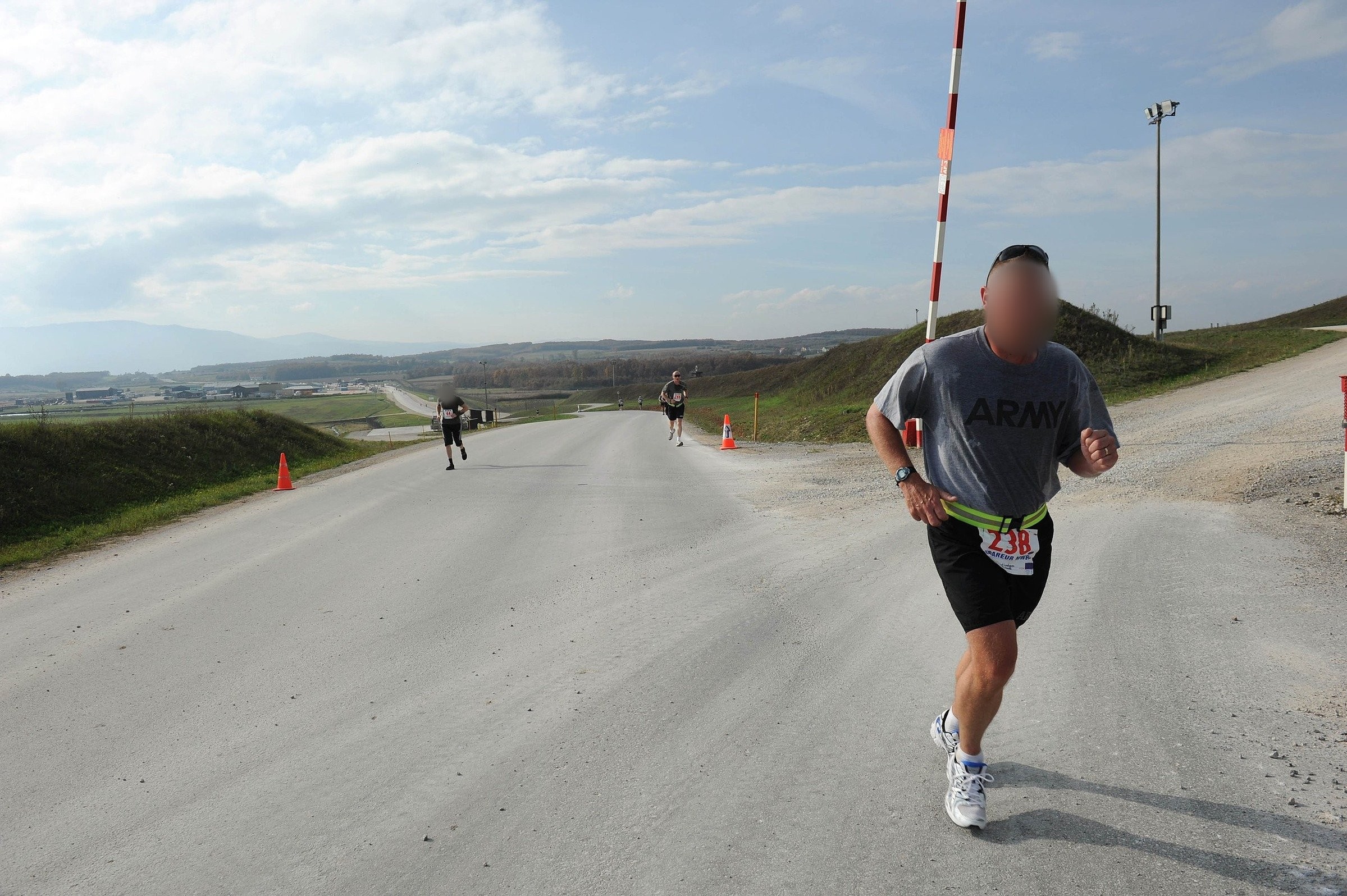
How Zone 2 Training Works: The 4 Key Adaptations
Zone 2 training works by strengthening the body's aerobic energy system at a sustainable, low-to-moderate intensity, roughly 60–75% of max heart rate, a pace where you can still hold a conversation. Training here drives specific physical adaptations: more mitochondria in your muscle cells, more efficient fat metabolism, denser capillary networks, and a stronger heart. Over time, those adaptations let you move faster at the same effort, recover quicker between sessions, and perform longer without excessive fatigue, whether that's a timed run, a loaded ruck, or a 14-hour shift.
In simple terms: Zone 2 training builds the engine that powers all endurance performance. Athletes who want a program built around this foundation can explore our CF ONE aerobic base programs.
What Zone 2 Actually Means
Zone 2 refers to a training intensity where:
Effort feels steady and controlled
Breathing is slightly elevated but not strained
Conversation is still possible in full sentences
Fat is the primary fuel source
It sits between very easy activity and harder threshold or interval work.
In many systems, Zone 2 corresponds to:
About 60–75% of maximum heart rate
An effort you could sustain for over an hour
The exact numbers vary between individuals, but the key feature is sustainable aerobic effort. In practice, the talk test is more reliable than a heart rate formula. Age-based equations like 220-minus-age miss badly for many athletes, and heart rate drifts upward during long sessions even when effort stays constant. If you can speak in full sentences but wouldn't want to sing, you're in the zone. Physiologically, this corresponds to an intensity where blood lactate stays low and stable, your body is clearing metabolic byproducts as fast as it produces them, which is exactly why the effort is repeatable day after day.
The lactate number, and why "Zone 2" means different things in different systems.
The most precise definition of Zone 2 isn't a heart rate at all, it's a blood lactate concentration. In most endurance-athlete populations the zone corresponds to blood lactate sitting roughly between 1.5 and 2.0 mmol/L: elevated above true rest, but stable, because clearance is keeping pace with production. That stability is the whole point. The moment lactate starts climbing rather than holding, you've left the zone, regardless of what your watch says.
Heart rate is a proxy for that, and an imperfect one. Different zone models draw the lines in different places, which is why you'll see conflicting percentages quoted:
Three-zone models(common in the polarized-training literature) split training into below-first-threshold, between-thresholds, and above-second-threshold. Zone 1 in that system covers most of what a five-zone model calls Zone 2.
Five-zone models, the most common in coaching and on wearables, typically place Zone 2 at roughly 60–70% of maximum heart rate, though some systems extend it toward 75%.
Seven-zone models subdivide further and shift the numbers again.
The practical consequence: the percentage matters far less than the physiological state. If you can hold full sentences, if the effort feels repeatable, and if you could keep going considerably longer than you plan to, you're in the right place. If your watch says Zone 2 but you're breathing in fragments, trust your lungs over the algorithm.
Why Zone 2 Matters
Zone 2 training targets the foundation of endurance performance: the aerobic system.
This system:
Produces energy using oxygen
Fuels long-duration efforts
Supports recovery between high-intensity bouts
When the aerobic system improves, athletes can:
Sustain faster paces at lower effort
Recover more quickly between sessions
Tolerate higher overall training loads
Delay fatigue during long tasks
The tactical translation is direct. A 12-mile ruck under load, a multi-hour patrol, a structure fire that runs past the second bottle, none of these are won with top-end speed. They're won by an aerobic system that can produce energy for hours without redlining. The athlete with the bigger aerobic base operates at a lower percentage of their maximum for any given task, which means lower heart rate, clearer decision-making under stress, and gas left in the tank when the situation changes.
For tactical and hybrid athletes, this means better performance during long operations, extended shifts, and repeated efforts. If you're evaluating how to structure a program that develops this capacity effectively, the tactical fitness program buying guide walks through what to look for in an aerobic base-focused training plan.
What Happens in the Body During Zone 2 Training
1. Increased Mitochondrial Density
Mitochondria are the energy-producing structures inside muscle cells.
Zone 2 training stimulates:
Growth of new mitochondria
Improved function of existing mitochondria
This allows muscles to:
Produce more energy aerobically
Delay fatigue
Sustain longer efforts
This is the single most important adaptation Zone 2 produces. Mitochondria are where oxygen is actually converted into usable energy, and their total volume in your muscle largely determines how much work you can do aerobically. Long, steady efforts send a sustained signal to build more of them and upgrade the ones you have, a signal that short, hard intervals don't replicate in the same way. More mitochondrial machinery means more energy produced without accumulating fatigue, which is the definition of endurance.
One honest caveat, because this specific claim is contested.
The idea that Zone 2 is uniquely or optimally good at building mitochondria is the most popular claim in the current Zone 2 conversation, and it is not settled science. A serious counter-case exists, and it comes from people who study muscle physiology rather than from contrarians.
The argument runs roughly like this: mitochondrial biogenesis is driven substantially by metabolic disturbance, the accumulation of signaling molecules that tell the cell it is running short of energy. Higher intensities produce a larger disturbance. Several studies and at least one meta-analysis have found mitochondrial adaptations improving with intensity, with some evidence pointing to a threshold around 65% of peak work rate below which the adaptation signal is weak. On that reading, low-intensity work is not the optimal mitochondrial stimulus; it is simply an adequate one that happens to be very easy to accumulate.
Where does that leave the case for Zone 2? Largely intact, but for a different reason than usually given.
Zone 2's real advantage is not that it is the most potent mitochondrial signal per minute. It is that it is the only intensity at which you can accumulate five or eight or twelve hours a week indefinitely without accumulating fatigue you cannot clear. High-intensity work drives adaptation harder per minute and strictly limits how many minutes you get. Total stimulus is dose times duration, and Zone 2 wins on duration by such a margin that it wins overall, for people who actually do the volume.
The practical implication is worth taking seriously, and it argues against the version of Zone 2 advice that says "just go easy." If your weekly aerobic volume is low, replacing your hard sessions with easy ones is probably a downgrade. Zone 2 earns its place as the base of a large training week, not as a substitute for intensity in a small one. That is also why the programming section further down keeps threshold and interval work in the mix rather than treating Zone 2 as the whole answer.
2. Improved Fat Metabolism
At Zone 2 intensity:
The body relies heavily on fat as fuel
Fat oxidation pathways become more efficient
This helps:
Preserve glycogen stores
Maintain steady energy levels
Support long-duration performance
The math here matters. Your body stores roughly 1,600–2,000 calories of glycogen, enough for around 90 minutes to two hours of sustained hard work before performance drops. Your fat stores, even on a lean athlete, hold tens of thousands of calories. Zone 2 training teaches your body to tap that nearly unlimited fuel tank at higher and higher workloads, sparing glycogen for the moments that actually demand it: the final sprint, the casualty drag, the last hill under load.
3. Increased Capillary Density
Zone 2 training increases the number of capillaries surrounding muscle fibers.
This improves:
Oxygen delivery
Nutrient transport
Waste removal
Better circulation supports both performance and recovery. Think of capillaries as the supply routes between your bloodstream and your working muscle. More routes means oxygen reaches the mitochondria faster, fuel arrives where it's needed, and metabolic waste gets cleared before it accumulates. This adaptation is also a quiet driver of recovery between sessions: improved local blood flow shortens the time it takes muscle tissue to restock fuel and repair after hard training, which is part of why aerobically fit athletes bounce back faster from everything, including lifting.
4. Improved Cardiac Output
Consistent aerobic training strengthens the heart.
Adaptations include:
Increased stroke volume
Lower resting heart rate
Improved blood flow during exercise
Stroke volume, the amount of blood your heart pushes with each beat, is the headline adaptation. As the heart's main chamber grows stronger and more compliant, it moves more blood per beat, so it doesn't have to beat as often to meet the same demand. This is why a well-trained athlete's resting heart rate sits in the 40s or 50s, and why the same run that once put you at 165 beats per minute eventually happens at 140. This allows more oxygen to reach working muscles. These adaptations sit within the broader framework of what aerobic capacity is and why it underpins every other physical quality in endurance and tactical performance.
Sustained over years, this remodeling has a name, the athlete's heart, describing the enlarged, more compliant left ventricle characteristic of trained endurance athletes. It is a normal, healthy adaptation to sustained aerobic training, and it is worth knowing the term exists because it can occasionally be mistaken for pathology on a routine screening ECG in athletes who have simply trained a lot.
Why Zone 2 hits these four specifically
There is a reason these four adaptations cluster at this intensity, and it comes down to which muscle fibers are doing the work.
At Zone 2, the body recruits predominantly Type I fibers, slow-twitch, fatigue-resistant, and densely packed with mitochondria and capillaries already. Those are the fibers best equipped to use fat as fuel and the ones that respond most readily to the endurance adaptations above. Push the intensity up and you progressively recruit Type II fibers, which produce more force, fatigue faster, and rely far more on carbohydrate.
That recruitment pattern explains everything in this section. Fat metabolism improves because the fibers doing the work are the ones that burn fat. Capillary and mitochondrial density increase in those fibers because that's where the sustained demand is landing. The cardiac adaptation is the one exception, that responds to sustained cardiac output rather than to fiber type, which is why it also develops from harder work.
Why Zone 2 Feels Easy - but Works So Well
Many athletes underestimate Zone 2 because it does not feel extremely hard.
However:
High-intensity work creates large fatigue spikes.
Zone 2 allows high training volume with manageable fatigue.
This means athletes can:
Train more consistently
Accumulate more total work
Improve the aerobic system steadily
Over time, this produces major performance gains. This isn't theory, it's how the best endurance athletes in the world actually train. Research by Seiler and Kjerland (2006) analyzing elite endurance athletes found their training followed a polarized distribution: roughly 75–80% of sessions performed at low intensity, with only a small fraction at threshold or above. The athletes with the most to prove do the most easy work. The intensity discipline that feels like holding back is precisely what allows the volume that drives adaptation.
The person most responsible for Zone 2's current prominence outside endurance circles is Iñigo San Millán, PhD, Director of the Exercise Physiology and Human Performance Lab at the University of Colorado School of Medicine. His work on lactate, mitochondrial function, and metabolic flexibility, developed over years with professional endurance athletes, is where most of the popular Zone 2 discussion ultimately traces back, and it is why the lactate-based definition above tends to be treated as the authoritative one. Worth knowing mostly because it tells you where to go for the primary material rather than the third-hand version.
How Zone 2 Fits Into a Training Program
In most effective endurance programs:
60–80% of training is low-intensity aerobic work.
Zone 2 makes up a large portion of that volume.
Harder sessions are layered on top of this base.
A typical week might include:
3–4 Zone 2 sessions
1–2 threshold or interval sessions
Strength or mobility work as needed
Made concrete: an intermediate tactical athlete running five conditioning sessions a week might do three 50-minute Zone 2 runs or rucks, one threshold session, and one interval workout, with two or three lifting sessions layered alongside. That's roughly 70% of conditioning volume at low intensity, and it's sustainable indefinitely. Flip the ratio toward intensity and most athletes last four to six weeks before recovery debt forces a deload, surrendering the consistency that aerobic development depends on. Zone 2 forms the backbone of the program. Understanding how it compares to the harder training zones is covered in the contrast post on Zone 2 vs tempo vs threshold training, a direct look at when each intensity level is appropriate and why.
How the ratio shifts across a training cycle
That 70/30 split is a base-building default, not a permanent setting. The proportion should move depending on what you're preparing for and how far out you are.
Building a base, most of the year for most tactical athletes. The largest share of Zone 2 sessions, minimal intensity, and the priority is accumulating volume without accumulating fatigue. This is where the adaptations in this article actually get built, and it is the phase people cut short because it's boring.
Approaching a test or selection date. Zone 2 volume drops modestly while threshold and interval work rise, because the specific quality being tested needs sharpening. Zone 2 doesn't disappear, it becomes the recovery and maintenance work between hard sessions rather than the main event.
In a testing or operational period. Zone 2 does most of the aerobic work again, at reduced total volume, because it maintains the base without adding meaningful fatigue while the real demands are coming from elsewhere.
The pattern is consistent: Zone 2 is the constant, intensity is the variable. In every phase there's some Zone 2. The question is only whether it's building the base, supporting harder work, or holding what you've got.
For a tactical athlete this matters more than for a marathoner, because you rarely control the calendar. A base you built over months is what lets you handle a test you found out about last week.
Common Zone 2 Training Methods
Zone 2 training can be performed through many activities:
Running
Rucking
Cycling
Rowing
Swimming
Hiking
The key is maintaining the correct intensity, not the specific modality. For tactical athletes, running and rucking should carry most of the volume because they match the demands of testing and the job, but rotating in cycling or rowing is a legitimate way to add aerobic minutes without adding impact stress on the legs. The heart and mitochondria adapt to the intensity and duration of the work, not the machine it's done on. If your knees and feet are taking a beating, moving one or two weekly sessions to a low-impact modality preserves volume while joints recover.
A warning specific to rucking, because it's the modality most likely to be misused as Zone 2.
Rucking is excellent aerobic work and it is directly job-specific, which makes it tempting to use for everything. But loaded carriage raises heart rate at any given pace, and it applies far more mechanical stress than unloaded walking. That combination means a ruck you intended as an easy Zone 2 session very easily lands in Zone 3 metabolically while costing Zone 4 recovery from the tissue loading.
Check the intensity with the talk test rather than assuming the pace makes it easy. If you're breathing in fragments under load, that's not a Zone 2 session no matter how slow the pace looks. And treat heavy rucking as competing for the same recovery budget as lower-body strength work, because it does.
How Long Zone 2 Sessions Should Be
Session duration depends on training level.
Beginner:
20–40 minutes per session
Intermediate:
40–75 minutes per session
Advanced:
60–120+ minutes per session
Longer sessions are usually performed at lower intensities to manage fatigue. Duration is the variable doing the work. Mitochondrial and capillary adaptations respond to sustained time at intensity, and most of the signal accumulates in the back half of a session, which is why a single 60-minute effort generally beats two disconnected 30-minute efforts. Progress duration before frequency, and frequency before intensity. Adding ten minutes to your existing sessions every two to three weeks is a slow, boring progression that works for years.
Common Zone 2 Training Mistakes
Going Too Hard
Many athletes drift into higher intensities.
This leads to:
Excess fatigue
Slower recovery
Reduced weekly volume
Zone 2 should feel controlled and sustainable. The usual failure pattern is drifting into the gray zone, too hard to recover from easily, too easy to drive top-end adaptation. It happens gradually: pace creeps up mid-session, ego responds to a passing runner, or heart rate drift goes unnoticed over a long effort. The fix is mechanical, not motivational. Set a heart rate ceiling, and when you hit it, slow down, even if the pace feels embarrassingly easy. The adaptation doesn't care how the pace looks.
Not Training Long Enough
Very short sessions:
Provide minimal aerobic stimulus
Limit mitochondrial adaptation
Consistency and duration matter.
Ignoring Progression
As aerobic capacity improves:
The same heart rate should produce faster paces.
Training should gradually increase in duration or frequency.
Cutting Intensity Entirely
The mistake that has become common as Zone 2 has gained popularity is the opposite of going too hard: dropping intensity work altogether on the theory that easy training is all you need.
It isn't, and the reason is in the caveat further up. Zone 2 wins on accumulated volume, not on stimulus per minute. An athlete training four hours a week entirely in Zone 2 is very likely leaving adaptation on the table compared to one splitting that same four hours between easy volume and a properly hard session or two. The polarized distribution the elite athletes follow is polarized, mostly easy and genuinely hard, not uniformly moderate.
If your weekly aerobic volume is large, Zone 2 should dominate it. If it's small, you cannot afford to spend all of it at the lowest-stimulus intensity.
Who Benefits Most From Zone 2 Training
Zone 2 is valuable for:
Distance runners
Ruckers
Tactical athletes
Hybrid strength-endurance athletes
Anyone building endurance from scratch
Even highly trained athletes rely heavily on Zone 2 work. In fact, the more advanced the athlete, the larger the share of total volume Zone 2 tends to occupy, elite endurance training is overwhelmingly easy work punctuated by carefully placed hard sessions. For a beginner, Zone 2 is the fastest route to a base. For an advanced tactical athlete, it's the only way to keep adding training volume without breaking down. The method scales in both directions, which is rare in training.
Practical Takeaways
If you want to use Zone 2 training effectively:
Train at a steady, conversational pace.
Perform 3–5 sessions per week.
Gradually increase session duration.
Avoid turning Zone 2 sessions into hard workouts.
Combine Zone 2 with occasional threshold or interval work.
Zone 2 training may feel simple, but it is one of the most powerful tools for building long-term endurance. Two sibling posts round out the intensity picture: how tempo training works and how threshold training works explain the higher-intensity zones that sit above Zone 2 and how they complement it. Two decision-points posts also worth reading: when Zone 2 becomes counterproductive identifies the conditions under which more Zone 2 stops helping, while is Zone 2 enough for tactical performance answers the question every tactical athlete eventually asks about this training method.
Frequently Asked Questions
What is Zone 2 training?
Zone 2 is sustained aerobic exercise at a low-to-moderate intensity, roughly 60–75% of maximum heart rate in a five-zone model, at a pace where you can hold a conversation in full sentences. Physiologically it corresponds to blood lactate staying low and stable, around 1.5–2.0 mmol/L in most endurance athletes.
What heart rate is Zone 2?
It depends on the zone model. Five-zone systems typically place it at 60–70% of maximum heart rate, with some extending to 75%. Because age-based maximum heart rate formulas are unreliable for many people and heart rate drifts upward during long efforts, the talk test is generally a more dependable guide than a number.
What adaptations does Zone 2 training produce?
Four primary ones: increased mitochondrial density, improved fat oxidation, increased capillary density around muscle fibers, and improved cardiac output via greater stroke volume. Together they let you produce more energy aerobically, sustain effort longer, and recover faster between sessions.
Does Zone 2 increase capillary density?
Yes. Sustained work at this intensity increases the number of capillaries surrounding the working muscle fibers, shortening the distance oxygen and fuel travel to reach the mitochondria and speeding the clearance of metabolic byproducts. It's also a significant contributor to faster recovery between sessions.
Is Zone 2 really the best training for mitochondria?
This is contested. Some recent research suggests higher intensities produce a stronger mitochondrial signal per minute, with evidence pointing to a threshold below which the adaptation is weak. Zone 2's advantage is that you can accumulate far more of it without accumulating unrecoverable fatigue, so total stimulus is higher for athletes doing real volume, but if your weekly aerobic volume is small, replacing intensity with easy work is likely a downgrade.
How long should a Zone 2 session be?
Beginners: 20–40 minutes. Intermediate: 40–75 minutes. Advanced: 60–120+ minutes. Duration is the variable doing most of the work, and a single continuous 60-minute session generally beats two disconnected 30-minute ones. Progress duration first, then frequency, then intensity.
How many Zone 2 sessions per week?
Three to five for most athletes, making up roughly 60–80% of total conditioning volume, with one to two harder threshold or interval sessions layered on top. The proportion shifts across a training cycle, more Zone 2 when building a base, relatively less when sharpening for a test.
Can you ruck in Zone 2?
Yes, and it's job-specific for tactical athletes, but check the intensity rather than assuming a slow pace makes it easy. Load raises heart rate at any given speed and adds substantial mechanical stress, so a ruck intended as Zone 2 can easily land harder metabolically and cost considerably more recovery than an unloaded session of the same duration.
References
Seiler, S., & Kjerland, G. Ø. (2006). Quantifying training intensity distribution in elite endurance athletes: is there evidence for an "optimal" distribution? Scandinavian Journal of Medicine & Science in Sports, 16(1), 49–56.
Granata, C., et al. (2018) - meta-analysis on exercise intensity and mitochondrial adaptation.
Inglis, E. C., et al. (2024) - comparison of training intensities and mitochondrial adaptation.


