
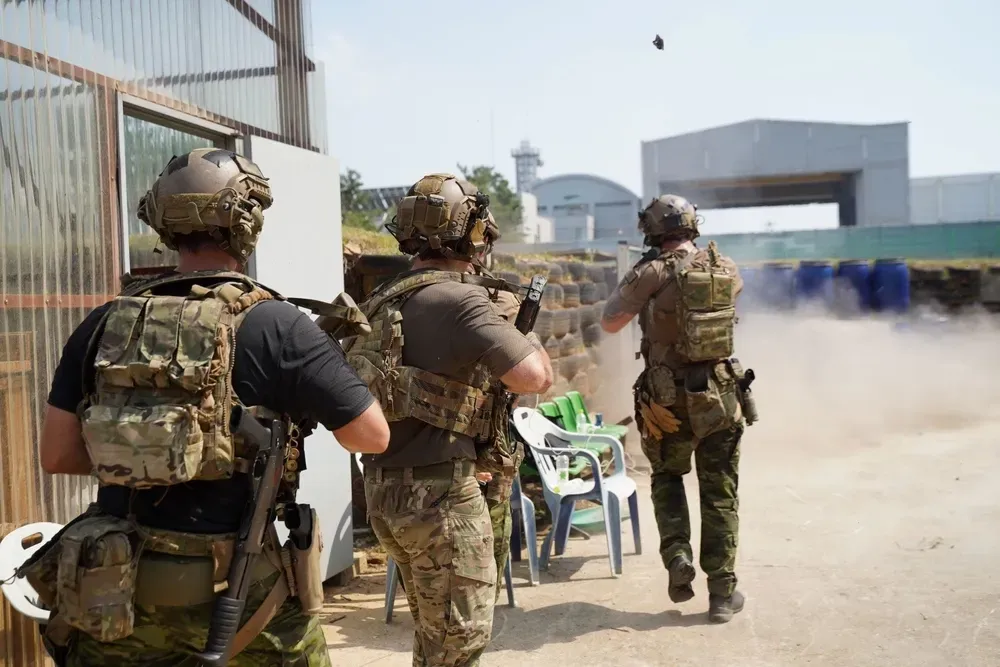
Training Prioritization: What to Train First & Why
Why Training Prioritization Matters
Training prioritization is what separates training that gets results from training that gets busy. Most tactical athletes know what they want to improve, and many train hard every week. What few do well is decide what to train first, how hard to push it, and when to shift focus. Without that decision, training becomes a flat list of equally weighted tasks instead of a structured plan with direction, and equal effort spread across every quality is how athletes stay busy for months while their performance flatlines.
Prioritization is not about training less. It is about training smarter so that the most important adaptations occur first and the rest supports those adaptations without interference. This framework helps athletes make intentional decisions every week rather than reacting session to session. The same logic underpins our structured training programs, which sequence each quality instead of stacking everything at once.
For tactical athletes the stakes are higher than for the average gym-goer. A powerlifter can afford to ignore conditioning for a year; an operator cannot. The job demands strength, endurance, work capacity, and durability at the same time, and it demands them on no notice. That breadth is exactly why prioritization is non-negotiable here, you cannot max every quality at once, so you rotate which one leads while holding the rest, and over a year every quality gets its turn at the front without any of them collapsing.
What Is Training Prioritization
Prioritization is the process of selecting which physical quality, skill, or capacity matters most at a given time and allocating stress accordingly. Athletes may want to get stronger, faster, fitter, and more durable all at once, but physiology does not adapt equally to simultaneous stressors. Trying to train everything with equal emphasis leads to mediocre gains, plateaued progress, and increased injury risk. Getting the plan right up front avoids that trap, and our guide on how to choose a training program breaks down which option fits which set of demands.
Training prioritization answers the question:
Which quality should we drive now, and how do other qualities support that goal?
This matters because the body does not treat every training signal independently. Pursue maximal strength and maximal endurance in the same block and the two adaptations actively compete, the endurance stimulus blunts strength and power gains, an effect strength researcher Robert Hickson first documented in 1980 and one that still shapes how serious programs are sequenced today. Prioritization is the practical answer to that interference: it decides which adaptation leads so the supporting qualities reinforce it instead of cannibalizing it.
The Core Principles of Prioritization
There are three foundational principles that guide prioritization:
Assess goals and timelines
Define a training bias
Adjust based on readiness
These principles allow you to make decisions that work with your environment rather than against it.
Assess Your Goals and Timelines
Start by clarifying what matters most right now. Long term goals are useful targets, but short term priorities determine your actions.
Short term goals might include:
Improve strength by a measurable amount in 8 weeks
Build endurance capacity for an upcoming event
Increase work capacity for multi day operations
Recover from a training block with minimal performance loss
By narrowing the target, training becomes aligned with measurable outcomes instead of vague intentions. If you are still weighing which target to chase first, the common program selection questions cover how to match a plan to a deadline and a demand. The timeline is what turns a goal into a priority. A soldier with a record PT test in eight weeks and a soldier with no event on the calendar for six months should not train the same way, even with identical long-term goals. The nearer and more specific the deadline, the harder the current block should bias toward it. Vague goals with no timeline default to maintenance, and maintenance is rarely what an athlete actually needs when a real demand is bearing down.
Define a Training Bias
Once goals are identified, designate one quality as a bias for the current phase. Bias does not mean exclusion. Other qualities are still trained; they are just trained in support of the primary quality.
For example:
Strength biased training focuses the hardest lifts earlier in the week while conditioning is moderate and complementary.
Endurance biased training focuses cardio and metabolic work with strength training maintained at moderate intensities to preserve force production.
Work capacity biased training distributes moderate strength and conditioning sessions across the week to build sustained performance.
A clear bias helps manage conflicting stimuli and reduces interference between training qualities. When the right bias is not obvious, working through the training decision tree can map the choice for you. The bias is a ranking, not an on-off switch. Treat weekly training stress as a fixed budget: the priority quality gets the largest, freshest share, and everything else is dialed to whatever intensity still leaves room for the priority to be trained hard. Strength bias does not mean no running, it means running never shows up heavy enough to compromise the next lifting session. Get the ranking right and conflicting stimuli stop fighting each other for the same recovery.
Adjust Based on Readiness
Readiness is how prepared the athlete is to handle stress at any given moment. It includes factors such as recovery, sleep, nutrition, psychological state, and external stressors. Even the best priorities fail if the athlete is not ready for the planned stimulus. On high readiness days, push priority work with precision. On low readiness days, reduce intensity or duration for non priority support work, while still protecting quality in priority sessions.
Without readiness checks, prioritization becomes wishful thinking. Readiness also governs how much stress the plan can safely absorb. Spike training load faster than the body has prepared for and injury risk climbs, the relationship between recent and chronic workload that sports scientist Tim Gabbett mapped in 2016. Prioritization keeps that ratio sane by concentrating hard stress in the priority sessions and easing everything else. Here, treat readiness as the dial that modulates priority decisions, not the whole subject, defining and tracking readiness in depth is a topic of its own.
How to Structure a Prioritized Training Week
Prioritization works best when training elements are organized around the primary quality. That organizing choice, better structure over volume, is what turns extra effort into extra progress instead of extra fatigue.
A general structure might look like this:
Priority Session First
Perform the highest demand session early in the week or early in the day when recovery capacity is highest.Support Sessions After
Place complementary work after the priority session with enough recovery to avoid overlap stress.Deload or Ease Days
Include days with lower overall stress to promote recovery and adaptation.
The logic underneath this is simple: hard things go where recovery is highest. Priority work demands full neural and physical freshness, so it claims the front of the week and the front of the day before accumulated fatigue erodes output. Support work slots in behind it, far enough back that its fatigue does not bleed into the next priority session. Ease and deload days are not wasted time, they are when the adaptation you trained for actually gets installed. Skip them and the priority work has nowhere to land.
Example priorities:
Read these as skeletons, not prescriptions. What makes each one work is the spacing, not the exact day names: the priority quality is trained hard early and given room, while the secondary quality is present but deliberately capped. Shift the days to fit your schedule and the structure still holds, as long as you never let a support session land heavy enough to compromise the next priority block.
Strength Bias
Monday: Heavy lifts
Wednesday: Strength tolerance with moderate conditioning
Friday: Strength focus with accessory work
Saturday: Low intensity aerobic or mobility
Endurance Bias
Monday: Long or threshold aerobic work
Tuesday: Strength maintenance
Thursday: Aerobic quality with short intervals
Friday: Strength support
Sunday: Easy recovery movement
These templates show how sessions can be oriented around one dominant quality while still addressing others.
The Most Common Mistakes in Prioritization
Several predictable errors sabotage prioritization:
Training everything equally
This dilutes adaptation and creates confusion in stimulus.
Waiting until performance drops before adjusting
Prioritization should be proactive, not reactive.
Pushing priority work without sufficient recovery
Priority work should be heavy, not rushed.
Ignoring readiness and context
Life stress, travel, sleep, and mood affect the capacity to handle stress.
These mistakes slow progress and increase the risk of regression. The antidote is training smart, not just hard, so effort lands where it drives adaptation instead of piling up in every direction at once. These failures usually compound. Picture an athlete chasing a strength PR, a faster two-mile, and more conditioning volume in the same eight weeks, refusing to ease off until a tweaked back forces the issue. Nothing improved, because nothing was ever the priority, every quality got just enough stress to interfere with the others and not enough to drive a real adaptation. Naming a single priority up front is what prevents that slow, frustrating spread of effort across goals that never quite move.
Real World Application
Training prioritization is especially important for athletes with unpredictable schedules, limited training time, or multiple performance demands. Tactical athletes benefit from this framework because mission demands cannot be paused for a training block. Prioritization allows meaningful progression even when training conditions are imperfect. Busy professionals find prioritization useful because time is limited. By focusing on what matters most now, training becomes an investment rather than a task list.
Age group competitors use prioritization to peak for events while managing recovery so they do not burn out before the competition. Consider a law enforcement officer rotating onto night shifts mid-block. Sleep collapses, readiness drops, and a rigid plan would simply break. A prioritized plan flexes instead: the two strength sessions that matter most are protected, tactical conditioning is trimmed to short and easy, and the block still moves forward at a slower but real pace. That is the difference prioritization buys, progress that survives contact with an imperfect schedule rather than progress that only exists on paper. Prioritization works because it aligns training with real life demands instead of assuming ideal conditions.
Prioritization Is Not a Restriction
Training prioritization does not limit training. It clarifies training. It answers the question of what to push, how hard to push it, and why it matters now.
Prioritization ensures that training investments return performance dividends rather than stalled progress. None of this requires a perfect program or perfect conditions. It requires one honest decision repeated every cycle: what leads now, and what supports it. Make that call deliberately, protect the priority work, and let readiness tell you when to push and when to hold. Do that consistently and the gains compound, not because you trained more, but because nothing you trained was working against anything else. This is what sustainable performance progress looks like in practice: results that come from alignment, not from adding more work to an already full week.
Train with purpose
Progress with clarity
Adapt with intention
This is how capable athletes are built and sustained over time.
Frequently Asked Questions
What if I have multiple goals at once?
Choose one primary priority and let the rest support it. Attempting to advance all goals at once is usually less effective.
How often should I change priorities?
Every cycle should be long enough to allow adaptation but short enough to keep momentum. Eight weeks is a common rule of thumb, but readiness and response should guide timing.
Can prioritization help reduce injuries?
Yes. By organizing training stress logically, the body adapts without unnecessary overload, reducing risk.
What if readiness is low most of the time?
Low readiness requires conservative training and a reevaluation of lifestyle stressors. Prioritization adapts to reality, not idealism.
References
Hickson, R.C. (1980). Interference of strength development by simultaneously training for strength and endurance. European Journal of Applied Physiology, 45(2–3), 255–263.
Gabbett, T.J. (2016). The training–injury prevention paradox: should athletes be training smarter and harder? British Journal of Sports Medicine, 50(5), 273–280.


