
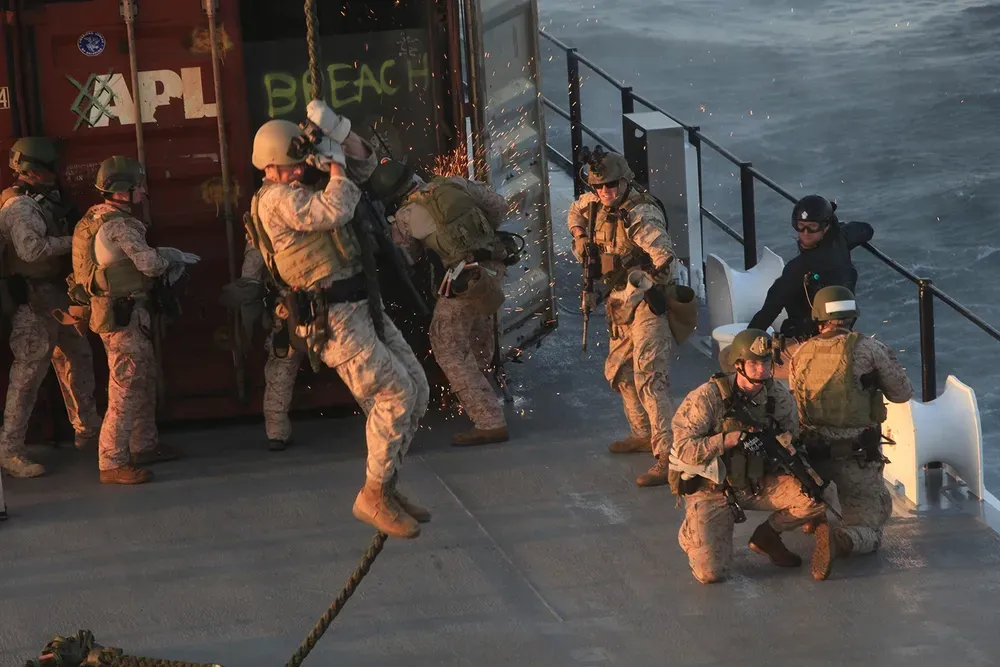
How to Train Under Fatigue: A Smart Decision Framework
Why Training Under Fatigue Requires a Framework
Training under fatigue is unavoidable for anyone serious about performance, tactical athletes, shift workers, endurance athletes, and everyone balancing high training volume against stress, broken sleep, and an unpredictable work schedule. Learning how to train when fatigued is not about gutting out every session; it's about having a decision framework that tells you which version of training the day actually calls for. It is the same logic that separates well-built military fitness programs from generic templates: the plan has to survive contact with a bad night of sleep. Get that decision right and you keep adapting. Get it wrong and you either dig a recovery hole or stall out completely.
The problem isn’t fatigue itself.
The problem is making poor training decisions while fatigued.
Most athletes default to one of two mistakes:
Push blindly and accumulate injury, burnout, or regression
Pull back too aggressively and lose momentum, confidence, or adaptation
Both mistakes carry a real cost. Spiking training load when you're already cooked is exactly the scenario Gabbett (2016) tied to elevated injury risk: when acute workload jumps well above the chronic base your body is prepared for, soft-tissue injury risk climbs sharply, which is why keeping the acute-to-chronic workload ratio in roughly the 0.8–1.3 range matters. But over-correcting is just as damaging, pull the plug every time you feel tired and your chronic training base erodes, taking your fitness and your confidence with it. The framework below exists to keep you off both extremes.
A decision framework creates structure under uncertainty. Instead of asking “Should I train today?”, the better question becomes:
“What version of training makes sense given today’s fatigue signal?”
This article outlines a practical decision-making model that helps you adjust intensity, volume, and intent without abandoning the training plan altogether. Before that, one thing worth naming: not every program is built to absorb a bad day. Some are rigid by design, and the difference shows up fast under real-world stress. If you are weighing options, our tactical training program comparison breaks down how competing systems handle load management and adjustment. The delivery method matters too, which is why it is worth understanding app-based versus in-person coaching before you commit to a system you have to follow on your worst weeks, not just your best ones.
A Practical Decision Framework for Training Under Fatigue
When fatigue is present, training decisions should be based on capacity, not motivation.
Use this simple three-layer framework:
1. Assess the Type of Fatigue (Not Just the Feeling)
Fatigue is not one thing. Different types require different responses. It also helps to know where you sit on the spectrum of fatigue versus overtraining, because the two demand very different responses.
Common fatigue signals include:
Central fatigue: poor sleep, mental fog, low motivation
Peripheral fatigue: heavy legs, localized soreness, reduced force output
Systemic fatigue: elevated resting heart rate, reduced HRV, poor recovery across sessions
Each type points to a different response. Central fatigue, the mental fog and flat motivation that follow poor sleep, usually tolerates movement fine but punishes high-skill or high-risk work, so it's a cue to simplify, not stop. Peripheral fatigue is local and specific; heavy, sore legs don't stop you from training upper body, technique, or the mobility limitations that wreck accuracy behind the gun. Systemic fatigue is the one to respect most, because it reflects an autonomic-nervous-system state you can't simply push through. Plews et al. (2013) showed that vagal-derived heart-rate variability tracks how an athlete is actually adapting to training load, making a depressed HRV trend alongside an elevated resting heart rate one of the clearest signals that the whole system, not just the muscle, needs a lighter day.
Duration is the other variable to read here, since the line between acute and chronic fatigue changes how aggressively you should adjust. The key is identifying what system is stressed, not just whether training feels hard. Feeling tired does not automatically mean training should stop, it means training should adapt.
2. Adjust the Training Variable, Not the Entire Session
Most poor decisions come from an all-or-nothing mindset. Instead of cancelling training outright, modify one variable at a time:
Intensity: reduce load, pace, or effort ceiling
Volume: shorten the session or reduce total reps
Density: increase rest, reduce interval compression
Complexity: simplify movements or skill demands
Here's what changing one variable looks like in practice. Say the plan calls for back squats at 5x5 across 85% of your max, but you slept five hours and your warm-up sets feel like lead. Cancelling is the lazy answer. Instead, pull one lever: drop intensity to 75% and keep the 5x5 (volume intact, stimulus preserved), or hold the load and cut to 5x3 (intensity intact, total volume reduced), or keep both and add ninety seconds of rest between sets (density adjusted, quality protected). You still squatted heavy. You still trained the pattern. What you avoided was a missed session, and the all-or-nothing thinking that turns one bad night into a lost week. This preserves training continuity, which matters more long-term than any single session.
3. Preserve the Intent of the Session
Even under fatigue, training should still have a purpose.
Examples:
A speed day becomes technical sprint mechanics
A strength day becomes submaximal skill practice
An endurance day becomes easy aerobic exposure
The reason intent matters is that training adaptation is cumulative, not session-by-session. A speed day stripped down to clean sprint mechanics still reinforces the movement pattern and keeps the nervous system primed; a strength day run at submaximal load still grooves technique and feeds the chronic base that protects you down the line. The moment you keep the work but lose the purpose, grinding out sloppy reps just to fill the log, you've manufactured junk volume: fatigue with no return. Protecting the intent is how you maintain training continuity, and continuity, accumulated over months, beats any single heroic session. If the intent disappears, the session becomes junk volume. The goal is not to “win the workout”, the goal is to maintain trajectory.
Autoregulation: The Method Behind the Framework
What this framework describes has a formal name in strength and conditioning: autoregulation, adjusting the training prescription to match your readiness on the day rather than obeying a number written weeks ago. The simplest tools are the ones you already carry. An RPE or reps-in-reserve check tells you whether today's "heavy" is honest: if a load that should feel like an 8 out of 10 is sitting at a 9.5, that's your cue to reduce, not to push. A thirty-second readiness scan before you start, sleep, soreness, resting heart rate, mood, converts a vague feeling into a decision. Autoregulation isn't permission to go easy; it's a system for spending your hard days when they'll actually pay off and protecting them when they won't.
How to Train Under Fatigue in Tactical and Military Environments
This framework is especially relevant outside ideal training conditions. In tactical, military, and high-stress occupations:
Sleep is inconsistent
Workload is unpredictable
Recovery windows are limited
Rigid training plans fail in these environments. Adaptive frameworks succeed. It is also where you see harder training backfiring on the job, as accumulated fatigue quietly degrades the occupational performance the training was meant to support.
Instead of forcing a pre-written plan, athletes who apply decision-based adjustments:
Stay healthier over long training cycles
Accumulate more usable training weeks per year
Maintain confidence and consistency under stress
Picture a selection candidate deep in a training block, or a patrol officer rotating onto nights: sleep is fragmented, the work shift dictates the schedule, and a rigid spreadsheet is the first thing to break. The athletes who survive these stretches aren't the ones with the most aggressive program, they're the ones whose program already has the adjustment rules built in. That's the practical case for training under a structured system rather than a static plan, and it's exactly how the framework is engineered into our programming; for athletes who'd rather follow a plan that auto-adjusts than build one from scratch, explore the CF ONE training programs. This is not about training less, it’s about training intelligently when conditions are imperfect.
The Goal Is Consistency, Not Perfection
No athlete trains under perfect conditions year-round.
The athletes who make the most progress are not the ones who never feel fatigued, they are the ones who make better decisions when fatigue shows up.
A decision framework removes emotion from the process and replaces it with clarity.
Over a year, that clarity compounds. The athlete who adjusts intelligently banks far more usable training weeks than the one who swings between grinding through everything and bailing at the first sign of fatigue. Progress in tactical fitness isn't won in the single hardest session you can survive, it's won in the dozens of good-enough sessions you string together because you made the right call when conditions were imperfect. The framework is what keeps that string from breaking.
Train when you can.
Adjust when you must.
Recover before it’s forced.
That’s how long-term performance is built.
Frequently Asked Questions About Training Under Fatigue
Should I train if I feel fatigued?
Usually yes, but the question to ask isn't "train or rest," it's "which version of training fits today's fatigue?" The presence of fatigue almost never requires a full stop; it requires an adjustment. Check the severity, how long it's been building, and whether it's dragging down concrete performance markers, then dial intensity, volume, density, or complexity to match. (Whether a day warrants complete rest is a separate decision with its own thresholds.)
How do I know when fatigue is too high to train?
Red flags include:
Sharp performance drop across multiple sessions
Persistent joint or tendon pain
Elevated resting heart rate for several days
Declining motivation combined with poor sleep
When these stack together, multiple red flags at once, not a single off day, that's the signal to strip the session down to its lightest viable version: easy aerobic work, mobility, or technique only. A single marker in isolation rarely justifies pulling back hard; it's the convergence of several, especially a multi-day rise in resting heart rate alongside falling motivation, that tells you the adjustment needs to be a big one.
Is training under fatigue ever beneficial?
Yes. Strategic exposure to fatigue can improve:
Mental resilience
Aerobic efficiency
Technical execution under stress
The key difference is planned fatigue versus accumulated, unmanaged fatigue. Deliberately training in a pre-fatigued state, a controlled overreach, a hard finisher, a session late in a demanding week, builds mental resilience and aerobic efficiency precisely because it's programmed and bounded. The same fatigue, left to pile up unmonitored across weeks, stops being a stimulus and becomes a liability that erodes performance and invites injury.
Should I follow the plan or listen to my body?
Both, and the bridge between them is autoregulation. A good training plan ships with rules for adjustment built in, so "listening to your body" becomes a structured decision rather than a mood. Listen without structure and you talk yourself out of hard days you should have kept; follow the plan with no awareness and you drive straight into avoidable breakdown. The framework's job is to give your instincts a set of rules to operate inside.
References
Gabbett, T. J. (2016). The training–injury prevention paradox: should athletes be training smarter and harder? British Journal of Sports Medicine, 50(5), 273–280
Plews, D. J., Laursen, P. B., Stanley, J., Kilding, A. E., & Buchheit, M. (2013). Training adaptation and heart rate variability in elite endurance athletes: opening the door to effective monitoring. Sports Medicine, 43(9), 773–781


