
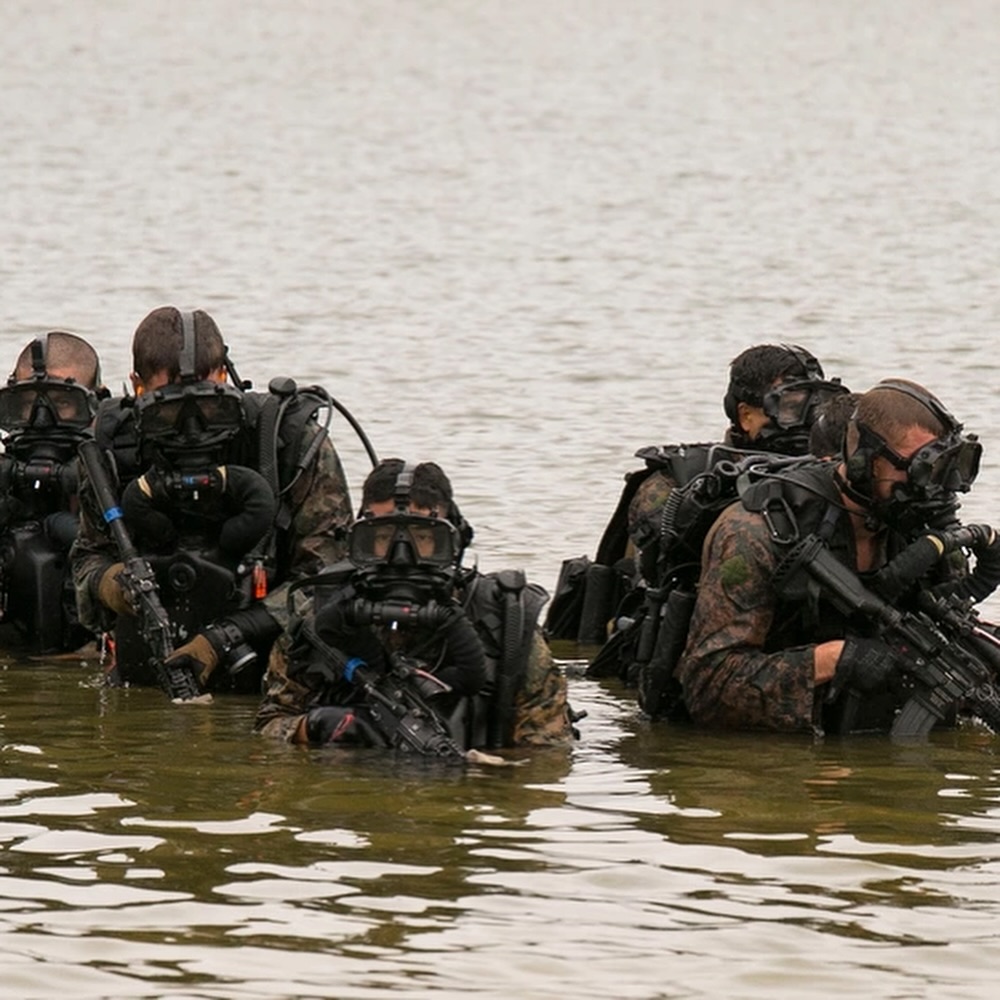
Training Under High Stress: Protect Your Recovery
Your Body Does Not Separate Gym Stress From Life Stress
Training under high psychological stress is its own physiological problem, and every experienced tactical athlete knows the feeling. You're carrying real weight off the gym floor, an ongoing investigation, a personnel problem, a family situation, financial pressure, and your training is suffering in ways sleep loss or physical fatigue alone don't explain.
The explanation is straightforward physiology, and it matters to how you train. Psychological stress imposes a real, measurable physiological load that competes with training recovery for the same resources. Ignoring that reality doesn't make you tougher. It makes your training less accurate and your outcomes worse. Athletes who want programming that accounts for total life stress, not just gym load, can explore our CF ONE tactical training programs.
How Psychological Stress Affects Training Biology
The physiological response to psychological stress activates the hypothalamic-pituitary-adrenal axis, the same system activated by physical training stress. The result is elevated cortisol, elevated catecholamines (adrenaline and noradrenaline), and a shift in immune function that mirrors the response to physical overtraining.
Chronically elevated cortisol directly inhibits muscle protein synthesis, the same inhibition that physical overtraining produces. It promotes protein catabolism, reducing the efficiency of strength training adaptation. It also impairs sleep quality, elevates resting heart rate, reduces HRV (heart rate variability), and suppresses testosterone production.
This is not a metaphor. The body does not run separate accounting systems for a maximal deadlift session and a hostile custody hearing. Both register as load on the same hypothalamic-pituitary-adrenal axis, and the adrenal output is additive. When the European College of Sport Science and the American College of Sports Medicine issued their joint consensus on overtraining syndrome (Meeusen et al., 2013), they were explicit that non-training stressors feed the same maladaptive endpoint. Your physiology counts every stressor, whether or not it happened in the gym.
What That Costs You, Measured
The effect has been quantified, and the size of it is the part worth knowing. Stults-Kolehmainen and Bartholomew (2012) put 31 resistance-trained subjects through a lifting session and measured how fast maximal isometric force came back, testing immediately after and again at 20, 40 and 60 minutes. Then they split the group by life stress.
At the one-hour mark, the low-stress group had recovered to 60.3% of their pre-session force. The high-stress group had recovered to 38.2%. Same session. Same protocol. Twenty-two percentage points of recovery, gone to things that happened outside the gym.
The effect held after the researchers adjusted for fitness, training workload and training experience, so this is not a case of the stressed group simply being less prepared. Life stress on its own explained 9.2% of the variance in recovery, which in this literature is a large effect. That is what the additive load looks like when someone puts a number on it. The training was identical. The recovery was not.
This means a training program that was appropriate for your physiology during a low-stress period may be genuinely excessive during a high-psychological-stress period. Not because you've become less fit, but because the total stress load the system is managing has increased beyond the recovery capacity of the same program. For military athletes weighing whether an individual program or unit PT better accounts for this kind of variable stress load, the CF App vs Unit PT comparison breaks down which approach handles life-stress variability more effectively.
Recognizing the Compounding Pattern
The athletes who manage high psychological stress best in training are those who recognize the compounding pattern early. The sequence: psychological stress elevates cortisol and disrupts sleep. Disrupted sleep reduces recovery capacity. Reduced recovery capacity means the same training load produces more fatigue than it would under normal conditions. Training under compounding fatigue elevates injury risk, degrades session quality, and adds another cortisol signal on top of the existing psychological stress load.
Left unmanaged, this spiral can produce genuine overtraining syndrome, a clinical condition that takes weeks to months to resolve, from training volumes that would be entirely appropriate under normal conditions. The trigger isn't the training. It's the total load. Understanding the role of the nervous system in performance explains the physiological mechanism behind why psychological stress and training stress are processed through the same biological system, making this the foundational context for everything in this guide.
Catching the compounding pattern early prevents the spiral from developing. That means reducing training load at the first signs of sustained performance decline and sleep disruption during a high-stress period, not after. Waiting until performance has substantially declined before adjusting means the spiral is already in progress.
Consider a patrol officer three weeks into an internal affairs investigation. Sleep drops to five broken hours. Resting heart rate climbs four beats. The same Tuesday squat session that felt routine last month now leaves him flat for two days instead of one. He reads the flatness as weakness and adds volume to compensate, which only deepens the hole. Nothing in his programming changed. The investigation changed everything, and the training simply reported a deficit it was never built to absorb.
What to Watch, Since You Can't Feel It
The officer above misread his own state, and that is the normal case rather than the exception. In the Stults-Kolehmainen data, the high-stress group's perceived energy, fatigue and soreness were no different from the low-stress group's. Their force recovery was 22 points worse and it did not register as anything.
So the markers have to be things you observe rather than things you feel.
Resting heart rate. Same conditions every morning. A sustained rise of several beats above your normal, held across a week, is the cheapest signal available.
Sleep, measured by continuity rather than hours. How many hours you were in bed matters less than whether you woke and stayed awake. Fragmented sleep is the specific signature here.
Session quality against the same benchmark. Not how the session felt, but whether a familiar working weight moved the way it usually does, and whether the second and third sets fell off faster than normal.
Flatness that shows up outside training. Reduced motivation and irritability across work and home, not just in the gym, is what distinguishes systemic stress load from ordinary training fatigue.
One marker moving is noise. Three of them moving together for more than a week is the point at which you cut load, whether or not you feel like you need to.
What to Preserve and What to Reduce
During high-psychological-stress periods, training should continue. Complete training removal is not the answer. The mood benefits, stress-regulating effects, and fitness maintenance value of training are all important during high-stress periods. The answer is reduction in load, not elimination.
The instinct under stress runs to one of two extremes: grind harder to prove control, or stop entirely because nothing has capacity. Both are wrong, and for the same reason, they treat training as all-or-nothing when the useful move is to keep the signal and cut the dose. The framework below sorts every training variable into two columns: what earns its keep during a high-stress stretch and should be protected, and what costs more than it returns and should be pulled back first.
Preserve: training frequency.
Maintaining the habit of showing up and training, even at reduced load, is more valuable during high-stress periods than maximizing any session's physiological output. The routine itself is stabilizing.
Preserve: aerobic work.
Particularly low-intensity aerobic work. Zone 2 training has documented cortisol-modulating effects, mod erate aerobic exercise reduces cortisol reactivity and improves HRV when volume is appropriate. It functions as a stress management tool as well as a fitness tool.
Reduce: training intensity.
High-intensity work significantly elevates cortisol. Under psychological stress, adding a high-cortisol training stimulus compounds an already elevated cortisol load. Shift intensity to moderate levels during high-stress periods. The sibling post on training load management under life stress applies this same principle to the full range of life-stress constraints tactical athletes face, not just psychological stress specifically.
Reduce: total volume. Shorter sessions, fewer accessory movements, less total work. The goal is fitness maintenance and psychological benefit, not adaptation development. This is a maintenance period with a specific clinical justification.
The Practical Prescription
During a period of sustained high psychological stress: two to three strength sessions per week at sixty to seventy percent of normal intensity. Two to three aerobic sessions per week, prioritizing zone 2 or light moderate work. Total weekly training time reduced to sixty to seventy percent of normal.
Put concrete numbers on it. An athlete who normally trains five days a week, sixty minutes a session, at full intensity is carrying roughly three hundred quality minutes weekly. The prescription above lands that same athlete near four sessions of forty minutes at moderate effort, closer to one hundred sixty minutes of materially lighter work. That is not half a program. It is the same habit, the same movement patterns, and the same weekly rhythm, delivered at a load the compromised recovery system can actually absorb and adapt to.
Figure 1.1 - The compromised training week: what to keep and what to remove. Strength, aerobic and session-length prescriptions with the matching cut list, and the one variable that never gets cut. Sources: Robinson et al., Sports Medicine 54:2209–2231, 2024; Spiering et al., J Strength Cond Res 35(5):1449–1458, 2021; Pelland et al., Sports Medicine, 2025.
Two rules govern all of it. Stop every set well short of failure, because failure training is the highest-cortisol thing you can do in a gym and the point of this block is not to add to that. And keep the movements familiar, because novel exercises demand attention and coordination that stress has already spent.
This is not a soft option. It is the accurate option. It produces the psychological and physiological benefits of training while not compounding the stress load in a way that accelerates deterioration. For athletes who also struggle to maintain training quality when recovery is already compromised, managing fatigue with poor recovery covers the specific training adjustments that make the most difference when the recovery environment is outside your control.
Some athletes attempt to maintain full training intensity through major life stress events, believing that pushing through is the correct response to all adversity. They accumulate injuries, illness, and performance decline at higher rates than those who modulate load. Toughness is not the same as ignoring physiology. Toughness includes knowing when the system needs less, not more.
Training as a Stress Management Tool
The mood and cognitive benefits of training are real, documented, and particularly valuable during high-stress periods. Regular exercise reduces cortisol reactivity, improves sleep architecture, elevates BDNF (brain-derived neurotrophic factor) which supports cognitive resilience, and provides a reliable sense of agency and accomplishment during periods when much else feels outside of your control.
These benefits are maximized at moderate training loads, not maximal ones. A thirty-minute moderate-intensity run provides more psychological benefit during a high-stress period than a forty-five-minute maximum-effort conditioning circuit. The moderate session is restorative. The maximum-effort session adds more physiological load to an already taxed system.
The relationship between exercise and cortisol is not linear, it is shaped like a U. Light-to-moderate work bends the curve downward, blunting cortisol reactivity and nudging the nervous system toward its parasympathetic, recovery-oriented state. Past a certain intensity the curve reverses and exercise becomes another cortisol spike stacked on the psychological one. This is why dose, not effort, is the variable that matters here. The same run is medicine at a conversational pace and a liability at a flat-out one. Use training as the stress management tool it is. Just use the correct dose.
When to Seek Additional Support
Training management helps. It is not a complete solution for significant psychological stress. Persistent psychological stress that is affecting sleep, performance, and quality of life, particularly following traumatic operational events, line-of-duty losses, or institutional conflicts, warrants support beyond training modification.
The tactical professions have made meaningful progress in reducing the stigma around mental health support. A performance psychologist, chaplain, or peer support specialist is a performance resource, not an admission of weakness. Addressing the root cause of significant psychological stress is a higher-order intervention than training load management.
In practice, the line is not subtle once you know what to watch for. Stress that follows you out of the situation that caused it, sleep that stays broken after the acute event has passed, performance that keeps sliding for more than two or three weeks despite a reduced load, or a flatness that bleeds into family and work as much as training, these are signals the load has outrun what programming alone can manage. Reaching out at that point is not escalation. It is accurate triage.
If the answer is yes and you don't know where to start, the shortest routes are usually already inside the organization: peer support, the employee assistance program, a unit chaplain, or the department or unit psychologist. Any of those is a first call rather than a commitment, and any of them can point you further if it needs to go further. Outside the organization, a physician or a psychologist with tactical or first-responder experience is the equivalent starting point.
The decision post on when intensity should be reduced addresses the specific judgment call of how to identify the right moment to pull back, providing a practical framework for the decision this entire guide builds toward.
Frequently Asked Questions
How do I distinguish normal training fatigue from psychological stress-driven fatigue?
Start with the uncomfortable part: often you can't, not by feel. In the Stults-Kolehmainen and Bartholomew (2012) data, subjects under high life stress recovered force far more slowly after an identical session, and their ratings of energy, fatigue and soreness were no different from the low-stress group's. The deficit was real and it was invisible from the inside. So use markers you can observe rather than sensations you can rate. Resting heart rate taken under the same conditions each morning. Whether sleep is fragmenting rather than just shortening. Whether a familiar working weight is moving the way it normally does. And whether the flatness is showing up at work and at home rather than only in the gym, which is the clearest signature of systemic stress load rather than ordinary training fatigue. HRV, if you track it, tends to fall in psychological stress states and is more useful than subjective fatigue on its own.
Should I train on days when psychological stress is acutely high, right after a bad shift or during a crisis?
Generally yes, but at low to moderate intensity. The acute cortisol-regulating and mood-improving effects of moderate exercise are well-supported and are most valuable precisely when psychological stress is high. A moderate run or light strength session on a hard day is typically beneficial. A maximum-effort session is typically not.
Is there a specific type of training that's most effective for managing psychological stress?
Low to moderate intensity aerobic work, walking, easy running, rucking, has the most consistent evidence for cortisol modulation and mood improvement. Strength training at moderate intensity also has documented mood benefits. High-intensity training has acute mood benefits but adds physiological stress that may not be appropriate during already high-stress periods.
How long does it typically take for training adaptation to normalize after a high-stress period resolves?
Most athletes see training quality and recovery normalize within two to four weeks of the psychological stressor resolving, assuming sleep quality also normalizes. If a significant training load reduction was maintained during the stress period, a gradual four-to-six week return to full program volume is preferable to an immediate full-volume resumption.
References
Stults-Kolehmainen, M. A., & Bartholomew, J. B. (2012). Psychological stress impairs short-term muscular recovery from resistance exercise. Medicine & Science in Sports & Exercise, 44(11), 2220–2227.
Stults-Kolehmainen, M. A., Bartholomew, J. B., & Sinha, R. (2014). Chronic psychological stress impairs recovery of muscular function and somatic sensations over a 96-hour period. Journal of Strength & Conditioning Research, 28(7), 2007–2017.
Meeusen, R., et al. (2013). Prevention, diagnosis, and treatment of the overtraining syndrome: Joint consensus statement of the ECSS and ACSM. Medicine & Science in Sports & Exercise, 45(1), 186–205


