
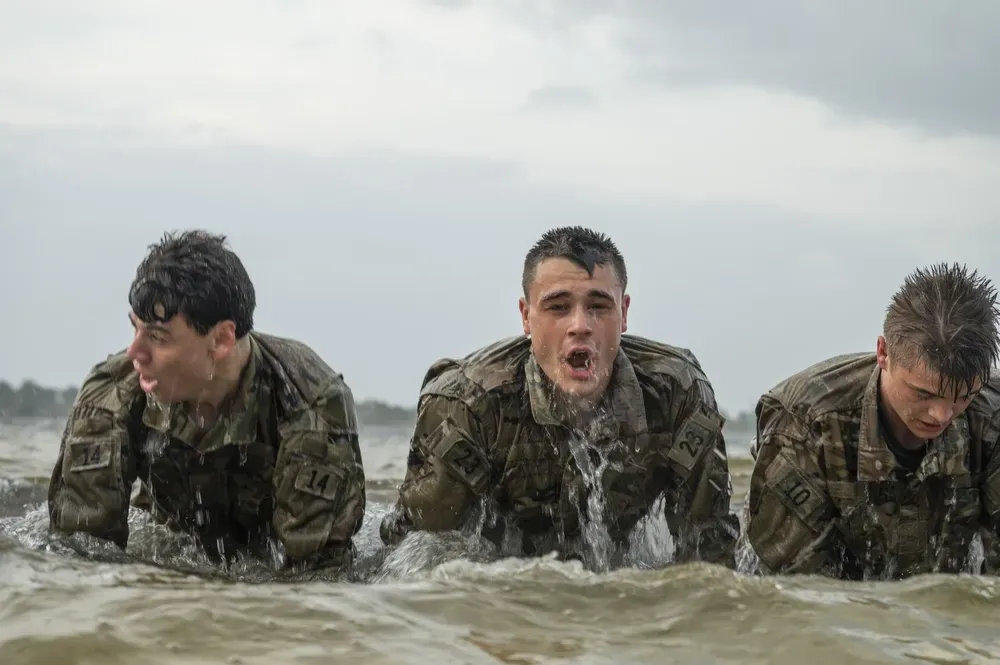
Elite Fitness: Why Most People Never Reach It (And How To)
Most people assume elite fitness is a genetic lottery. A lucky few are built for it, the rest are not, and no amount of work closes the gap. That belief is comforting because it explains failure without demanding change. It is also mostly wrong. Genetics set your ceiling, but almost nobody trains long enough or intelligently enough to get anywhere near their own. Elite fitness is rarely lost to bad genes. It is lost to bad training that never evolves past the beginner stage. People work harder every year. Far fewer ever train better.
Elite Fitness Is Built, Not Born
Walk into any gym and you will see people pouring out genuine effort into programs that cannot take them anywhere. They are not lazy. They are loyal to methods that stopped working months ago. Elite performers are not chasing suffering or novelty. They are running systems, the kind of structured tactical athlete fitness programs built to be repeated, and they trust those systems long enough to see them compound.
That is the unglamorous truth the fitness industry hides: the work that produces elite capacity is repetitive, measured, and frequently boring. It does not photograph well. It does not go viral. It does, however, produce results, year after year, while the people relying on motivation alone cycle through the same plateau on repeat.
Why Beginners Improve on Bad Programs - and Then Stall
Beginners improve under almost any stimulus. Run more and your engine grows. Pick up something heavy and you get stronger. Those early wins are real, but they are also a trap, because they reward whatever you happened to be doing regardless of whether it was well designed. This builds false confidence in poor programming. It is the same reason people stay on a stalled plan instead of looking at how the tactical fitness programs compared elsewhere actually stack up. When the plateau finally hits, that comparison gets specific, as in this head-to-head of Combat Fitness versus other training programs, because the details of a program are what decide whether it keeps delivering. When progress inevitably slows, most people reach for the only lever they understand: more. More volume, more sessions, more fatigue.
The problem is that intermediate and advanced progress is not bought with effort alone. It is bought with refinement. Past the novice stage, the question stops being "how much harder can I push?" and becomes "what specifically is limiting me, and how do I target it?" That shift, from escalation to precision, is exactly where most people stall and never recover. Picture a soldier who added thirty seconds to his two-mile run in his first three months simply by running more often. Encouraged, he doubles his weekly mileage. For another few weeks the clock keeps dropping, then it stops, then it creeps the wrong way as his legs stay perpetually flat. Nothing about "more" was going to fix a plan that had no easy days, no strength work to protect his joints, and no structure to peak him for the test. He did not need more grit; as why more running is not the answer lays out, he needed a different plan.
Intensity Is Not the Same as Intent
As people advance, volume climbs and intensity climbs, but intent quietly disappears. Sessions get harder without getting smarter. Everything becomes a grind because grinding feels like progress. The research on how elite athletes actually distribute their effort tells a different story. In their study of well-trained endurance athletes, Seiler and Kjerland (2006) found that the best performers spend roughly 80 percent of their training at genuinely low intensity, with only a small fraction near threshold or above.
The hard days are hard, but they are rationed. The easy days are kept easy on purpose. Most amateurs invert this, living in a gray zone of moderately-hard work that is too taxing to recover from and too soft to drive top-end adaptation. Elite fitness demands precise stress application, not maximal stress everywhere. Not every session needs to hurt. The reason is physiological, not motivational: low-intensity aerobic work and high-intensity work drive different adaptations through different pathways, and blurring them into a constant moderate grind gives you a weak version of both. Easy work should build the aerobic base that lets you recover between hard efforts; hard work should be hard enough to force a real adaptation.
Knowing which sessions should hurt, and which ones must not, is a skill, and it is one of the clearest dividing lines between people who progress and people who stall. If you have never mapped out how your hard and easy work fits together across a week, our breakdown of concurrent training versus block periodization is the place to start.
Strength, Endurance, and Durability Have to Rise Together
Elite fitness is balanced fitness. Strength without an aerobic base collapses under repetition. Endurance without strength breaks down the moment the task gets heavy. Durability without either is meaningless, because you cannot express any quality you cannot keep healthy. Most programs overdevelop one quality at the direct expense of the others, producing an athlete with a single visible strength and several hidden liabilities that real demands expose immediately. Building qualities together is harder than it sounds.
Hickson's foundational 1980 study was the first to demonstrate the interference effect: bolting endurance training onto a strength program blunted strength development compared with training strength alone, even though aerobic gains were unaffected. That does not mean the qualities are incompatible. It means concurrent development has to be sequenced and dosed deliberately rather than thrown together and hoped for. This is the entire logic behind a structured hybrid program likes like Functional +, which is built to raise strength, conditioning, and work capacity in parallel instead of forcing you to sacrifice one for another. If you want the underlying model, we lay it out in our framework for strength endurance balance. Durability deserves its own mention, especially for tactical populations, where why PT programs fail soldiers usually traces back to loaded stress the plan never prepared them for.
The job is not performed in a controlled gym. It is performed under load, on bad ground, when you are already tired. Knapik, Reynolds, and Harman (2004), in their review of soldier load carriage, documented that the injuries that sideline operators, mostly to the lower limbs and back, come from accumulated loaded stress, and that the fix is progressive conditioning, not heroics. They recommend building load tolerance gradually, with heavy carries spaced out and supported by dedicated strength and aerobic work in between. Durability is not toughness. It is a physical capacity you build on purpose, the same as any other.
Recovery Is a Training Variable, Not a Day Off
Elite performers recover better, and not because they rest more. They manage stress more intelligently. They adjust loads before fatigue forces the issue, they protect sleep as if it were a session, and they fuel consistently rather than heroically. Recovery is what converts hard work into adaptation; without it, training is just damage you never cash in. Gabbett (2016) framed this precisely in what he called the training-injury prevention paradox. Athletes carrying high, well-built workloads are actually more resilient than undertrained ones, but the injuries come from sudden spikes, when load jumps faster than the body has been prepared to absorb.
Hard training protects you only when it is delivered at a rate you can recover from. That balance, pushing the ceiling up while keeping the spike down, is the entire game. Consider a firefighter coming off a run of night shifts who trains hard anyway, every day, on four hours of broken sleep. He is not building fitness; he is accumulating a debt his body never gets to repay, and the eventual tweak or illness is not bad luck but arithmetic. People who treat recovery as optional do not just risk injury; they cap how much quality work they can ever absorb, which caps how good they can ever get. If this is the piece you have been neglecting, start with how recovery actually work.
The Patience Most People Don't Have
Elite fitness takes years, not months, and that single fact filters out the overwhelming majority of people before they ever get close. Modern expectations run on weeks. People want a transformation by summer, so they switch programs the moment progress feels slow, chase whatever is trending, and reset their own adaptation clock to zero over and over. Compounding only works if you let it run.
The athletes who reach elite levels are not more gifted than the ones who quit; they simply stayed with effective systems long enough for the slow gains to stack into something large. This is the exact trap we break down in why most people plateau in military fitness. Structured programs are built around this timeline on purpose. They are not designed to deliver a quick win and a burnout. They are designed for sustained, repeatable development, which is the only kind that ever reaches the top.
Discipline Paired With Restraint
Discipline is usually framed as the willingness to push. At the elite level it is just as much the willingness not to. The advanced athlete knows when to back off, when to leave reps in the tank, and when a planned easy day needs to stay easy no matter how good they feel. This restraint is not weakness; it is what preserves the capacity to train hard again tomorrow, and the day after, for months on end. The Gabbett model makes the cost of ignoring it concrete: the athlete who chases every session into the ground creates exactly the load spikes that produce injury and forced time off. People who never learn restraint burn out long before they reach elite levels, not because they lacked drive, but because they had no governor on it.
What This Looks Like in Practice
Strip away the mystique and elite fitness is a sequence of unremarkable decisions made consistently. You follow a plan that develops several qualities in parallel. You keep easy work easy and make hard work count. You manage load so it climbs steadily instead of spiking. You guard recovery. And you stay the course long enough for compounding to do its work. None of it is dramatic, which is exactly why most people never do it. If you are early in the journey, the priority is building a broad, durable base before specializing, which is the entire purpose of a beginner program like Resurgence. If you already have a base and keep stalling, the missing ingredient is almost never more effort. It is structure: a plan that knows what it is developing this block, why, and what comes next. That is the difference between training that climbs and a pile of hard sessions strung together by feel, which is why random workouts fail the people relying on them. Elite fitness is not reserved for the genetically gifted. It is reserved for the disciplined few who are willing to train intelligently and wait. The methods are not secret. The patience is just rare.
FAQ
Why don't most people reach elite fitness?
Because their training never evolves past the beginner stage. It lacks structure, balanced development across strength and endurance, controlled intensity, and the patience to let progress compound over years.
Is elite fitness genetic?
Genetics set your ceiling, but they are rarely the limiting factor. Almost nobody trains intelligently or long enough to reach their own ceiling, so structure and consistency matter far more in practice.
How long does it take to reach elite fitness?
Years, not months. The defining trait of people who get there is that they stayed with effective systems long enough for slow, steady gains to stack up, instead of resetting the clock by program-hopping.
What separates elite performers from everyone else?
Load management, balanced development, intelligent recovery, and restraint, the discipline to keep easy days easy and avoid the load spikes that cause injury and burnout.
References
Gabbett, T. J. (2016). The training-injury prevention paradox: should athletes be training smarter and harder? British Journal of Sports Medicine, 50(5), 273–280.
Hickson, R. C. (1980). Interference of strength development by simultaneously training for strength and endurance. European Journal of Applied Physiology and Occupational Physiology, 45(2–3), 255–263.
Knapik, J. J., Reynolds, K. L., & Harman, E. (2004). Soldier load carriage: historical, physiological, biomechanical, and medical aspects. Military Medicine, 169(1), 45–56.
Seiler, K. S., & Kjerland, G. Ø. (2006). Quantifying training intensity distribution in elite endurance athletes: is there evidence for an "optimal" distribution? Scandinavian Journal of Medicine & Science in Sports, 16(1), 49–56.


