
12-Week Functional Training Program: What to Include
The phrase "12-week functional training program" gets attached to almost anything: downloadable PDFs, six-week bootcamps stretched to twelve, and generic workout plans that simply run for three months. Twelve weeks sounds long enough to promise results and short enough to feel manageable, so the label sells. The problem is that most of these programs are not functional and were never engineered as twelve-week systems. They are loose collections of workouts with a number on the cover. That distinction is the whole game. A program built on real physiological progression rather than effort theater is what CF ONE training programs are designed to deliver.
A real 12-week functional training program is not about variety, novelty, or fatigue. It is about adaptation. For athletes deciding which tactical fitness program fits their goals and timeline, the tactical fitness program buying guide walks through exactly how to evaluate your options.
What "Functional" Actually Means in Tactical Training
Functional does not mean random. It does not mean unstable surfaces, gimmicks, or complex movements. Functional means the training improves performance in the tasks the individual actually needs to perform. For athletes with specific questions about tactical fitness program structure and what to expect from a well-designed system, the tactical fitness program FAQ covers the most common questions in one place.
For tactical and military athletes, those tasks include:
Moving under load
Sustaining effort over long durations
Producing force repeatedly while fatigued
Recovering quickly between bouts of work
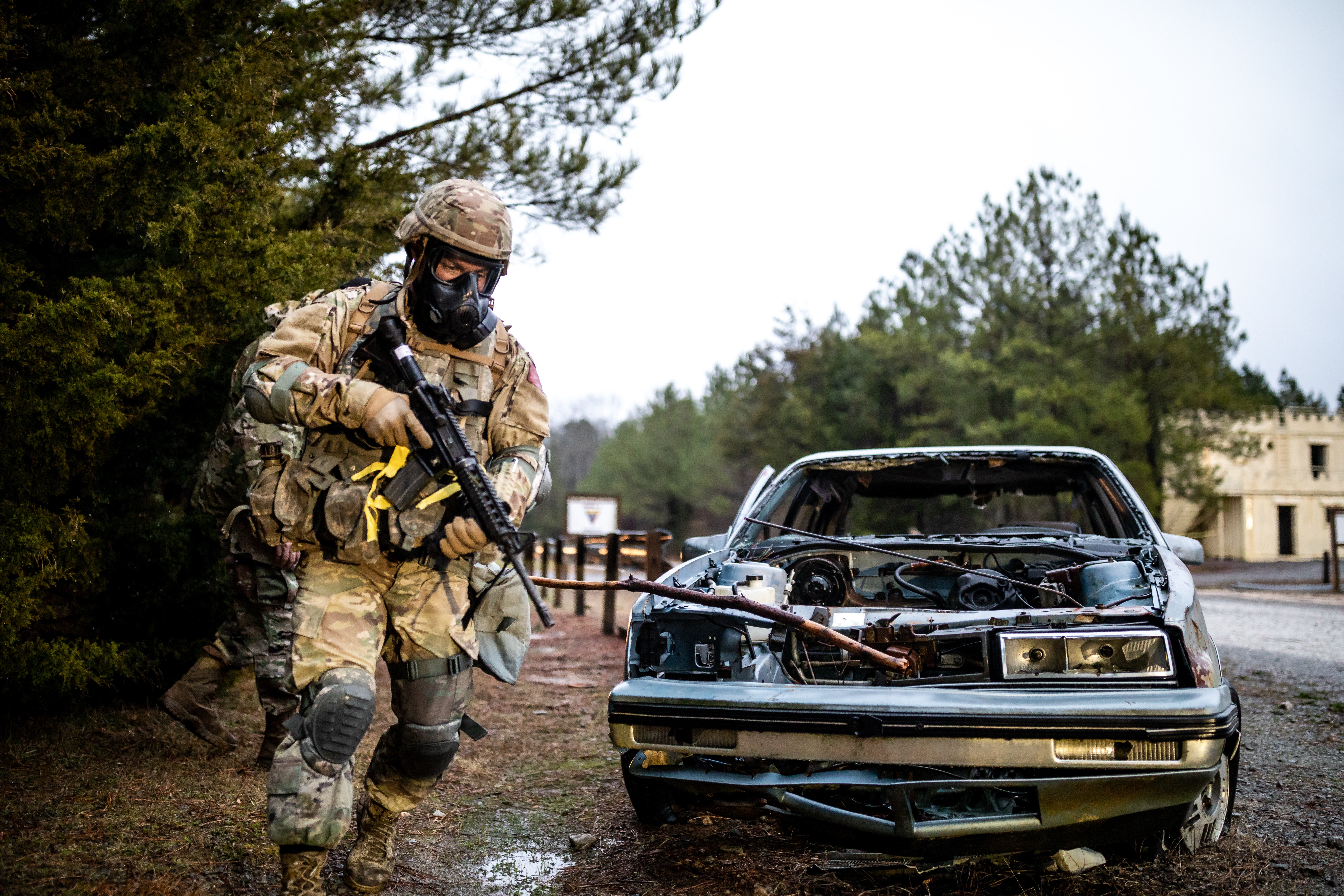
Put a face on that list. A soldier moving a 65-lb ruck over 12 miles of broken terrain, then expected to clear a building and drag a casualty, is drawing on every one of those qualities at once. Functional training is the work that makes that sequence repeatable under fatigue, not the work that looks impressive on a phone screen. If a movement does not raise the ceiling on load carriage, sustained output, repeat power, or recovery between efforts, it is occupying time the program cannot afford to waste. If a program does not improve those qualities, it is not functional, regardless of how it looks. The full definition of what is tactical conditioning grounds this standard in operational context, establishing the performance demands that any genuinely functional program must be built to serve.
Why Twelve Weeks is a Meaningful Window
Twelve weeks is long enough for genuine physiological change, and the changes arrive in a predictable order. The first three to four weeks are dominated by neural adaptation, where strength climbs quickly because the body is learning to recruit muscle more efficiently rather than building new tissue. From roughly week four onward, structural change takes over: muscle cross-section, aerobic enzyme density, capillary supply, and connective-tissue tolerance all rise on a slower curve that needs the back half of the block to express itself. That timeline is also why twelve weeks exposes bad programming. A well-designed plan shows measurable progression by week four to six, while a poorly designed one feels exhausting yet looks identical at week twelve to where it sat at week one. That is not progress. It is repetition wearing the costume of work.
A Functional Program Must Have a Clear Objective
Every effective twelve-week plan starts with a question.
What are we trying to improve?
Not vaguely.
Specifically.
Examples include:
Improving load carriage tolerance
Building aerobic capacity without excessive impact
Increasing usable strength while maintaining endurance
Reducing injury risk during high-volume periods
The reason prioritization is non-negotiable is interference: chasing maximal strength and high endurance volume in the same block, at the same intensity, blunts both. Hickson (1980) was the first to document this, showing that concurrent heavy strength and endurance work suppressed strength gains relative to strength training alone. That does not mean the two cannot coexist over twelve weeks; it means one is the priority and the other is maintained, and the dose is sequenced so they support rather than cannibalize each other. A program with four equal "priorities" has none. Programs that try to do everything at once usually do nothing well. Functional training prioritizes.
Strength Must be a Primary Pillar
Any functional training program that minimizes strength is incomplete.
Strength supports:
Joint stability
Load tolerance
Movement efficiency
Injury resistance
Progression is the part most plans skip. Training a main lift two to four times per week only works if the stimulus climbs: adding roughly 2.5 to 5 lbs to upper-body lifts and 5 to 10 lbs to lower-body lifts week over week, or adding a set, or tightening rest, so the body is always being asked for slightly more than it has already adapted to. Exercise selection barely matters by comparison. A back squat, a trap-bar deadlift, and a heavy carry will all build tactical strength if the load actually moves over twelve weeks. They will all stall the moment it stops.
For tactical athletes, strength is infrastructure. A twelve-week plan should include progressive strength training at least two to four times per week. Progression matters more than exercise selection. If loads, volume, or complexity do not increase over time, adaptation stalls.
Conditioning Must be Structured, Not Constant
Functional conditioning is not constant intensity. It targets specific energy systems deliberately.
A twelve-week program should include:
Low-intensity aerobic work to build capacity and recovery
Moderate-intensity efforts to improve sustained output
Limited high-intensity work to maintain speed and power
The proportions matter more than the menu. Seiler and Kjerland (2006) found that well-conditioned endurance athletes spend roughly 80 percent of their training time at low intensity and only about 20 percent at moderate-to-hard efforts, and that this distribution out-performs grinding away in the middle zone. For a tactical athlete that translates cleanly: most aerobic minutes should be easy enough to hold a conversation, with hard intervals kept deliberately scarce so they stay genuinely hard. Stacking every conditioning session in the gray zone of "kind of hard" produces fatigue that reads as effort but never builds the aerobic base the harder work is supposed to sit on top of.
When everything is hard, nothing improves. Conditioning without structure produces fatigue, not fitness.
Volume Must Progress Logically
Functional programs manage volume carefully.
Week one should not resemble week twelve.
Volume and intensity must build gradually.
Sudden spikes increase injury risk and reduce adaptation.
Progression can take many forms:
Increased load
Increased duration
Increased density
Increased technical demand
What matters is that stress increases in a controlled way. Understanding what is training load gives this volume progression principle its mechanistic foundation, defining exactly how accumulated stress drives adaptation and why uncontrolled spikes undermine it. There is a usable number behind "controlled." Gabbett (2016) framed it as the acute-to-chronic workload ratio: this week's training load divided by the rolling average of the past four. Keep that ratio in roughly the 0.8 to 1.3 range and the body is being progressively loaded inside what it can absorb. Push it past about 1.5, the classic "I felt good so I doubled the mileage" weekend, and injury risk climbs sharply. A twelve-week plan that respects this never lets any single week jump more than about 10 percent over the recent average, which is exactly why week one and week twelve should look different but adjacent weeks should not.
Recovery Must be Planned, Not Hoped For
Recovery is not optional in a twelve-week system.
Without planned recovery, progress collapses midway through the program.
Effective plans include:
Easier days
Reduced volume weeks
Adjustments based on fatigue
In practice that means building the deload in before the program starts, not improvising it when the wheels come off. A common, durable structure runs three weeks of progressive loading followed by a fourth week at roughly 40 to 50 percent reduced volume, with intensity held high enough to maintain the adaptations already banked. The reduced week is not lost time. It is when the body actually expresses the work of the prior three, a process called supercompensation, where fitness rises during recovery rather than during the hard sessions themselves. Skip it across twelve weeks and adaptation quietly inverts into accumulated fatigue.
Recovery allows consolidation of gains. Ignoring it guarantees regression. This is one reason many short-term programs fail before week eight.
Functional Programs Account for Reality
Tactical athletes do not train in ideal conditions. Sleep gets cut by a duty shift, stress spikes during a selection pipeline, and the week's workload can double with no warning. A functional twelve-week plan has to survive that, which is why autoregulation is built into good programming rather than bolted on. The simplest version is a rule the athlete can apply mid-session: after a night of broken sleep, hold the prescribed sets but back the load off by roughly 10 percent and judge the day by quality of movement, not by ego. A rigid plan that demands the exact prescribed number on a bad day breaks adherence, and a program no one can stick to is worthless regardless of how it looks on paper. Adaptive systems are what actually accumulate twelve weeks of consistent work.
Movement Quality Matters, but Simplicity Wins
Functional training values movement quality. It does not require endless complexity. Simple movements performed well under progressive load produce better outcomes than complex movements performed inconsistently. Twelve weeks is enough time to refine technique and reinforce patterns. Excessive novelty interferes with this process.
What Most 12-week Programs Get Wrong
Most programs fail because they:
Chase variety instead of progression
Emphasize fatigue over adaptation
Ignore recovery
Underdose strength
Overuse conditioning
They feel productive.
They do not produce durable results.
That gap is why so many people finish programs feeling tired rather than capable. The direct contrast between training hard vs training smart draws the precise line between programs that produce this outcome and programs that avoid it, making it the essential reference for athletes evaluating why their current approach is falling short.
A Systems Approach Produces Results
A functional twelve-week program is a system. Each component supports the others.
Strength supports endurance.
Endurance supports recovery.
Recovery supports consistency.
Programs like the Combat Fitness training plans are built around this systems approach.
The focus is not on workouts.
It is on outcomes. The structural framework for how strength and endurance are integrated within that system is laid out in a framework for concurrent training, which shows exactly how these qualities are programmed to support rather than compete with each other across a training block. A twelve-week program should leave someone more capable than when they started. If it does not, the structure was wrong. The framework for training prioritization gives athletes the practical decision structure for sequencing the components this post has described, and more volume vs better structure closes the argument by explaining why adding more work is never the answer when the design itself is the problem.
FAQ
What should a 12-week functional training program include?
Progressive strength training, structured conditioning, planned recovery, and logical volume progression.
Is twelve weeks enough to see real results?
Yes, if the program is structured and progressive.
Why do most functional programs fail?
Because they prioritize variety and fatigue instead of adaptation.
Who benefits most from a 12-week functional program?
Tactical athletes and anyone whose performance depends on durability and sustained output.
References
Hickson, R.C. (1980). Interference of strength development by simultaneously training for strength and endurance. European Journal of Applied Physiology, 45, 255–263.
Seiler, S., & Kjerland, G.Ø. (2006). Quantifying training intensity distribution in elite endurance athletes: is there evidence for an "optimal" distribution? Scandinavian Journal of Medicine & Science in Sports, 16(1), 49–56.
Gabbett, T.J. (2016). The training–injury prevention paradox: should athletes be training smarter and harder? British Journal of Sports Medicine, 50(5), 273–280.


