
Army Schools: Complete Guide to U.S. Army Training Paths
United States Army Schools: A Complete Guide to Training & Careers
Imagine a university system with more than 150 "majors," campuses in nearly every state, and a commitment to lifelong learning that never lets up. That system is real, and the U.S. Army runs it. Beyond the Hollywood image of obstacle courses and drill sergeants, the Army operates one of the world's most extensive education networks. These army schools, the United States Army's training and education system, exist to turn raw recruits into highly skilled specialists and leaders, covering nearly every profession imaginable.
Most people are familiar with Basic Combat Training, the ten-week crucible that transforms civilians into soldiers. But that is just the beginning. Arriving ready for that crucible starts long before day one, and dedicated military training programs build the strength and endurance the Army expects. The real specialization starts when a soldier's journey splits toward a specific career. These United States Army schools are where a recruit learns to be everything from a helicopter mechanic or cybersecurity analyst to a musician or culinary artist, part of a broader family of army schools that focus on skills for every profession.
These specialized army training schools function much like vocational colleges. After learning the fundamentals of being a soldier, individuals attend Advanced Individual Training (AIT) to master their chosen job. According to Army data, this training can last from a few weeks for a truck driver to over a year for a linguist at the prestigious Defense Language Institute. The skills gained are not only critical for military operations but often come with civilian-recognized certifications.
A soldier's entire career is structured around continuous learning, with leadership academies and advanced courses required for every promotion. This educational journey builds careers both in and out of uniform, from the foundational skills every soldier learns to the specialized training that defines a profession across the army schools list.
Overview
The Army operates a nationwide education system that begins with Basic Combat Training, then splits into AIT for enlisted job mastery and distinct commissioning routes for officers via West Point, ROTC, or OCS. Soldiers can add specialized qualifications through schools like Airborne and Air Assault, while elite courses such as Ranger School and Special Forces Assessment and Selection forge leaders under extreme conditions. For candidates comparing how to prepare, a structured SFAS training program comparison lays out the options before selection day.
Career-long Professional Military Education ties promotion to progressively advanced leadership training. Many programs confer civilian-recognized certifications and college credit, enabling a path from recruit to skilled specialist to leader.
Fort Benning training courses
When you picture Army training, you probably imagine drill sergeants and obstacle courses. While that's part of it, the true goal of Basic Combat Training (BCT) is much deeper. Over ten weeks, this school transforms civilians into soldiers by building a foundation of discipline, teamwork, and resilience. This intense course is the universal starting point for every Enlisted Soldier, the hands-on specialists who form the backbone of the U.S. Army. Before that transformation begins, recruits can arrive prepared by working through a thorough basic training packing list so nothing essential is left behind. It's less about creating a combat expert and more about forging a capable and disciplined individual.
The curriculum focuses on three core areas. Trainees build physical and mental toughness through daily conditioning and challenging events. They also learn marksmanship, mastering the safe and effective use of a rifle. Finally, they practice essential soldiering tasks, from first aid and navigation to moving and communicating as a team. These skills are standardized across all army training schools that host BCT, including the well-known Fort Moore training courses in Georgia, ensuring every soldier starts with the same critical knowledge.
Graduating from BCT makes you a soldier who is ready to learn a specific job. The emphasis is on mental readiness and a willingness to learn, not just physical fitness. From this point, the Army's educational system splits, creating different paths for the enlisted specialists who perform tasks and the commissioned officers who lead them.
Manager or Specialist? Choosing Your Army Career Path
In the Army, career paths are split into two distinct roles: Enlisted Soldiers and Commissioned Officers. Think of Enlisted Soldiers as the skilled technicians and hands-on experts who perform the vast majority of the Army's jobs. A commissioned officer, on the other hand, is the organization's equivalent of a manager, responsible for planning missions and leading teams of soldiers. This core difference shapes their entire careers. Before either path opens up, applicants must first meet the Army's enlistment standards, and it helps to review the current Army tattoo policy that can affect who qualifies to serve.
Enlisted Soldiers all begin at Basic Combat Training. Their path is about becoming a master of a specific craft. After BCT, they attend another school to become an expert in their chosen job, whether that's as a helicopter mechanic, a cybersecurity analyst, or a combat medic. Their career progression is based on deepening this technical expertise and gaining hands-on experience through a spectrum of army schools for enlisted.
The route to becoming an officer is fundamentally different. These leaders typically earn a four-year college degree before or during their military education at institutions like West Point or through the Reserve Officers' Training Corps (ROTC). Others may enlist first and later meet the strict army officer candidate school requirements . These separate enlisted vs officer training paths exist because an officer's primary focus is on leadership, planning, and taking responsibility for their soldiers' success and well-being.
Neither path is better, they are simply different careers suited for different aspirations. The decision hinges on whether you are more drawn to mastering a specific, hands-on skill or to leading, planning for, and managing people.
From Soldier to Specialist: What is Army AIT?
After mastering the fundamentals in Basic Combat Training, an enlisted soldier's journey into their specific career begins. This next phase is called Advanced Individual Training (AIT), which serves as the Army's version of a vocational school and one of the core army schools for enlisted personnel. While BCT focuses on transforming civilians into soldiers, AIT is where soldiers are transformed into skilled specialists. It's the professional, hands-on instruction personnel attend to truly learn their job.
At AIT, soldiers receive in-depth military occupational specialty training. Your Military Occupational Specialty (MOS) is the Army's term for your job. This is where a soldier stops being just a trainee and starts mastering the technical craft that will define their Army career and provide valuable skills for life after service.
The training experience varies dramatically depending on the job. The length and location of your advanced individual training are tailored entirely to the complexity of your chosen MOS. For example, becoming a culinary specialist takes a few months, while training as a cryptologic linguist can take well over a year of intensive, immersive study.
This diversity is one of the Army's greatest strengths. To give you an idea of the range, here is a short list of army advanced individual training options:
Cyber School (Fort Eisenhower, GA): 6 months to a year
Culinary Specialist School (Fort Gregg-Adams, VA): 9 weeks
Black Hawk Helicopter Repairer School (Fort Eustis, VA): 17 weeks
Upon graduation from AIT, these soldiers report to their first duty station not just as members of the Army, but as qualified and confident experts in their field.
The Three Roads to Becoming an Army Officer
While enlisted soldiers head to a specific job school after Basic Training, the path to becoming an Army Officer, the force's planners, managers, and leaders, is fundamentally different. This journey centers on combining leadership development with a four-year college education. For those who feel called to lead, the Army offers three distinct roads to earning a commission.
The most famous route is the U.S. Military Academy at West Point , a prestigious and highly competitive four-year military training academy where cadets live Army values while earning their bachelor's degree. A more common path is the Reserve Officers' Training Corps, or ROTC. This program is integrated into hundreds of civilian colleges, allowing students to lead a relatively normal campus life while taking military science classes and participating in leadership training.
For college graduates and dedicated enlisted soldiers seeking to become officers, the third road is Officer Candidate School (OCS). Meeting the army officer candidate school requirements, which includes holding a four-year degree, allows you to attend this intense 12-week leadership course. It's a concentrated crucible designed to forge leaders by testing their mental and physical limits.
Despite their different timelines and environments, all three paths lead to the same destination. Whether through the immersive experience of West Point , the integrated approach of ROTC, or the focused trial of OCS, graduates earn their gold bar as a newly commissioned Second Lieutenant. Their training, however, isn't over.
Beyond Your Job: How Soldiers Earn Special Skills
Once a soldier has a primary job, their education is far from over. The Army operates dozens of functional and army specialized schools, also called army specialty schools, that act like professional certifications, offering extra skills that make soldiers more versatile. These are often voluntary, highly demanding, and available to soldiers from almost any career field. A supply clerk can learn to parachute just as an infantryman can, adding valuable capabilities to their unit.
Perhaps the most iconic of these is Airborne School. Over three intense weeks at Fort Benning, Georgia, soldiers learn the fundamentals of static-line parachuting. They are taught how to rig their equipment, exit an aircraft, and land safely. The purpose is strategic: to give the Army the ability to deploy a fighting force anywhere in the world on short notice by dropping them directly into the action.
While Airborne focuses on high-altitude deployment from planes, Air Assault School centers on the tactical use of helicopters. This grueling 10-day course teaches soldiers how to rappel and fast-rope from a hovering helicopter, as well as how to prepare vehicles and supplies for "sling-load" transport beneath the aircraft. It's about using helicopters to rapidly move troops and equipment around the battlefield.
The simplest distinction between airborne school vs air assault school is planes versus helicopters. Airborne is a method of strategic deployment to get to the fight, while Air Assault is a tactical skill for moving around it. Though they are just two options from a long list of army specialty schools, their difficulty makes them a badge of honor within the wider ecosystem of army military schools.
What Are the Hardest Army Training Schools?
While schools like Airborne and Air Assault focus on teaching specific physical skills, the next tier of difficulty tests a soldier's entire being, mind, body, and character. These are less like classes and more like crucibles, designed to find and forge the Army's most resilient leaders.
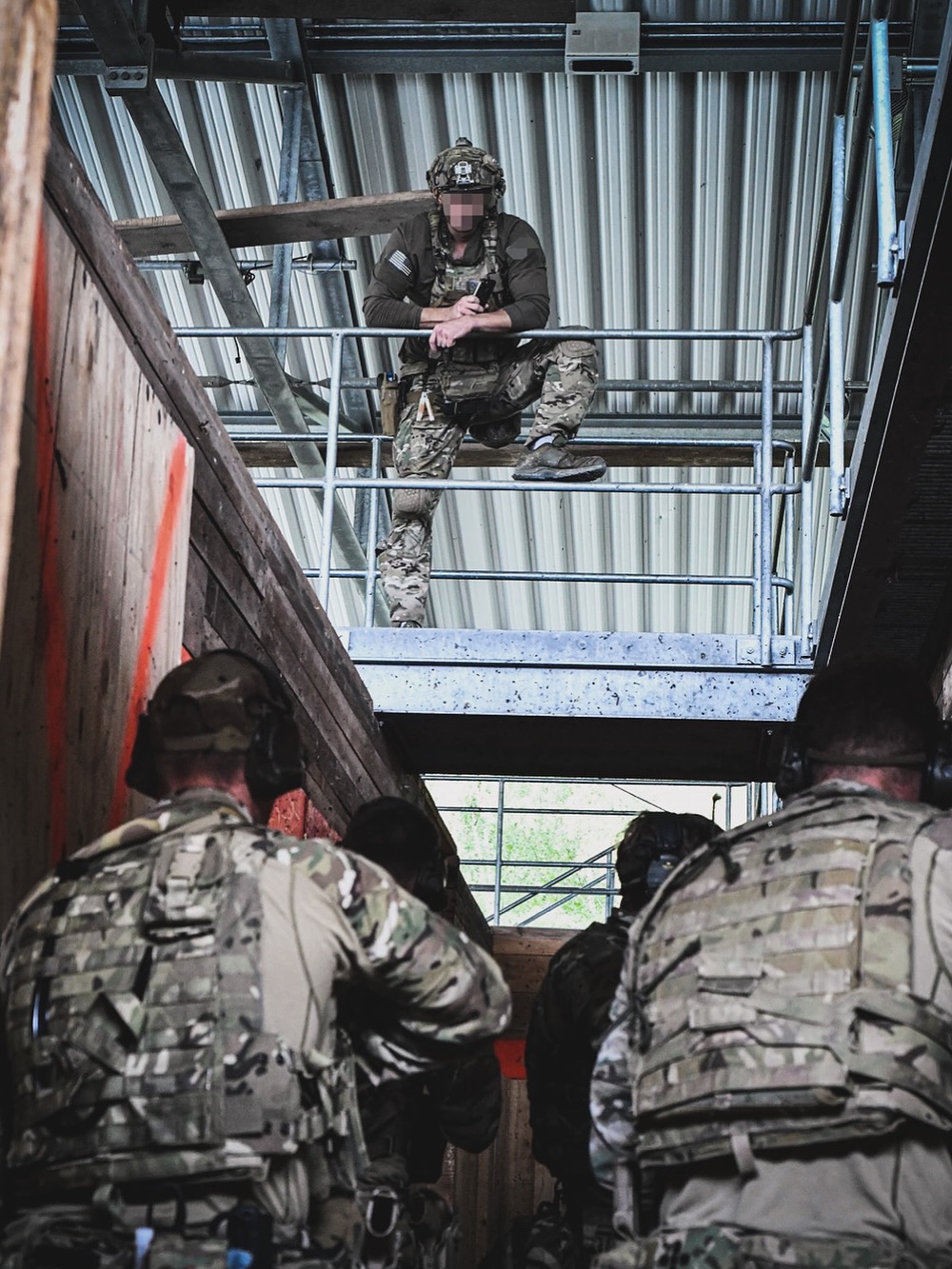
Among the most famous is Ranger School. This grueling two-month leadership course pushes soldiers to their absolute limits through simulated combat patrols in woods, mountains, and swamps. With minimal food and sleep, students must prove they can lead other exhausted soldiers effectively. This school is open to soldiers from across the Army, not just those serving in the 75th Ranger Regiment, because its purpose is to create battle-hardened leaders for the entire force.
For those aspiring to become Green Berets, the journey starts with an even more demanding filter: Special Forces Assessment and Selection (SFAS). This is not a school you pass, but a 24-day tryout where the majority of candidates are sent home. Instructors look for a unique combination of physical stamina, intelligence, and unwavering character, creating immense stress to see who has the mental fortitude to begin the long Special Forces training pipeline. Selection like this feeds the Army's most elite units, from the Green Berets to the storied Delta Force Legacy of tier-one special operators. Civilians drawn to that world can even enlist directly through the 18X Special Forces contract, which points qualified recruits toward selection from their very first day.
The difficulty of these elite combat schools comes from a simple but brutal formula: extreme physical demands, severe sleep and food deprivation, and the requirement to solve complex problems under constant pressure. They are designed to answer one question: who can lead when everything has gone wrong?
How the Army Builds Leaders for Life
While elite schools forge leaders under extreme pressure, the Army has a more fundamental system for developing leaders at every level. This career-long training path is called Professional Military Education (PME). It functions as the military's version of mandatory professional development courses required for advancement, ensuring that as responsibility grows, so does competence.
For an enlisted soldier, this journey begins at the Basic Leader Course (BLC). After proving their expertise as a junior soldier, they attend BLC to learn an entirely new skill: how to lead. The focus shifts from simply following orders to learning how to issue clear instructions, manage a small team, and take responsibility for their soldiers' welfare and training.
This educational system is directly tied to career progression. In the Army, you don't get promoted to a leadership position without first going to the school for it. Successfully completing a course like BLC is a non-negotiable requirement to earn the rank of Sergeant and formally lead other soldiers. It's a deliberate process that ensures leaders are trained before they are given new authority.
This "school-then-promotion" pattern continues throughout a service member's entire career. Each new PME course, managed by the U.S. Army Training and Doctrine Command, builds on the last, adding skills in project management, strategic planning, and complex problem-solving. This system provides a clear path for advancement from recruit to seasoned leader.
From Recruit to Leader: Charting Your Course in Army Schools
The image of a drill sergeant in the mud is only the first page of a much larger story. A soldier's education follows a full arc, from the universal foundation of Basic Combat Training to specialized job training and a career-long path of leadership development. This path forks for enlisted soldiers and officers, yet continues for both, building expertise layer by layer.
This structured system of United States Army schools is more than just internal professional development. Many programs, from technical training to leadership courses, are recommended for civilian college credit by the American Council on Education. This means the skills learned in uniform translate directly into academic and career advantages, offering college credit and a paycheck simultaneously.
Your first step is simple. Visit the official Army recruiting website to browse the full list of army schools and courses tied to specific jobs, including an accessible army schools list by MOS and a list of army specialty schools for advanced qualifications. If you're searching online for phrases like "a school military," you'll still find your way to these helpful directories of army schools for enlisted and officers alike.
The Army is one of the nation's largest and most comprehensive educational institutions. It's a place where a high school graduate can, over a career, earn the equivalent of multiple degrees and certifications, all while serving. The training never truly stops; it just evolves, turning soldiers into specialists, specialists into leaders, and leaders into strategists.
Frequently Asked Questions
What does Basic Combat Training (BCT) actually cover, and what does it prepare you for?
BCT is a 10-week foundation that turns civilians into soldiers by building discipline, teamwork, and resilience. Trainees develop physical and mental toughness, learn rifle marksmanship, and practice essential soldiering tasks such as first aid, land navigation, and small-unit movement and communication. The curriculum is standardized across BCT sites, including the well-known Fort Moore training courses, ensuring every new soldier starts with the same core skills. Graduating BCT makes you ready for the next step: enlisted soldiers move on to job-specific training at AIT, while future officers follow distinct commissioning routes.
How do enlisted and officer career paths differ, and what are the three roads to a commission?
Enlisted soldiers are hands-on specialists who start with BCT and then master a specific craft at AIT; their careers center on deep technical expertise and experience. Officers are the Army’s planners and leaders; their path emphasizes leadership, mission planning, and responsibility for people. The three commissioning routes are: West Point (a competitive four-year military academy), ROTC (leadership training integrated with a civilian college degree), and Officer Candidate School (a focused 12-week course for college graduates and qualified enlisted soldiers who meet the requirements). Neither path is “better”, it’s a choice between mastering a trade or leading and managing teams.
What is Advanced Individual Training (AIT), and how long can it last?
AIT is the Army’s vocational phase where enlisted soldiers learn their Military Occupational Specialty (MOS) in depth. Length and location vary by job complexity, from a few weeks for roles like truck driver to over a year for linguists at the Defense Language Institute. Examples include Cyber School at Fort Eisenhower (about 6 months to a year), Culinary Specialist School at Fort Gregg-Adams (9 weeks), and Black Hawk Helicopter Repairer School at Fort Eustis (17 weeks). Graduates leave AIT as qualified specialists, often with civilian-recognized certifications that translate to careers beyond the Army.
What are the hardest Army training schools, and what makes them so demanding?
Ranger School and Special Forces Assessment and Selection (SFAS) are among the toughest. Ranger School is a roughly two-month leadership crucible with simulated patrols in forests, mountains, and swamps, conducted under severe sleep and food deprivation; it’s open to soldiers across the Army to produce battle-tested leaders. SFAS is a 24-day selection, not a pass/fail course, where most candidates are not selected. It stresses physical stamina, intelligence, and character to identify those ready for the Special Forces pipeline. Both are hard because they combine extreme physical demands, deprivation, and complex problem-solving under relentless pressure.
How does the Army build leaders over a career, and how is this tied to promotion and civilian education?
The Army uses Professional Military Education (PME), a career-long, mandatory progression of leadership courses tied directly to promotion. For enlisted soldiers it begins with the Basic Leader Course (BLC), a prerequisite to become a Sergeant; leaders are schooled before they’re promoted, and each subsequent course (managed by the U.S. Army Training and Doctrine Command) adds more advanced skills in planning and problem-solving. Many technical and leadership programs are recommended for civilian college credit, so soldiers can translate military schooling into academic progress while building credentials for life after service.
***Disclaimer: This content is provided for general informational purposes only. Combat Fitness is not affiliated with the U.S. Department of Defense, and official standards may change at any time. Always consult official military publications for the most up-to-date requirements.***


