
Tissue Tolerance in Training: The Hidden Injury Factor
Tissue Tolerance in Training: The Real Limit on Performance and Injury Risk
Most athletes chase injury prevention through stretching, mobility drills, and better technique. Those help at the margins, but they miss the factor that actually decides whether you stay healthy under hard training: tissue tolerance. Tissue tolerance is how much mechanical stress your muscles, tendons, ligaments, bones, and cartilage can absorb before they start to break down. It is the quiet limiter behind most overuse injuries in tactical training, endurance sport, and strength development. When your tissues can't tolerate the demands you place on them, fitness stops mattering, and the training itself grinds to a halt. The best military fitness programs plan for this from the start, progressing load to build durability instead of only chasing a test score.
What Is Tissue Tolerance?
Tissue tolerance is the capacity of the body’s structures to withstand load without injury.
This includes:
Muscles
Tendons
Ligaments
Bones
Cartilage
Fascia
Every one of these tissues adapts to stress over time. When the stress is appropriate, they become:
Stronger
More resilient
Better able to absorb force
When stress increases too quickly, they become:
Irritated
Inflamed
Damaged
Injured
Think of tissue tolerance as a budget. Every run, ruck, and lifting session makes a withdrawal, and every quality recovery day pays back in. Stay inside the budget and the tissue rebuilds slightly stronger than before. Overdraw it repeatedly and the structure fails at its weakest point, usually a tendon insertion, a joint surface, or a load-bearing bone. This is why two athletes with identical fitness can respond to the same week of training in completely opposite ways.
In simple terms:
Performance depends on how much load your tissues can handle, not just how fit you feel.
Why Tissue Tolerance Matters More Than Motivation
Many injuries occur not because an athlete is weak or unmotivated, but because:
The load increased too fast
The tissue wasn’t prepared
Recovery was insufficient
Training volume exceeded tolerance
For example:
A runner increases mileage too quickly and develops shin splints.
A tactical athlete jumps into heavy rucking and develops knee pain.
A lifter adds weight too aggressively and strains a tendon.
In each case, the limiting factor wasn’t effort or cardiovascular fitness.
It was tissue tolerance. The hard truth for driven athletes is that willpower scales faster than tissue. You can talk yourself into another mile or another twenty pounds long before your tendons and bones are ready to absorb it. That gap, between what you feel capable of and what your structures can actually withstand, is where most overuse injuries live.
The fix isn't less ambition. It's matching the rate of loading to the slowest-adapting tissue in the chain, not the fastest. This is also why the source of your programming matters, because the following one coherent plan controls the rate of loading in a way a feed of random sessions never will, a contrast broken down in this look at the Combat Fitness training app versus social media workouts question. the same logic applies to piecing training together from scattered video clips, as this comparison of the Combat Fitness training app versus YouTube workouts approach explains, since a disconnected plan rarely controls how quickly load climbs.
How Tissues Adapt to Load
Different tissues adapt at different speeds.
Faster-adapting tissues
Muscles
Cardiovascular system
These can improve noticeably within:
Days to weeks
Slower-adapting tissues
Tendons
Ligaments
Bones
Cartilage
These may take:
Months to adapt fully
The timelines aren't close. Muscle and the cardiovascular system respond within days to weeks, while tendon collagen remodels over months and bone follows a remodeling cycle of roughly three to four months. After a hard loading session, net collagen synthesis in a tendon can stay elevated for one to three days, which is why stacking heavy days on the same structure rarely allows full repair. If you want the mechanism behind that lag, our breakdown of how tendons adapt to load walks through why collagen remodeling sets the pace for the whole chain.
Your engine upgrades on a weekly clock; your chassis upgrades on a seasonal one. This mismatch creates a common problem, your:
Strength
Endurance
Motivation
May improve quickly.
But your connective tissues are still catching up.
That’s why athletes often feel:
Fit enough to do more
Motivated to push harder
Capable of higher workloads
But still get injured. That mismatch is exactly how a motivated athlete gets hurt while doing everything "right." Picture a soldier back from leave who feels strong and jumps straight into thirty-pound ruck miles. The legs and lungs cope fine for two weeks, then the shins and knees, still detrained at the connective-tissue level, start to ache. Nothing about the effort was excessive for the muscles. It was excessive for the structures that hadn't yet caught up.
The Load vs. Capacity Relationship
Injury risk is largely determined by the relationship between:
External load and tissue capacity.
When load is appropriate
Tissues adapt
Strength increases
Durability improves
Injury risk decreases
When load is too high
Tissue damage accumulates
Pain develops
Injury risk rises sharply
Research consistently shows that:
Sudden increases in training load are associated with higher injury risk.
Gradual load progression improves resilience.
Chronic training capacity protects against injury.
This is sometimes referred to as the training-injury paradox:
Athletes who can tolerate higher workloads often experience fewer injuries than those under-prepared for the same stress.
Researchers have tried to quantify this with the acute-to-chronic workload ratio, comparing this week's training load against the rolling four-week average. A widely cited model popularized by sports scientist Tim Gabbett places the lower-risk zone at roughly 0.8 to 1.3, with injury risk climbing once a week spikes well above recent norms. The exact numbers are debated, but the principle isn't: it's the sudden change in load, not the absolute amount, that most reliably predicts breakdown. If you've ever wondered where your own ceiling actually sits, our guide to how much training is too much helps you spot that line before a spike turns into a layoff.
Signs Your Tissue Tolerance Is Being Exceeded
Common warning signs include:
Persistent joint or tendon pain
Pain that worsens with training
Localized soreness that doesn’t improve
Swelling or stiffness
Declining performance in specific movements
These are often early signals that:
Load has exceeded tissue capacity.
Ignoring these signs usually leads to more serious injuries. The pattern matters more than any single symptom. Normal training soreness is diffuse, fades within a day or two, and eases once you're warm. Tissue-tolerance warnings are the opposite: sharp or pinpoint pain, discomfort that builds as the session continues rather than easing, and soreness that lingers into the next session. When the same spot speaks up at the same point in every workout, treat it as data, not weakness, and back off before it becomes a layoff.
How to Build Tissue Tolerance
Tissue tolerance improves through gradual, consistent loading.
Key principles include:
1. Progressive overload
Increase volume or intensity slowly.
Avoid sudden spikes in training load.
2. Consistency over intensity
Frequent moderate sessions build more resilience than occasional extreme efforts.
Consistency is the cheat code most people skip. Three steady sessions a week, held for months, expose your tendons and bones to far more total adaptive load than a heroic weekend that wrecks you for five days. The body reads frequency as a signal to invest in durable structure; sporadic maximal efforts read instead as repeated trauma with little chance to rebuild between hits. Boring, repeatable training is what slow tissue rewards.
3. Aerobic base development
Low-intensity work improves circulation and recovery.
Supports connective tissue adaptation.
Aerobic base work earns its place for a reason most lifters miss: low-intensity blood flow is what delivers nutrients to poorly vascularized tissue like tendon and cartilage and clears the byproducts of harder sessions. Easy mileage isn't filler between hard days, it's the circulation that lets the hard days actually adapt. A patient running progression that adds volume gradually builds the exact aerobic and structural base that high-impact tactical work demands.
4. Strength training
Builds tendon and ligament resilience.
Improves joint stability.
Heavy, controlled strength work is the most direct lever for connective-tissue durability. Loading a tendon at high force with a deliberate tempo drives the collagen and stiffness adaptations that easy cardio never will, and it's where joint stability through the knees, hips, and lower back is built. Programs that progress resistance methodically, rather than chasing soreness, give these slow tissues the consistent stimulus they need to hold up on operation day.
5. Adequate recovery
Sleep
Nutrition
Hydration
Rest days
Tissues adapt during recovery, not during stress. Recovery isn't the absence of training; it's when the rebuild happens. Sleep is when most tissue repair and remodeling is coordinated, and chronic underfueling or dehydration starves the very synthesis you trained to trigger. Skip recovery and you keep making withdrawals against tissues that never got the chance to deposit. The session breaks tissue down, everything you do in the twenty-four hours after decides whether it comes back stronger or simply damaged.
Tissue Tolerance in Tactical Environments
Tactical athletes face unique demands:
Load carriage
Long operational days
Repeated high-impact movements
Unpredictable environments
Limited recovery
These conditions place continuous stress on:
Knees
Ankles
Lower back
Hips
Feet
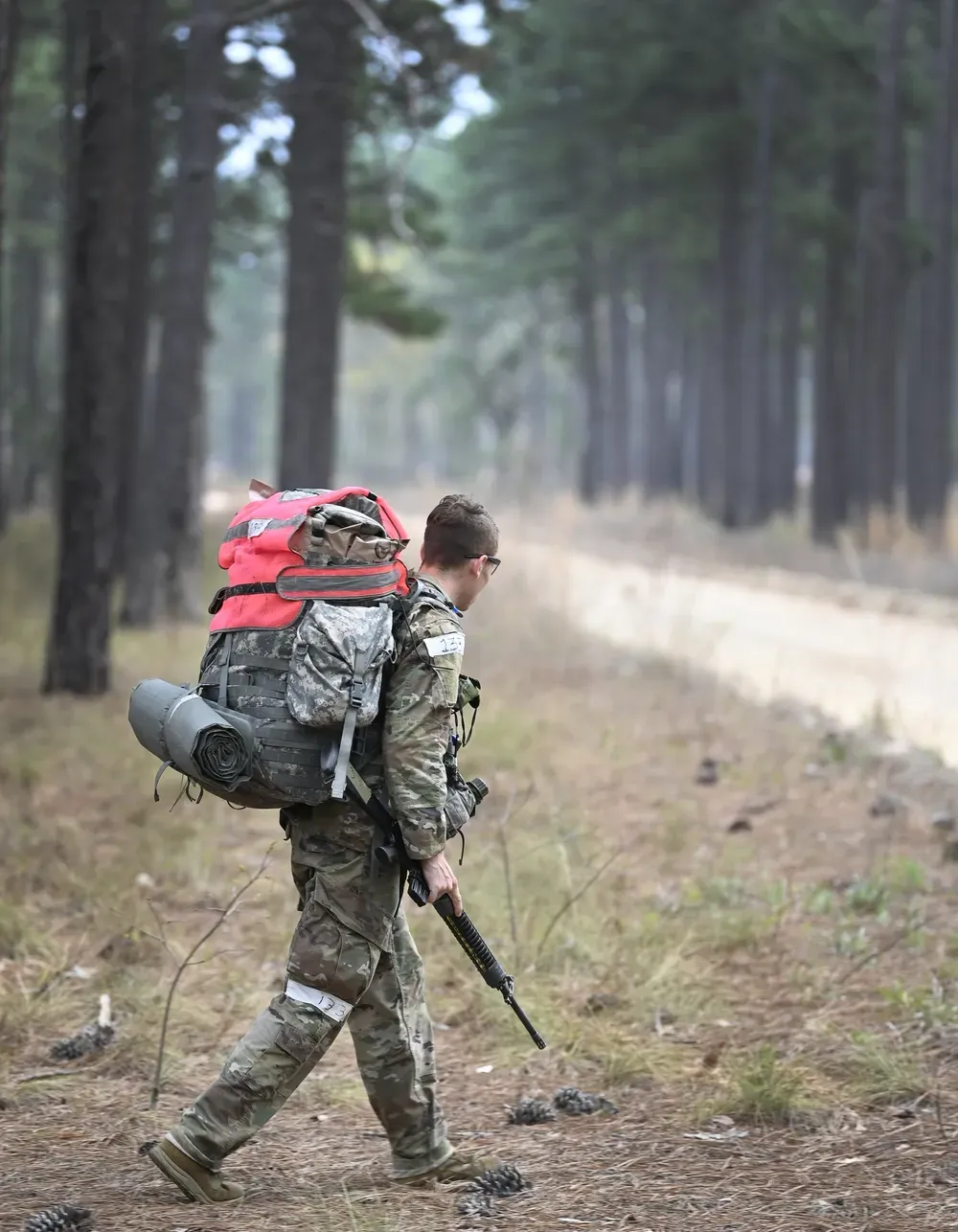
Without sufficient tissue tolerance, injury risk rises quickly. Recovery is also the first thing squeezed on a long shift, which is why managing fatigue in law enforcement training deserves as much attention as the workouts themselves. This is where tissue tolerance stops being abstract. A loaded ruck multiplies the force traveling through the ankles, knees, and lower back on every step, repeated for hours over uneven ground. An athlete can be aerobically ready for a twelve-mile ruck and still arrive with a stress reaction because the bones and tendons were never progressively loaded for that impact. A structured rucking progression that builds carry volume over weeks is what closes that gap.
That’s why effective tactical programs emphasize:
Gradual load progression
Aerobic base work
Strength endurance
Structural durability
Not just test performance.
The Long-Term Perspective
Tissue tolerance is built over:
Months
Years
Consistent training cycles
It cannot be rushed. Both paths below are real, and the difference is rarely talent, it's sequencing. The fast starter wins the first month; the patient builder wins the year, because tissue tolerance compounds quietly while everyone else is chasing the next session. That same pattern of overreaching shows up on the job, which is the core argument behind why harder training hurting job performance is more common than most operators expect. Here's how the two trajectories tend to play out.
Athletes who progress too quickly often:
See rapid early gains
Hit plateaus
Develop overuse injuries
Lose training consistency
Athletes who build tolerance gradually often:
Improve more slowly at first
Stay injury-free
Train consistently
Reach higher long-term performance
The Key Takeaway
Your muscles and lungs might be ready for harder training.
But your tissues decide whether you can sustain it.
Performance is limited not just by:
Strength
Speed
Endurance
But by how much stress your body can tolerate over time. Build tissue tolerance first, and performance follows. Ignore it, and injuries eventually force the issue. So train the structures, not just the engine. Progress load in small, repeatable steps, defend your recovery, and let the slowest tissue set the ceiling. Do that and the performance you're chasing becomes something you can actually hold onto, season after season, instead of something that keeps getting interrupted by the same avoidable injuries.


