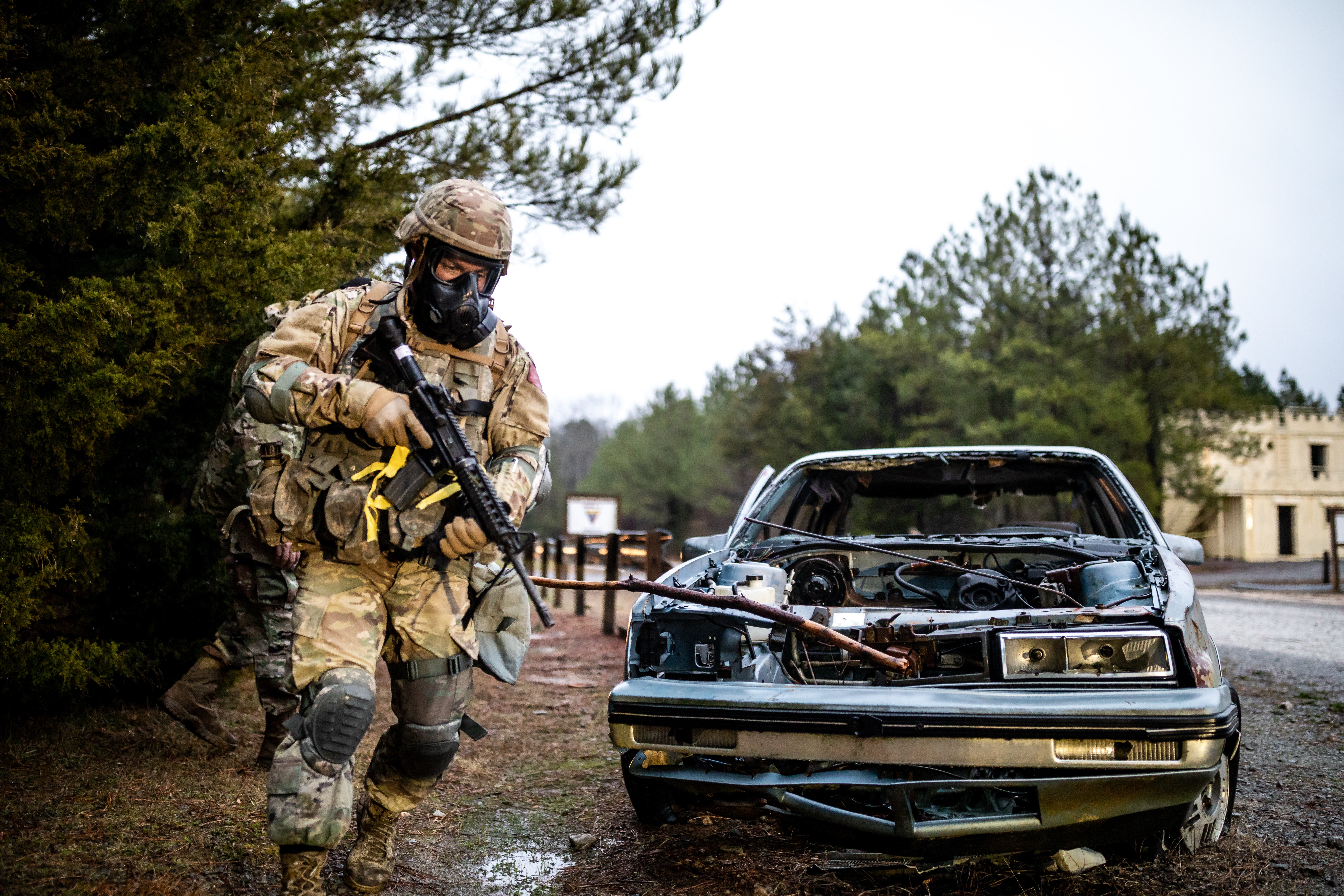
The Tactical Athlete's Guide to Rucking: Burn Fat, Build Grit, and Bulletproof Your Body
Headline: Why Running Sucks (And Why Rucking is the Operator's Secret Weapon for Fat Loss)
If you are a 220lb cop or a former linebacker turned executive, running distance is not "cardio." It is a systematic destruction of your knees.
Every time your foot hits the pavement running, you absorb 3-4x your body weight in impact force. If you are heavy (muscle or fat), that is a recipe for a blown meniscus, shin splints, and a short career.
But you need an aerobic base. You need to be able to move. You need to burn fat.
Enter Rucking.
It is the foundation of Special Forces conditioning. It burns 3x more calories than walking. It builds a bulletproof back. And it won't destroy your joints.
This is the definitive guide to rucking for the Tactical Athlete.
### What is Rucking? (And Why You Should Care)
Rucking is simple: Walking with weight on your back.
That's it. It is the oldest form of human transportation and the primary mode of movement for light infantry.
But for the modern tactical athlete (that's you), it is a physiological cheat code.
1. The "Zone 2" Magic You have heard the influencers talk about "Zone 2 Cardio." This is the heart rate zone (60-70% of max) where your body becomes efficient at burning fat for fuel.
- Running: Spikes your heart rate too high, too fast. You enter "Zone 3 or 4" (burning sugar/glycogen), and you hate your life.
- Rucking: Keeps your heart rate perfectly in Zone 2. You can do it for hours. You burn pure fat. You build an aerobic engine that acts as a gas tank for high-intensity work later.
2. Strength + Cardio (The Hybrid Effect) Running makes you weak. Look at a marathon runner. They are twigs. Rucking makes you strong. Look at a Green Beret. They are tanks. Rucking engag
3. Low Impact Because you always have one foot on the ground, the impact force on your knees is significantly lower than running. You can ruck 3-4 times a week without feeling like you got hit by a truck.
### The Gear: Don't Overcomplicate It
You do not need a $400 backpack to start. You need gravity.
Level 1: The "I'm Just Starting" Setup
- Pack: Any sturdy backpack you have in the closet (Jansport, 5.11, whatever).
- Weight: Wrap a 10lb or 20lb dumbbell in a towel (so it doesn't dig into your spine). Put it in the bag.
- Boots/Shoes: Wear what you are comfortable walking in. Running shoes are fine for pavement. Boots are better for trails.
Level 2: The "I'm Serious" Setup
- Pack: Get a dedicated Ruck (GoRuck is the gold standard, but 5.11 or tactical surplus works). You want thick shoulder straps and a frame sheet to support the weight.
- Weight: Ruck Plates. These are flat cast iron plates designed to sit high and tight against your back. They don't shift around.
- Boots: If you are training for selection or duty, ruck in your duty boots. Break them in. If you are training for life, get a pair of supportive trail runners (Salomon, Merrell).
### The Progression: How to Start Without Dying
The biggest mistake guys make is ego-loading. They throw 50lbs in a pack on Day 1, march 10 miles, and then can't walk for a week.
The Golden Rule: Start light. Start short.
Week 1-2: The Acclimation
- Weight: 10-20lbs (or 10% of bodyweight).
- Distance: 1-2 miles.
- Pace: 15-20 minutes per mile. (Just a brisk walk).
- Frequency: 2x per week.
Week 3-4: The Build
- Weight: 25-30lbs.
- Distance: 2-3 miles.
- Pace: 15 minutes per mile. (This is the Army standard pace).
- Frequency: 2-3x per week.
Week 5+: The Operator Standard
- Weight: 35-45lbs. (Do not go heavier than 45lbs for training unless prepping for specific selection. The risk/reward ratio drops off).
- Distance: 3-5 miles.
- Pace: Sub-15 minute miles.
### The "Ruck Shuffle" (How to Go Fast)
To hit sub-15 minute miles, you cannot just walk. You need the "Airborne Shuffle." This is not a run. It is a trot. You lean forward slightly, letting the weight carry you, and take short, quick steps. Use this for intervals:
- Pick a telephone pole or tree 100 yards away.
- Shuffle to it.
- Walk to the next one to recover.
- Repeat.
### Integrating Rucking into Combat Fitness ONE
Rucking is not a replacement for lifting. It is the glue that holds your fitness together.
- Monday: Strength (Squat/Push).
- **Tuesday:** Ruck (30-45 mins Zone 2).
- Wednesday: Strength (Deadlift/Pull).
- Thursday: Interval Sprints/METCON.
- Friday: Full Body Strength/Hyrox style.
- **Saturday:** Long Ruck (60-90 mins).
- Sunday: Recover.
This schedule builds a monster. You get strong from the lifting. You get explosive from the sprints. You get lean and durable from the rucking.
### Summary
We train to be assets, not liabilities. A liability is the guy who can bench 400lbs but gasps for air walking up a flight of stairs. An asset is the guy who can carry his gear, his weapon, and his teammate out of the kill zone without quitting.
Rucking builds assets.
Grab a pack. Put some weight in it. Step outside.
Do Hard Things.
es your glutes, hamstrings, spinal erectors, and traps. It pulls your shoulders back, correcting the "caveman posture" you get from sitting at a desk or in a patrol car all day. It builds "work capacity"--t


