
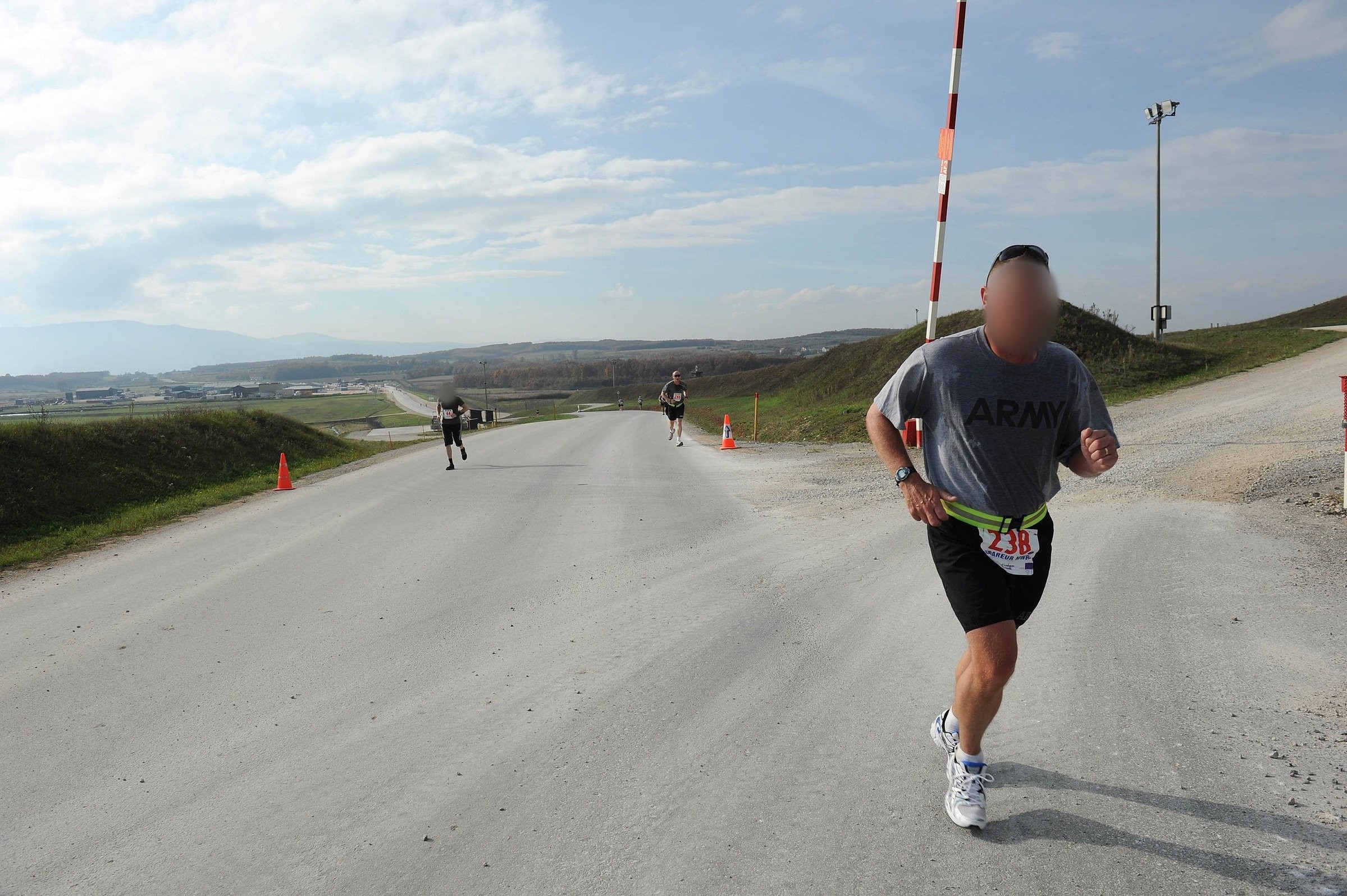
Army 2 Mile Run Time: AFT Standards, Scoring, Training
Improving Your Army 2 Mile Run Time
The Army 2 mile run time you need depends on your age and gender, not a single number. As of June 1, 2025, the Army Fitness Test (AFT) replaced the Army Combat Fitness Test (ACFT) as the official test of record, and the 2-mile run remains the final event, scored on a 60-to-100 point scale with separate brackets for every age group from 17 to 62-plus. A 19-year-old needs to finish in 22:00 to pass; a 40-year-old has a different number entirely. This guide breaks down the army 2 mile run standards under the current AFT, scoring charts, age and gender brackets, and the training that turns a passing time into a competitive one. Numbers in this guide reflect the AFT scoring tables published by the U.S. Army.
Furthermore, the run isn't a simple pass-or-fail event. Performance is scored on a point scale from 60 to 100, where 60 is the minimum to pass and higher scores demonstrate superior fitness. Understanding the real army pt standards 2 mile run, and the broader army 2 mile run standards, means demystifying the scoring charts and seeing how age and gender create a sliding scale of expectations. This gives you a clear picture of what it truly takes to run like a soldier. A soldier who can run well is a soldier who can keep going when it matters most, which is exactly why a structured army running program that builds aerobic capacity, not just speed, is the foundation under any 2-mile run improvement.
Why the AFT 2 Mile Run Matters in Army Fitness Standards
The AFT 2 mile run is the fifth and final event of the Army Fitness Test, and it's where most soldiers either lock in a strong score or watch their total collapse. The four events before it, the three-rep maximum deadlift, hand-release push-ups, sprint-drag-carry, and plank, drain the legs, the lungs, and the will. By the time you reach the start line for the run, you're already cooked. That's the point. The Army uses the 2-mile run to measure aerobic endurance under fatigue, the exact condition every soldier will encounter on a real ruck, a real patrol, or a real fight.
Aerobic endurance is the engine that keeps a soldier moving when the mission gets long. It's the difference between finishing a 12-mile ruck strong and being the soldier holding up the formation. The Army measures it with the 2-mile run because the distance is long enough to expose conditioning gaps but short enough to be repeatable and scoreable across hundreds of thousands of soldiers.
That kind of endurance is critical in the field, where missions can demand hours of patrolling, moving under load, or reacting to contact after already being on your feet for half a day. A soldier who can run well is a soldier who can keep going when it matters most, which is exactly why a structured army running program that builds aerobic capacity, not just speed, is the foundation under any 2-mile run improvement. But it's not just about finishing; it's about how well you finish. So, how does the Army grade this crucial event?
AFT 2 Mile Run Scoring: How the 60–100 Point Scale Works
The AFT 2 mile run isn't pass/fail. Every soldier gets a score on a 60-to-100 point scale, where 60 points is the minimum passing performance and 100 points is the maximum. That score gets added to the scores from the other four AFT events to produce a total out of 500. The 2-mile run alone can swing a soldier's total by 40 points, which is why dialing it in matters more than any other single event on the test.
Hitting 60 points on the army pt test 2 mile run is the bare minimum, it confirms aerobic fitness but signals nothing about competitive readiness. The army pt 2 mile run is one of the most-watched metrics on a soldier's record, and the difference between a 60 and an 80 is the difference between being a soldier who passed and a soldier who's being noticed for promotion boards, schools, and team selections. Soldiers in the 21 designated combat MOSs face the higher AFT combat standard, a minimum of 60 points per event and a minimum 350 total, making the run an even sharper differentiator. In Army culture, meeting the minimum is the starting line, not the finish.
A high 2-mile run score directly affects which doors open in a career. Strong run scores feed into selection for Ranger School, Sapper, Air Assault, Pathfinder, SFAS, and every other physically demanding school the Army runs. They also factor into NCO promotion boards, where evaluators look at total AFT scores as a readiness proxy, and under the new AFT, the test scoring tables feed directly into promotion points. Soldiers don't train to pass the army 2 mile run time standard; they train to make it irrelevant. The exact time required for 60, 80, or 100 points depends on age and gender, which is where the scoring chart comes in.
Army 2 Mile Run Standards by Age and Gender
The army 2 mile run standards are not a single number, they're a matrix. The AFT scoring tables run from age 17 to 62-plus, with separate male and female brackets at every five-year step for the standard scoring scale. A 19-year-old male soldier and a 47-year-old female soldier both have to hit "60 points" to pass, but the actual times required are roughly five minutes apart. The matrix is built that way on purpose: it holds every soldier to a standard that's genuinely challenging for their physiology, not a one-size-fits-all benchmark that would be trivial for some and impossible for others.
Consider two concrete examples from the AFT scoring table. A male soldier in the 17–21 age bracket has to finish the 2-mile run in 22:00 to earn 60 points, an 11:00 mile pace, which is a brisk jog. A male soldier in the 42–46 bracket gets 23:36 for the same 60 points, an 11:48 pace. The 96-second difference reflects the measurable decline in aerobic capacity that occurs with age, even in trained athletes. The standards are not a participation trophy, they're calibrated to the real physiology of the human aerobic system.
The same age-bracket logic applies to gender on the standard AFT scale. A 25-year-old male soldier needs 13:30 to max the run at 100 points, a 6:45 mile pace, which is competitive recreational-runner territory. A 25-year-old female soldier needs 15:29 for the same 100 points, a 7:44 mile pace, equally exceptional within the female aerobic-performance distribution. Both standards are set at roughly the 99th percentile of trained military athletes, which is why a 100-point 2-mile run is rare even among lifelong runners.
The tiered structure of the army 2 mile run standards means your real opponent is the time printed next to your specific age and gender bracket on the AFT scoring chart, not the soldier next to you. Every soldier is racing against their own row of the matrix, which makes the question "what's a good 2-mile time?" entirely demographic-dependent. Below are the baseline passing times for the most common brackets on the standard AFT scale.
AFT 2 Mile Run Minimum Passing Times (60-Point Standard)
"Passing" the AFT 2 mile run means earning 60 points minimum. Anything slower than the 60-point time for your specific age and gender bracket is a failed event, which fails the entire AFT, under current standards, a soldier must score at least 60 points in every event, with a minimum total of 300 for the standard scale or 350 for the combat MOS scale. Soldiers who fail the run typically have 60 to 90 days to retest, depending on command policy and the unit's H2F integration.
Below are the official 60-point minimum passing times under the AFT scoring tables for the most common brackets on the standard scale. To pass, a soldier must finish at or under the listed time (minutes:seconds).
Male, Age 17–21: 22:00 (11:00 per-mile pace)
Female, Age 17–21: 23:22 (11:41 per-mile pace)
Male, Age 32–36: 23:18 (11:39 per-mile pace)
Female, Age 32–36: 25:06 (12:33 per-mile pace)
The army 2 mile run standards above show the floor of acceptable performance, not a target. For soldiers building toward selection, a school, or a competitive promotion packet, the 60-point time is irrelevant. The real benchmark sits at 80 points and above, and reaching that level reliably under fatigue requires a structured aerobic-base program, not just adding random runs to the week. A dedicated military fitness program built around progressive aerobic load is the difference between a soldier who hits 80 once and a soldier who can hold that standard for the rest of a career on the AFT. Deciding how to run that program is its own question, and weighing app versus in-person coaching helps a soldier match the delivery method to how they actually stay consistent. It also pays to survey the field before committing months to a plan, so comparing tactical training programs side by side keeps the aerobic-base progression aligned with AFT scoring instead of a generic template.
Good vs. Great Army 2 Mile Run Times: AFT Scoring Benchmarks
A "good" army 2 mile run time starts at 80 points on the 100-point AFT scoring scale. That number isn't arbitrary, 80 points is the threshold most NCOs and unit leaders treat as the line between "meets standard" and "above standard," and it's the level promotion and school-selection boards expect to see on a competitive soldier's record. Anything below 80 passes the event but doesn't move the needle. Anything at 80 or above starts to count toward a soldier's career trajectory.
The gap between 60 and 80 is significant. A male soldier in the 17–21 bracket has to cut his time from 22:00 down to 16:36, that's an 8:18 mile pace versus an 11:00 mile pace. Same soldier, different training reality. For a female soldier in the same bracket, the 80-point standard is 19:27, a 9:44 mile pace versus the 11:41 of a 60-point performance. The transition from passing to "good" is roughly a 25 percent faster pace, which is the difference between casual running and structured training.
Beyond 80 points sits the territory of "exceptional." A 90-point score is the line where a soldier's run starts to mark them out for SOF pipelines, ranger school, and hard entry gates like the pre-RASP PT test. To max the run at 100 points, the standards are at the edge of what most trained military athletes can hit, a male 17–21 soldier needs 13:22, which is a 6:41 mile pace held for two miles. That's faster than the average competitive recreational 5K runner's mile pace, sustained twice over, with deadlifts, push-ups, sprint-drags, and a plank already burned through the legs.
A 13:22 looks intimidating on paper, but elite AFT 2 mile run scores are the result of structured periodization, not raw effort. The gap between passing and excelling is bridged by sequencing aerobic base, threshold work, and speed development across months, exactly the kind of progression built into our advanced 2-mile run training program for soldiers prepping selection or shooting for a 100-point run. Improving the 2-mile for the AFT is not about starting sprinting; it's about building the aerobic engine first, then layering speed on top.
Army Two Mile Run Training Plan: How to Start Building a Faster Run
A successful army two mile run training plan starts with one principle: build the engine before you tune it. The biggest mistake new runners make, and the single fastest route to a stress fracture or chronic shin splint, is starting with sprints and intervals instead of slow, easy aerobic miles. The Army's own H2F (Holistic Health and Fitness) doctrine reinforces this: aerobic base first, intensity second. The goal of the first 4 to 6 weeks isn't speed. It's making running a sustainable habit that the body and connective tissue can absorb.
The walk/run method is the safest entry point for soldiers who are out of running shape, whether returning from injury, deployment, or a long stretch behind a desk. It builds aerobic capacity progressively without the joint pounding that sidelines beginners who try to "just run two miles" on day one. Run three sessions per week on non-consecutive days, focused on time-on-feet rather than distance covered.
Week 1: Run for 1 minute, then walk for 2 minutes. Repeat 8 times.
Week 2: Run for 2 minutes, then walk for 2 minutes. Repeat 6 times.
Week 3: Run for 3 minutes, then walk for 1 minute. Repeat 6 times.
By Week 4, most soldiers can sustain continuous running for 10 to 15 minutes at conversational pace. From there, the next phase introduces tempo runs at 5K pace and interval work at mile pace to build the specific speed required to drop the 2-mile time. Consistency is king, three structured sessions per week beat one exhausting all-out run that leaves the legs trashed for four days. For soldiers entirely new to structured training, a guided beginner running program removes the guesswork and sequences each week's volume and intensity automatically. This gradual aerobic adaptation is the exact mechanism the Army's H2F doctrine is built on, progressive load, planned recovery, repeatable performance under AFT conditions.
After four to six weeks of consistent aerobic base building, the body is ready for technique work, pacing strategy, breathing mechanics, and stride economy. These are the details that convert raw fitness into a faster 2-mile run time on test day.
Pacing and Breathing Techniques to Lower Your 2 Mile Run Time
The single most common 2-mile run pacing mistake is going out too fast in the first half-mile. Adrenaline at the start line, surrounded by other soldiers also pushing hard, makes it easy to drop into a pace that is unsustainable for the back half. The result is a runner who looks fast at the 800-meter mark and crawls across the finish line. A better strategy for the AFT 2-mile run isn't running harder, it's distributing the effort intelligently across the full two miles.
The fix is the negative split, running mile two slightly faster than mile one. Aim for a 5 to 10 second per-mile gap. If goal time is 16:30, that's roughly an 8:20 first mile and an 8:10 second mile. Holding back marginally in the first half conserves the glycogen and neuromuscular freshness needed to close hard. The bonus is psychological: passing tired runners in the final 800 meters is a confidence boost that almost always shaves a few extra seconds off the clock.
Breathing rhythm is the other lever. Side stitches and the dreaded "I can't get a full breath" sensation are usually the result of shallow chest breathing combined with foot-strike collisions on the diaphragm. Fix both by switching to rhythmic breathing, in for three foot strikes, out for two (in-in-in, out-out). The asymmetric 3:2 pattern alternates the exhalation foot, distributing diaphragmatic stress evenly across both sides and dramatically reducing the side-stitch risk that pulls down two-mile times. Practice the pattern on every easy run until it's automatic; the test is not the place to learn it.
Pacing and breathing don't require elite fitness, they require deliberate practice on every training run. Combined with a structured aerobic base, they can pull 30 to 90 seconds off a 2-mile time inside 8 weeks. For soldiers who want every variable handled in one place, base building, intervals, tempo work, pacing protocols, recovery, and taper, a complete military fitness program removes the guesswork and lets soldiers focus on executing the work, not designing it.
Army 2 Mile Run FAQ: AFT vs ACFT vs APFT, Walking, and Gear
Beyond training strategy, it's helpful to clear up a few common questions about the test itself.
Is walking allowed on the army 2 mile run test?
Yes, there is no rule against walking under the AFT. But walking is only a viable tactic if a soldier is already tracking comfortably ahead of their 60-point time. A 17–21 male needs to average an 11:00 mile pace to pass; a 14:00-per-mile walk-jog blend will not get there. Walking is best deployed for 5 to 15 seconds at a time to clear a side stitch or reset breathing rhythm, never as a primary pacing strategy.
How does the AFT 2 mile run compare to the older ACFT and APFT versions?
The Army has now run three versions of its physical assessment in five years, a reminder ow how central PT in the military is to readiness : the APFT (the legacy push-ups, sit-ups, 2-mile run test), the ACFT (a six-event test introduced in 2022), and the AFT (the current five-event test of record since June 1, 2025). The 2-mile run is the only event present in all three.
The legacy apft 2 mile run was scored on a different scale and ran as the third event after push-ups and sit-ups. Under the ACFT, whose six-event ACFT score cards scored each event on its own scale, the run was the sixth and final event, run on legs already loaded by the deadlift, standing power throw, hand-release push-ups, sprints-drag-carry and plank. Under the current AFT, the run is the fifth and final event, the standing power throw was removed in the 2025 update, which slightly reduces accumulated fatigue at the start of the run. Identical clock times on the three tests are not equivalent levels of fitness; a soldier who ran 16:00 on the APFT will typically run 30 to 90 seconds slower on the ACFT or AFT version because of accumulated fatigue from the prior events.
What are the best running shoes for the army 2 mile run test? The Army does not mandate a brand, but four factors matter more than the model: heel-to-toe drop (most road runners prefer 6–10mm for a 2-mile race effort), stack height (lower for responsiveness, higher for cushion on training miles), outsole grip for the test surface (asphalt vs. cinder track vs. rubberized track all behave differently), and break-in mileage (never run a PR attempt in shoes with fewer than 20 miles on them). The best shoe is one a soldier has trained in for at least a month, race-day surprises lose the most time on AFT day.
Set Your Baseline and Start Improving Your Army 2 Mile Run Time
The army 2 mile run time is not a single intimidating barrier, it's a personal benchmark, adjusted for age and gender and scored on a 60-to-100 point scale under the AFT. That benchmark tracks a soldier from the first formation run in basic and AIT army training all the way to a twenty-year career, which is why the smartest move is to treat today's time as data, not a grade. The right question is not "how fast does the Army want me to run?" It's "what number does the AFT scoring table assign to my bracket, and what's the training path between my current time and that number?"
Step one is finding the baseline. Time a full 2-mile effort on a measured, flat course on a non-training day, with a thorough warm-up and rested legs. Record the time, the per-mile splits, and how the run felt at the 800-meter, 1-mile, and 1.5-mile marks. That single data point becomes the foundation everything else gets measured against, every interval, tempo run, base mile, and re-test for the next 8 to 12 weeks of AFT preparation.
The baseline time is not a verdict, it's a starting line. From here, the path to a faster 2-mile run time is structured aerobic base work, progressive intervals, smart pacing, and disciplined recovery. Soldiers who want the entire program built and sequenced for them can start a free trial of our military training programs and start running against the actual AFT standard, not against a guess. The next step is yours.
FAQ
How is the Army 2-mile run scored, and why should I aim beyond the minimum?
The ACFT 2-mile run is graded on a 60–100 point scale, not simple pass/fail. Scoring 60 points is the minimum to pass and confirms basic aerobic fitness; higher scores reflect superior performance. Going beyond the minimum matters because stronger run times and higher scores can positively influence promotions and selection for advanced schools, so soldiers train to excel, not just to pass.
What time do I need to pass, and how do age and gender change the standard?
Passing means earning at least 60 points, and the time you need depends on your age and gender to keep the standard fair and relevant. Examples of 60-point times (minutes:seconds):
Male 17–21: 22:00
Female 17–21: 23:22
Male 32–36: 23:18
Female 32 - 36: 25:06 The same principle applies across all brackets, for instance, a male 42 - 46 needs 23:36 for 60 points. This tiered system ensures each soldier is measured against a challenging but fair benchmark for their demographic.
What counts as a “good” vs. “great” Army 2-mile time?
In Army culture, “good” generally starts at 80 points; “great” is 90+ and is considered exceptional. A perfect 100-point score is elite. Examples:
Male 17–21: 80 points at 16:36 vs. the 60-point pass at 22:00; 100 points at 13:22.
Female 17–21: 80 points at 19:27 vs. the 60-point pass at 23:22.
As another 100-point reference, a 25-year-old male needs 13:30, and a 25-year-old female needs 15:29. Standards vary by age and gender, but the pattern is consistent: the higher the score, the sharper your competitiveness and readiness.
I’m new to running, what’s the safest way to start improving my 2-mile time?
Build a foundation first using a walk/run approach 3 days per week, focusing on time-on-feet and consistency:
Week 1: Run 1 min, walk 2 min - repeat 8x
Week 2: Run 2 min, walk 2 min - repeat 6x
Week 3: Run 3 min, walk 1 min - repeat 6x Consistency beats occasional all-out efforts. Once you’ve logged a few steady weeks, you’ll have the base fitness to refine technique and add speed-focused work.
Any quick technique fixes, can I walk during the test, how should I pace, and how should I breathe?
Yes, walking is allowed, but it’s best used briefly to reset; relying on it makes meeting minimum times difficult. Pacing-wise, aim for a negative split, run mile two slightly faster than mile one, so you finish strong instead of fading. For breathing, use a steady rhythm like “in for 3 steps, out for 2” to improve oxygen delivery and reduce side stitches. These small tweaks can make the run feel more controlled and shave real time off your result.
***Disclaimer: This content is provided for general informational purposes only. Combat Fitness is not affiliated with the U.S. Department of Defense, and official standards may change at any time. Always consult official military publications for the most up-to-date requirements.***


