
Tempo Training Explained: How It Works & Why It Helps
First, which tempo this is. The word gets used for two unrelated things in training:
Tempo pace, the endurance intensity this article covers. A comfortably hard, sustained effort sitting just below lactate threshold
Lifting tempo, the timing prescription in resistance training, written as something like 3-1-1-0 to control how long the eccentric, pause and concentric phases take
If you came here looking for what 3-1-1-0 means on a squat, this is not that article. Everything below is about pace.
Tempo training is sustained work at a comfortably hard pace, the effort that improves endurance by teaching the body to hold a fast, controlled speed without breaking down. It sits between easy aerobic work and all-out high-intensity intervals, and it raises the pace you can hold before fatigue takes over. That combination of speed and durability is why tempo training is a cornerstone of most serious endurance and tactical training programs.
In simple terms: tempo training builds the ability to move fast without falling apart.
Programs structured around deliberate intensity distribution, including tempo work placed at the right frequency and intensity, are what CF ONE training programs are designed to deliver.
What Tempo Training Actually Is
Tempo training refers to sustained efforts performed at a comfortably hard intensity. It is not an all-out effort, but it is noticeably harder than an easy aerobic pace.
Typical characteristics of tempo intensity:
Breathing is deeper and more rhythmic
Conversation is limited to short phrases
Effort feels controlled but challenging
Pace is sustainable for 20–60 minutes
How to pin it down numerically, since "comfortably hard" is doing a lot of work:
Roughly 80 to 88% of maximum heart rate, or about 85 to 90% of your threshold heart rate
Around the pace you could hold in a one-hour race, which is the standard practical anchor. If you have a recent 10K time, tempo pace is usually 15 to 25 seconds per mile slower than that
RPE of about 6 to 7 out of 10. Hard enough to require attention, not hard enough to require courage
In a three-zone model, this is Zone 2, the middle band. Note that this is a different Zone 2 from the five-zone system, where Zone 2 means easy aerobic work. The naming collision causes real confusion and it is worth knowing which model someone is using before following their advice
A simple field check: at true tempo, you can speak in short, clipped phrases but not hold a conversation.
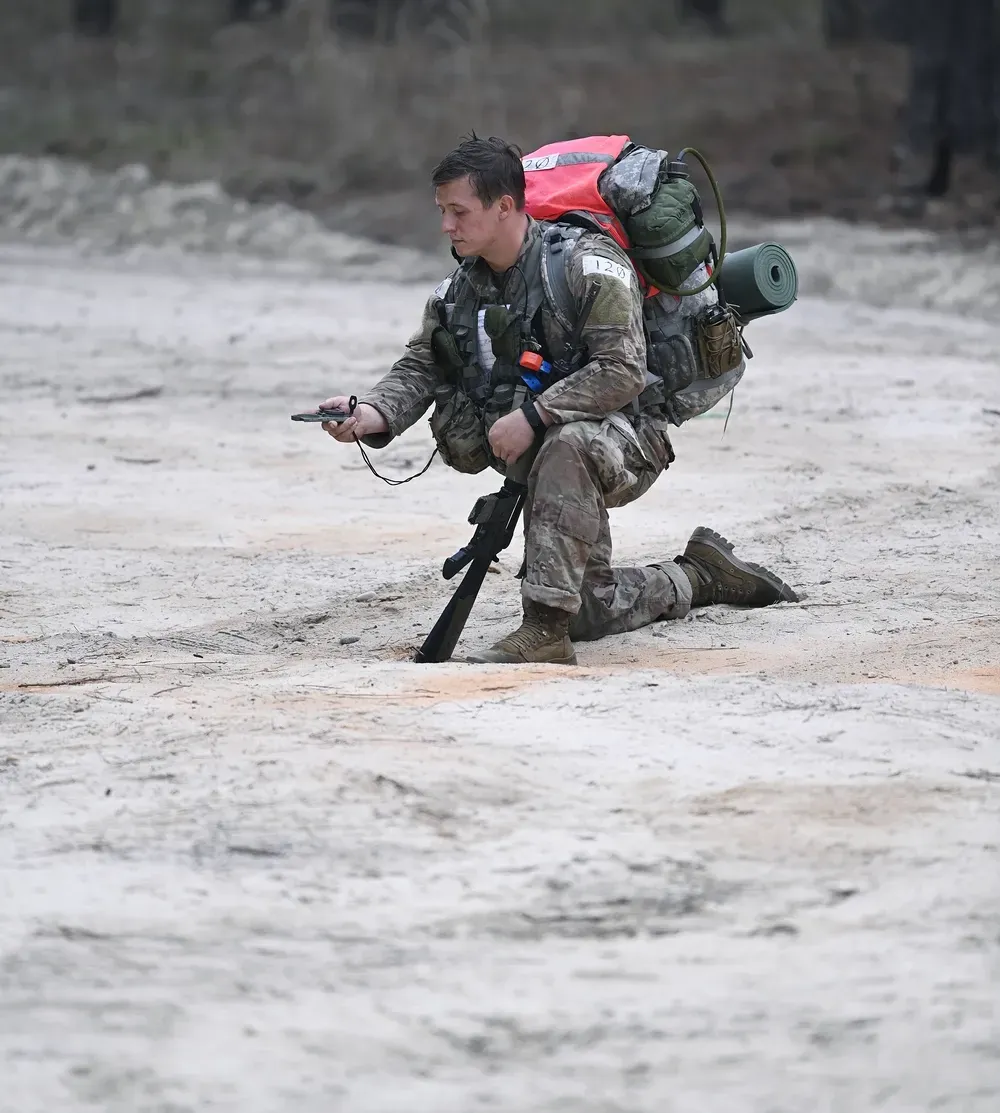
For a soldier or first responder, this is the gear you spend most of a long task in: a fast patrol pace under load, a graded ruck against the clock, a sustained carry. It is hard enough to demand attention but controlled enough to repeat day after day, which is exactly why it transfers so well to operational work that rewards holding output over time rather than producing one explosive effort.
Tempo work sits just below your lactate threshold, the intensity at which lactate begins to accumulate faster than the body can clear it. Training repeatedly at this edge is one of the most reliable ways to push that threshold higher, so the same pace eventually feels easier (Jones and Carter, 2000).
For athletes evaluating which running program best develops aerobic performance through structured tempo and threshold work, the running program buying guide walks through exactly what to look for before committing to a plan.
Why Tempo Training Matters
Tempo sessions target the intensity range where many real-world performance tasks occur: sustained running at a fast but controlled pace, long rucks under time pressure, extended operational efforts, and continuous high-output work.
Improving performance at this intensity allows athletes to:
Move faster without excessive fatigue
Maintain pace over longer durations
Recover more quickly between hard efforts
Improve overall endurance performance
For tactical athletes specifically, tempo training is one of the most transferable training investments available. The physiological adaptations from consistent tempo work map directly onto the sustained-output demands of the job: patrol movement under load, extended operational tasks, and maintaining performance quality during the later stages of a demanding shift.
For athletes with specific questions about running program structure, the running program FAQ covers the most common questions in one place.
How Tempo Differs From Other Training Intensities
Figure 1.1 - Easy aerobic, tempo, threshold and interval training compared across effort, heart rate, duration, adaptation, recovery cost, frequency, weekly share and what each fixes. The volume row is the one that matters: across 175 measured training-intensity distributions in trained and elite endurance athletes, the medians are 85 percent easy, 7 percent tempo and 6 percent hard - so the easy share here is about ten points low and the hard share roughly triple, while the tempo figure is right. The heart rate bands also leave 70 to 80 percent of maximum unassigned, a ten-point gap in the most heavily used part of the range. Pyramidal distributions are more common than polarized, 51 percent against 37. Source: Frontiers in Sports and Active Living, 2023.
The row worth reading twice is the second from the bottom.
Tempo sits in the middle of this spectrum, which makes it versatile but also easy to misuse.
Research tracking how endurance athletes actually distribute their training found that the comfortably hard band accounts for a surprisingly small share of total volume. In one frequently cited study, athletes anchored roughly three quarters of their sessions at easy aerobic paces, spent under a tenth at this tempo or threshold intensity, and reserved the remainder for genuinely hard work (Seiler and Kjerland, 2006).
Two things are worth knowing about that finding before applying it. The subjects were eleven male junior cross-country skiers, so "elite endurance athletes" flatters the sample. And the study was observational, describing what those athletes did rather than testing it against alternatives. It is strong evidence about the habits of successful endurance athletes and weaker evidence about what is optimal.
That said, the pattern has held up broadly across endurance sport, and the practical lesson survives the caveats. Tempo is a tool, not the whole toolbox. Its value comes from precise placement, not constant use.
What Happens in the Body During Tempo Training
1. Improved Lactate Management
At tempo intensity the body produces lactate at a moderate rate, learns to clear and reuse it more efficiently, and accumulates fatigue more slowly.
The mechanism is clearance, not avoidance. Tempo work trains the muscles and heart to take up and reuse lactate as fuel rather than letting it pool, and endurance training of this kind measurably increases the body's lactate-clearance capacity and shifts the threshold upward (Jones and Carter, 2000).
The practical result is a higher sustainable pace: the speed that once spiked your fatigue becomes the speed you can hold, which is the entire point of the session.
2. Increased Aerobic Efficiency
Tempo training stimulates mitochondrial development, improved oxygen utilization, and better fuel efficiency. This allows the body to produce more energy aerobically, rely less on anaerobic processes, and sustain higher intensities for longer.
Underneath these adaptations is the cell. Sustained aerobic and tempo-range training increases mitochondrial density and improves the muscle's ability to use oxygen and oxidize fat for fuel (Jones and Carter, 2000). More mitochondria and better oxygen delivery mean more energy produced aerobically at any given pace, so the body leans less on anaerobic pathways that fatigue quickly.
For a tactical athlete, that shows up as a pace that no longer feels like a sprint and a tank that lasts deeper into a long task.
3. Improved Movement Economy
Repeated tempo efforts reinforce efficient movement patterns, improve coordination at faster speeds, and reduce energy cost per stride or step.
Economy is not a minor detail. Among elite runners with similar aerobic ceilings, movement economy is a better predictor of performance than VO2max itself (Saunders et al., 2004).
In plain terms, two athletes with the same engine can perform very differently if one wastes less energy per stride. Repeated tempo efforts at a controlled, fast pace are where that efficiency is grooved, which is why economy gains often outlast the program that built them.
Understanding what is aerobic capacity gives tempo training its full physiological context.
How Long Tempo Training Takes to Work
Different adaptations arrive on different clocks, and knowing which is which stops people abandoning the work three weeks in.
Weeks 1 to 2: the session stops feeling awful. This is mostly pacing skill and familiarity. You learn what tempo actually feels like and stop starting too hard. Real, and not yet physiological
Weeks 2 to 4: the metabolic machinery responds. Mitochondrial content and oxidative enzyme activity climb quickly at this stage. Heart rate at a fixed tempo pace starts to drift down
Weeks 4 to 8: the threshold moves. This is the adaptation you are actually training for, and it is the one that takes patience. The pace you can hold at the same effort improves measurably in this window
Weeks 8 to 12 and beyond: economy consolidates. The efficiency gains build slowly and decay slowly, which makes them the most durable return on the work
Beyond 12 weeks: diminishing returns from tempo alone. At that point the limiter usually shifts, either to aerobic base underneath or to top-end work above
How to tell it is working: hold the pace constant and watch the heart rate, or hold the heart rate constant and watch the pace. Either drifting in the right direction over four to six weeks is the signal. A single good session is not.
Two things that stop it working: doing tempo more than twice a week, and running easy days too hard so tempo sessions arrive on tired legs.
Common Tempo Training Formats
Continuous tempo efforts involve a single sustained effort:
A 25 to 40 minute steady tempo run
A continuous threshold ruck
A sustained moderate-hard cycling session
These build mental and physical tolerance for steady, demanding efforts and are the most direct format for developing lactate threshold.
Tempo intervals use multiple shorter efforts at tempo intensity with brief rest:
Four sets of eight minutes at tempo pace with two minutes easy between each
Five sets of six minutes at tempo intensity
This format allows more total time at the target intensity for athletes who cannot yet sustain continuous tempo efforts, and provides a more manageable introduction to the intensity.
Understanding aerobic vs anaerobic adaptations gives tempo training its full physiological context within the broader spectrum of energy system development. The practical question of how long aerobic adaptations take to accumulate is answered in how long does it take to build aerobic capacity.
Common Tempo Training Mistakes
Going Too Hard
Many athletes turn tempo sessions into race-pace or interval efforts. This leads to excess fatigue, slower recovery, and reduced consistency. Tempo should feel controlled, not desperate.
Going Too Easy
If intensity is too low, the tempo stimulus is lost and adaptations are minimal. Tempo should feel challenging but sustainable.
Doing Too Many Tempo Sessions
Tempo work is demanding. Too much of it increases fatigue, reduces recovery, and stalls progress. Most athletes only need one or two sessions per week.
This is where intensity discipline matters most. The athletes who improve fastest are rarely the ones doing the most tempo work. They are the ones who protect easy days hard, so each tempo session lands fresh and produces a real stimulus.
Stacking three or four tempo sessions a week turns a sharpening tool into a source of chronic fatigue, flattening the very quality the session is meant to build. One or two well-executed efforts beat four mediocre ones every time.
The direct comparison between Zone 2, tempo, and threshold intensity is covered in Zone 2 vs tempo vs threshold training.
Who Benefits Most From Tempo Training
Tempo training is valuable for distance runners, ruckers, tactical athletes, hybrid endurance-strength performers, and anyone needing sustained high output. It is especially useful for athletes who must perform at moderately high intensities for extended periods.
For athletes whose performance degrades significantly after 15 to 20 minutes of continuous effort, or who slow down considerably in the second half of a run or ruck, tempo training is typically the most direct intervention.
The common thread is duration under pressure. A distance runner fading in the back half of a race, a rucker losing pace in the final miles, and an operator whose output drops late in a shift are all describing the same problem: performance that holds early and collapses late. Tempo training attacks that collapse directly by raising the intensity you can sustain.
Practical Takeaways
Train at a comfortably hard, sustainable pace, roughly 80 to 88% of max heart rate or about one-hour race pace
Perform tempo sessions once or twice per week. Not three, not four
Use both continuous and interval formats depending on current fitness and session goals
Avoid turning tempo sessions into all-out efforts. Controlled, not desperate
Protect your easy days, so tempo sessions land on fresh legs
Give it four to eight weeks before judging whether it is working, and judge it by pace at a fixed heart rate rather than by how any single session felt
Done right, tempo training is one of the highest-return investments in an endurance program: a small weekly dose, placed with intent, that quietly raises the ceiling on everything else you do.
Understanding how Zone 2 training works gives the aerobic base that supports tempo training its mechanistic foundation. Understanding how threshold training works gives athletes the next intensity tier above tempo.
Frequently Asked Questions
What is tempo training?
Sustained effort at a comfortably hard pace, held for 20 to 60 minutes, sitting just below lactate threshold. It is roughly 80 to 88% of maximum heart rate, or about the pace you could hold in a one-hour race. It trains your body to clear lactate faster, which raises the speed you can sustain before fatigue takes over.
Is tempo training the same as lifting tempo?
No, and the shared word causes constant confusion. Tempo training in endurance means a pace. Lifting tempo means the timing of a rep, written as something like 3-1-1-0 to specify how many seconds the lowering, pause, lifting and top pause each take. Unrelated concepts. This article is about the first one.
How long does it take for tempo training to work?
Sessions stop feeling awful within one to two weeks, which is pacing skill rather than fitness. Metabolic changes arrive in two to four weeks. The threshold itself typically shifts measurably between weeks four and eight. Economy gains build over 8 to 12 weeks and last longest. Judge it by pace at a fixed heart rate over four to six weeks, not by any single session.
How fast should a tempo run be?
Roughly 15 to 25 seconds per mile slower than your current 10K race pace, or about the pace you could hold for an hour. By feel: you can speak in short phrases but not hold a conversation. By heart rate: 80 to 88% of maximum.
How often should you do tempo training?
Once or twice a week. Three or more turns it from a sharpening tool into a source of chronic fatigue, and the sessions stop producing a real stimulus because you never arrive fresh.
Is tempo the same as threshold training?
Close, but not identical. Tempo sits just below threshold and is sustainable for longer at a slightly lower intensity. Threshold work sits right at the edge, is harder, and is held for shorter durations. Tempo is the more repeatable of the two.
Do elite endurance athletes do a lot of tempo work?
Less than most people assume. Studies of training distribution in endurance athletes find the comfortably hard band accounts for well under a tenth of total volume, with the large majority spent easy and a smaller portion genuinely hard. Tempo is a precision tool, not a staple.
References
Jones, A. M., & Carter, H. (2000). The effect of endurance training on parameters of aerobic fitness. Sports Medicine, 29(6), 373-386.
Saunders, P. U., Pyne, D. B., Telford, R. D., & Hawley, J. A. (2004). Factors affecting running economy in trained distance runners. Sports Medicine, 34(7), 465-485.
Seiler, S., & Kjerland, G. Ø. (2006). Quantifying training intensity distribution in elite endurance athletes: Is there evidence for an "optimal" distribution? Scandinavian Journal of Medicine & Science in Sports, 16(1), 49-56.


