
Do You Still Work Out in the Navy? Yes - Here's How
Is Working Out Still Required in the Navy After Boot Camp?
When you picture Navy fitness, you probably imagine a drill instructor screaming as recruits sweat through endless push-ups. That intense, structured training is a huge part of boot camp. But what happens after graduation, when sailors are working on ships and bases around the world? Does someone still line them up for daily workouts? It's one of the most common questions people ask about Navy life: do you still work out in the Navy? The short version is that the daily group drills end, but the standard never does. The discipline behind structured military fitness programs is exactly what keeps sailors ready long after graduation. Here's exactly what changes, and how sailors stay fit on shore bases and deployed ships.
No drill instructor follows you to the fleet, but accountability remains absolute. Instead of daily forced workouts, the Navy uses a mandatory assessment called the Physical Readiness Test (PRT) to confirm everyone stays in shape. Think of it like a performance review, but for your physical readiness. Twice a year, in spring and fall testing cycles, every sailor, from one fresh out of training to a seasoned admiral, must pass it. These aren't a one-time boot-camp hurdle; the PRT standards apply for your entire career.
This test measures foundational strength and endurance through three straightforward events:
A 1.5-mile run/walk
Push-ups
A timed forearm plank
The forearm plank replaced timed sit-ups in 2021 as a lower-back-friendlier core test, and sailors can swap the 1.5-mile run for an approved alternate, a 500-yard swim, a 2,000-meter row, or a 12-minute stationary bike, when their command allows it. Training that builds running, pressing, and core endurance now pays off directly, because these are the same capacities the PRT measures for the rest of your career. Passing isn't about pride. Under the Navy Physical Readiness Program, meeting these standards is non-negotiable, failures route sailors into the Fitness Enhancement Program and can stall advancement or end a career. (Standards current as of 2026; always confirm against official Navy guidance.)
Fitness on Solid Ground: What Are Gyms Like on a Navy Base?
While life at sea gets most of the attention, a huge number of sailors work on land at what's called a shore base. Think of it like a dedicated company town or a college campus, with everything from offices and workshops to housing. For these sailors, the daily rhythm often looks surprisingly familiar: they work a standard day and then have personal time in the evenings and on weekends, just like their civilian counterparts.
This is where the Navy's impressive fitness resources come into play. Nearly every base has facilities run by an organization called Morale, Welfare, and Recreation (MWR). These aren't just a few dusty treadmills in a basement. MWR gyms are often massive, modern centers with free weights, extensive cardio equipment, pools, and sports courts that rival expensive private health clubs. Best of all for sailors, access is completely free. The smartest shore-duty routine is built around the three things the PRT actually tests, running, push-ups, and core work, slotted in before a shift, over a lunch break, or in the evening like any other job.
With resources like these, staying in PRT-shape on shore becomes a matter of personal discipline, much like it is for anyone else with a busy job. But this convenient, land-based setup only tells half the story. What happens when your gym, office, and home are all floating on the ocean with thousands of other people and very limited space?
The Real Challenge: How Do You Work Out on a Deployed Ship?
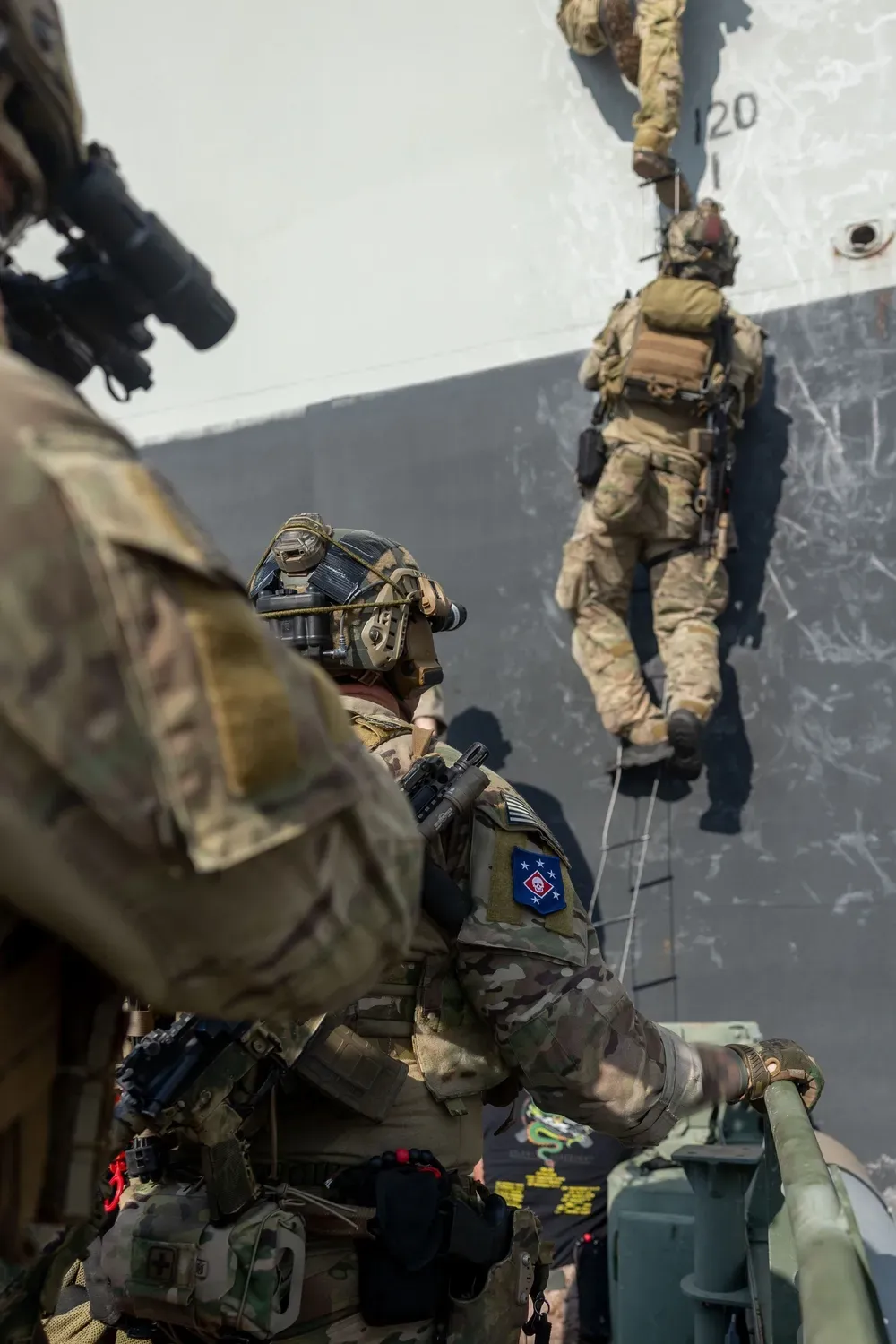
Life at sea presents a completely different set of challenges. When a ship is on deployment, a mission that can last for many months, sailors can't just head to a sprawling MWR gym after work. They must rely entirely on the resources available onboard. And yes, to answer the common question, virtually all Navy ships have gyms, but their size and scope vary dramatically.
The biggest factor is space. On an aircraft carrier, essentially a floating city, the gym can be surprisingly large, with dozens of cardio machines and full weight-lifting areas. On a smaller ship like a destroyer or a submarine, space is the ultimate luxury. Here the "gym" might be a few stationary bikes and a set of dumbbells crammed into a converted storeroom or a widened passageway. Sailors learn to make a complete workout out of almost nothing: bodyweight circuits, a single pair of dumbbells, and whatever floor space they can claim. That constraint is exactly why minimal-equipment, bodyweight-based programming is the most transferable kind of training a future sailor can build now, and a solid deployment fitness program guide walks through how to choose one that survives real shipboard conditions.
Beyond the physical constraints, there's the clock. A deployed ship operates 24 hours a day, and sailors work in rotating shifts called watch schedules to keep things running. This means your "morning" might start at midnight. Finding time and energy for a workout often means hitting the treadmill at 3 AM or lifting weights right after a demanding 12-hour shift. The workout routines on a Navy ship are built around opportunity, not a convenient schedule.
A realistic at-sea workout looks nothing like a base gym session. A submariner might do five rounds of push-ups, air squats, and flutter kicks in a passageway, then finish on the single rower bolted to a bulkhead. A carrier sailor coming off a 12-hour flight-deck shift might have a real weight room available, but only at 0200. The skill isn't access to equipment; it's the discipline to train consistently around an unpredictable watch rotation, which is precisely the habit that separates sailors who stay PRT-ready from those who scramble before every cycle. Building that habit starts well before the ship leaves port, which is where a clear pre-deployment fitness readiness resource earns its keep.
Ultimately, this dedication to staying in shape while deployed becomes about more than just passing a fitness test. For many, a workout is a critical outlet, a way to manage stress, clear their head, and find a moment of personal time in an intensely crowded and demanding environment. It's a powerful tool for resilience.
From Recruit to Sailor: Why Fitness Becomes Your Personal Duty
The instructor-led group training in boot camp is a snapshot of a sailor's initial training, not their entire career, and mapping out the fully Navy boot camp timeline shows just how brief that first chapter really is. Once sailors report to their permanent commands on shore or at sea, the dynamic changes dramatically. The daily, mandatory group workouts disappear. While the Navy's physical fitness requirements don't go away, how you meet them becomes a matter of personal responsibility. There's no one telling you it's time to go for a run. Whether you head straight to the fleet or move through a reserve path with separated phases, the same rule holds: between assignments and once you check in to your command, staying ready is on you.
Think of it like any professional job. Your boss expects you to have the skills to do your work but doesn't watch you complete every task. In the same way, Navy leadership expects every sailor to be ready to pass their Physical Readiness Test (PRT), and the Navy PRT scoring standards lay out exactly what a passing performance requires. They provide the tools, like the gyms on bases and ships, but they don't typically lead daily workouts. It's up to you to manage your time and put in the effort, whether that's before your shift, during a lunch break, or late at night.
Ultimately, staying in shape becomes a reflection of a sailor's professionalism and self-discipline. The motivation has to come from within, not from a shouting instructor. This personal ownership of fitness is one of the biggest, and most important, transitions a person makes when they go from recruit to fleet sailor. For anyone still weighing enlistment the essential Navy requirements for female recruits map out what that starting line looks like. It's not just about passing a test; it's about proving you have the discipline to meet the standards of the job on your own.
That shift catches a lot of new sailors off guard. In boot camp, fitness is scheduled for you; in the fleet, it competes with duty sections, watch, qualifications, and family. The sailors who pass comfortably treat their training like any other recurring obligation, blocked into the week, not improvised the month before a cycle. Building that self-managed routine before you ever ship out is the single biggest predictor of how easily you'll clear the PRT for twenty years, not just the first one.
Beyond the Gym: What if You Hate Lifting Weights?
But what if you're just not a "gym person"? Thankfully, you don't have to be. The Navy's Morale, Welfare, and Recreation (MWR) program knows that fitness is more fun with a team. On most bases, MWR organizes sports leagues that feel just like the ones in any hometown. Sailors can sign up to compete in everything from basketball and volleyball to softball, turning a workout into a weekly game against other commands or departments.
Beyond these official leagues, sailors often create their own informal groups. It's common to find a running club that meets at sunrise or shipmates who push each other through weightlifting sessions. These grassroots clubs spring up naturally, driven by shared interests and the need for a workout partner to stay motivated, especially when deployed in tight quarters. This turns a routine into a shared goal.
This social approach transforms a professional requirement into a chance to build friendships. Whether it's through a competitive softball game or an informal running group, staying active becomes less of a solitary chore and more of a community activity, showing that teamwork extends far beyond a sailor's official duties.
The Final Answer: Staying Fit is Simply Part of the Job
The image of a drill instructor screaming during push-ups is powerful, but you now know it's only the first chapter. After boot camp, the shouting stops and a different kind of discipline begins. The real story of Navy fitness isn't about constant group workouts; it's about individual responsibility in extraordinary environments, from a modern gym on a massive shore base to a cramped treadmill room on a deployed submarine.
So, do you still work out in the Navy? If you're asking "do you still workout in the navy" or "do you still workout while enlisted in the navy," the definitive answer is yes, but the how transforms completely. The Navy's physical fitness requirements set the non-negotiable standard every sailor must meet. The service provides the tools and the time, but the drive to stay in shape becomes a professional duty, one that is managed entirely by the sailor themselves.
The next time you see a sailor, you'll understand that their fitness is more than just a passing grade on a test. Fitness is the only piece of Navy readiness, the Navy ASVAB score requirements determine which ratings and career paths open up in the first place. It's a fundamental part of their readiness to perform their job and rely on their shipmates in an emergency. You've moved beyond the Hollywood version and now understand that this personal commitment is essential to the mission.
***Disclaimer: This content is provided for general informational purposes only. Combat Fitness is not affiliated with the U.S. Department of Defense, and official standards may change at any time. Always consult official military publications for the most up-to-date requirements.***


